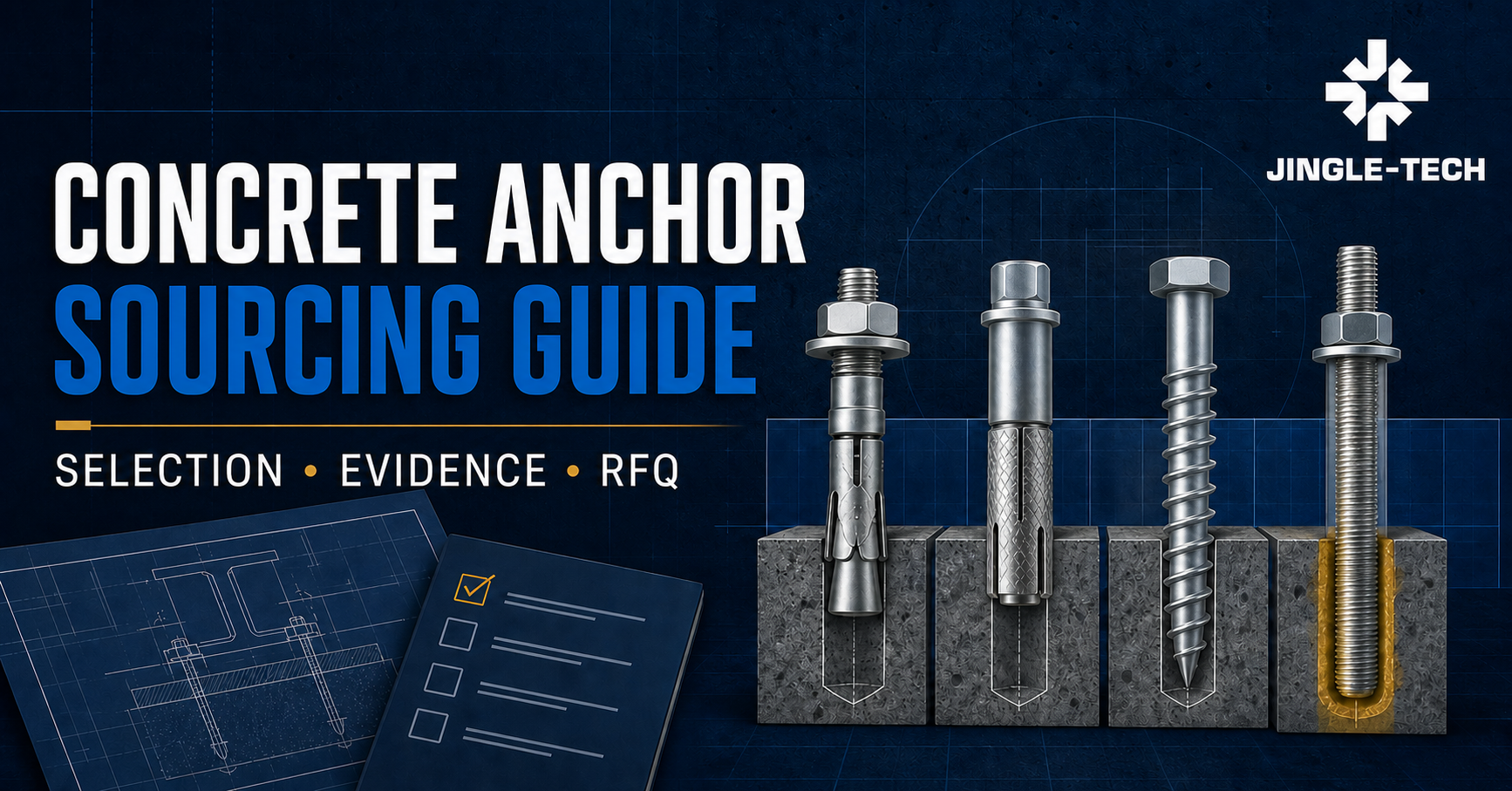
콘크리트 앵커 제조업체: 선택 및 소싱 가이드
빠른 답변: 카탈로그로 시작하지 마세요. 연결부터 시작하세요. 디자인 팀은 먼저 해당 작업에 예상되는 코드 경로, 구체적인 조건, 디자인 동작, 기하학, 노출, 설치 방법 및 증거를 정해야 합니다. 그래야만 조달팀에서 공급업체의 정확한 제품과 승인 범위를 비교할 수 있습니다.
콘크리트 앵커 제조업체는 종종 웨지, 슬리브, 드롭인, 나사 또는 언더컷과 같은 친숙한 부품 이름을 가지고 도착합니다. 이름은 도움이 되지만 RFQ를 전달할 수는 없습니다. 먼저 연결을 설명하세요. 붙어 있는 것은 무엇입니까? 디자인이 콘크리트를 균열된 것으로 취급합니까? 동작은 장력인가요, 전단인가요, 아니면 둘 다인가요? 근처 가장자리, 날씨 노출, 진동 또는 지진 역할과 같은 어색한 세부 사항도 기록하십시오. 적용 가능한 코드 에디션과 제품 평가 경로로 시작 개요가 완성됩니다.
이 가이드는 공급업체 자격, 제품별 증거, RFQ 통제 및 국가 간 조달에 중점을 둡니다. 별도의 콘크리트 고정 앵커 유형 선택 가이드 및 캐스트인 앵커 볼트 제조업체 체크리스트 프로젝트가 콘크리트가 굳기 전에 배치된 앵커 로드 또는 볼트와 관련된 경우
이러한 질문이 누락된 경우 다양한 제품, 가정 또는 증거를 다루면서 인용문이 비교 가능한 것처럼 보일 수 있습니다. 최저 가격은 잘못된 승인 범위, 환경에 맞지 않는 자재, 현장에서 사용할 수 없는 설치 도구, 배송된 로트에 연결할 수 없는 문서 등 비용이 많이 드는 불일치를 숨길 수 있습니다.
이 가이드는 엔지니어, 구매팀, 유통업체, 프로젝트 공급업체에게 애플리케이션 정의부터 통제된 견적 요청까지의 실질적인 경로를 제공합니다. 도면 및 응용 프로그램 요약이 이미 있는 경우 구체적인 앵커 RFQ에 대해 논의하세요. 공급업체 입력은 제품 및 상업 정보로 제한되며 엔지니어링 선택이나 프로젝트 승인을 구성하지 않습니다.
1. 앵커 이름이 아닌 연결로 시작하세요
콘크리트 앵커는 연결된 구성요소의 작업을 콘크리트 부재로 전달합니다. 그 짧은 문장은 단순한 철강 품목이 아닌 시스템을 설명합니다. 기본 재료, 앵커 형상, 고정 장치, 와셔 또는 너트, 설치 구멍, 설정 프로세스 및 앵커 주변의 콘크리트가 모두 연결에 영향을 미칩니다. 하나의 요소를 변경하면 원래 선택을 뒷받침하는 증거 밖으로 디자인이 이동할 수 있습니다.
첫 번째 조달 작업은 한 페이지 분량의 지원서 봉투입니다. 첨부된 항목의 이름을 지정하고 그 기능을 말해보세요. 프로젝트, 관할권, 구체적인 구성원 및 엔지니어 제공 작업을 기록합니다. 의도된 서비스 수명, 노출, 설치 순서, 검사 또는 문서화 의무를 추가합니다. 일부 필드는 아직 열려 있을 수 있습니다. 그 옆에 "미해결"이라고 적습니다. 눈에 보이는 격차는 조용한 공급업체 가정보다 더 안전합니다.
최소 결정 요약
- 연결 기능: 구조적 부착, 장비 구속, 외관 지지, 난간, 서비스 지원, 임시 설치 또는 기타 정의된 용도.
- 콘크리트: 부재 유형, 지정된 강도, 균열/균열 없음 설계 조건, 해당되는 경우 경량 또는 보통 중량 분류, 조건 및 접근 가능한 두께.
- 동작: 엔지니어가 제공한 장력, 전단, 결합 동작, 지속 동작, 피로, 충격, 진동, 화재 또는 해당하는 지진 요구 사항.
- 형상: 고정 장치 두께, 구멍 패턴, 인근 가장자리, 앵커 간격, 보강재, 내장 항목 및 사용 가능한 드릴링 깊이.
- 노출: 실내 건조, 실외, 해안, 산업, 화학, 습기, 온도에 민감한 환경 또는 기타 프로젝트에서 정의한 환경.
- 규정 준수 경로: 채택된 코드, 프로젝트 사양, 평가 보고서 또는 유럽 기술 평가, 검사 및 제출 요구 사항
영업팀에 누락된 설계 작업을 계산하도록 요청하거나 콘크리트에 균열이 생긴 것으로 처리해야 하는지 결정하지 마세요. 이것이 프로젝트 결정입니다. 책임 있는 공급업체는 격차를 표시하고, 제품 증거를 설명하고, 명시된 요구 사항에 대한 견적을 구성할 수 있습니다. 기록 엔지니어를 대체해서는 안 됩니다.
2. 주요 콘크리트 앵커 계열 이해
콘크리트 앵커 이름은 시장마다 완벽하게 동일하지 않으므로 견적에는 도면, 제품 명칭, 설치 원리가 포함되어야 합니다. 다음 비교는 소싱 방향에만 해당됩니다. 적합성이나 역량을 확립하지는 않습니다.
또한 RFQ 시작 시 사후 설치된 시스템에서 캐스트인 앵커리지를 분리합니다. 타설 앵커 로드, 헤드 앵커, 스터드, 채널 및 인서트는 콘크리트가 경화되기 전에 배치되며 다양한 세부 사항, 배치, 검사 및 제품 사양 경로를 따릅니다. ASTM F1554-20은 강철 앵커 볼트 및 앵커 로드 제품 사양입니다. 여기에는 콘크리트 기초에 구조적 지지대를 고정하기 위한 제품이 포함되며 기계적 확장 앵커는 명시적으로 제외됩니다. 그 자체로는 앵커리지 설계나 제품 인증 표준이 아닙니다. 단순히 이름에 '앵커'라는 단어가 나타난다는 이유로 이러한 제품을 함께 그룹화해서는 안 됩니다.
| 앵커 계열 | 일반 설정 원칙 | 선택을 제어하는 질문 | 확인할 조달 증거 |
|---|---|---|---|
| 토크 제어 확장 앵커(종종 웨지 스타일 포함) | 설치 토크는 드릴 구멍에 대한 확장을 유도합니다. | 콘크리트 상태, 승인된 직경 및 매립, 고정 장치 두께, 가장자리/간격 형상, 토크 절차 및 노출. | 제품별 보고서, 설치 지침, 치수, 토크 설정, 공구, 재료/마감 및 식별. |
| 변형 제어 확장 앵커(종종 드롭인 스타일 포함) | 설정 도구는 구멍의 내부 또는 외부 요소를 확장합니다. | 설정 도구 액세스, 확인된 설정, 내부 나사 결합, 고정 장치 조립 및 승인된 기본 재료. | 일치하는 설정 도구, 지정된 경우 설정 표시기 또는 검사 방법, 스레드 데이터, 보고서 및 패키징 제어. |
| 슬리브형 확장 앵커 | 어셈블리를 조이면 슬리브가 늘어납니다. | 정확한 제품 분류, 승인된 콘크리트 조건, 관통 고정 형상, 고정 장치 두께 및 설치 순서. | 외관으로 범위를 추론하지 마세요. 구체적인 평가, 지침, 구성요소 및 치수를 확인하세요. |
| 콘크리트 나사 앵커 | 경화 나사산 앵커가 미리 뚫린 구멍을 자르거나 맞물립니다. | 구멍 직경, 드릴링 시스템, 승인된 설치 도구, 헤드/고정 장치 인터페이스, 승인된 재사용 또는 조정 조항, 기판 상태. | 제품 보고서, 드릴 비트 및 도구 요구 사항, 설치 제한, 헤드 표시, 코팅/재료 및 로트 ID. |
| 언더컷 앵커 | 기계식 베어링 기능이 콘크리트의 언더컷과 맞물립니다. | 홀/언더컷 생성 방법, 특수 툴링, 설치 접근, 검사 및 제품 승인 범위 | 시스템 도구, 교육 요구 사항, 설정 확인, 보고서, 치수 및 전체 구성 요소 목록 |
| 접착 앵커 시스템 | 적격한 접착 시스템은 나사산 요소 또는 철근을 준비된 구멍에 접착합니다. | 카트리지 플러스 로드가 아닌 시스템 가격으로 책정됩니다. 개요에는 접착제와 요소뿐만 아니라 드릴링, 청소, 콘크리트 상태, 온도, 방향, 경화, 지속적인 조치, 설치자 요구 사항 및 검사도 포함되어야 합니다. | 이름이 지정된 시스템 자격을 확인하세요. 그런 다음 유통기한, 보관, 디스펜서, 청소 방법, 경화 기간, 설치자 및 검사 규칙, 로트 ID를 추적합니다. |
웨지 앵커와 콘크리트 나사는 모두 후설치 기계식 앵커일 수 있지만 구멍 준비, 설정 메커니즘, 제거 옵션, 공구 및 평가 데이터는 서로 다릅니다. 슬리브 앵커는 다른 범위를 휴대하면서 다른 확장 제품과 유사하게 보일 수 있습니다. 드롭인 앵커는 호환되는 설정 프로세스가 없으면 불완전합니다. 언더컷 시스템에는 특수한 구멍 형상이 필요할 수 있습니다. 이러한 차이점 때문에 직경만으로 제품을 대체하는 것이 안전하지 않습니다.
접착 앵커에는 명확한 경계가 있어야 합니다. 이는 단순히 "또 다른 마감"이나 기계식 앵커에 대한 일반적인 대안이 아닙니다. 자격, 보관, 구멍 청소, 설치 온도, 경화, 지속 부하 고려 사항 및 검사 의무는 실질적으로 다를 수 있습니다. 자체 제출 및 승인 경로에 접착 범위를 유지하세요.
3. 주요 승인 경로가 최종 후보자 목록을 필터링하도록 허용
제품 데이터 시트는 코드로 인정되는 평가 증거와는 다릅니다. 먼저 프로젝트에 어떤 규정 준수 경로가 적용되고 어떤 버전이 채택되었는지 설계 팀에 문의하세요. 미국에서는 ACI CODE-318-25는 이 가이드 검토 시점의 현재 ACI 건축 코드이며 콘크리트에 고정하는 것은 해당 범위 내에 있습니다. 현지 관할권에서는 여전히 다른 버전을 시행할 수 있으므로 '최신'과 '법적 적용 가능'을 서로 바꿔서 사용할 수 없습니다.
사후 설치된 기계식 앵커의 경우 ACI CODE-355.2-24는 ACI 318에서 다루는 구조적 애플리케이션에 대한 인증 테스트 및 평가에 대해 설명합니다. 깨지지 않은 콘크리트 분류. ICC 평가 서비스 목록 AC193은 콘크리트 요소의 기계식 앵커용이고 AC308은 콘크리트 요소의 후설치 접착 앵커 및 철근용입니다. ICC-ES는 또한 평가 서비스 보고서가 용도, 설치 조항, 사용 조건, 제출된 증거 및 제품 식별을 식별한다고 설명합니다. 이러한 섹션은 브로셔에 복사된 배지보다 구매자에게 더 유용합니다.
ACI 경로에서 ACI CODE-355.4-24는 ACI 318에 따른 설계를 위해 앵커 요소로 사용되는 변형 철근을 포함한 접착 앵커에 적합합니다. 17장. ACI CODE-355.5-24는 ACI의 직선 철근 개발 및 접합 길이 규정에 따라 사용되는 사후 설치 철근 시스템을 별도로 다룹니다. 318. 적격성 증거를 선택하기 전에 의도된 설계 모델을 확인하십시오.
유럽 프로젝트의 경우 EOTA는 EAD 330499-02-0601 콘크리트에 사용되는 패스너. 특정 제품 및 시장에 대해 적용 가능한 유럽 기술 평가 및 선언 경로를 확인해야 합니다. 한 경로의 증거가 자동으로 다른 관할권을 충족한다고 가정하지 마십시오.
공급업체 약어는 중요한 경계를 모호하게 만들 수 있습니다. ACI 318은 디자인 코드입니다. ACI 355.2, 355.4 및 355.5는 별도의 자격 경로를 다룹니다. 누구도 “ACI 인증 앵커”를 그 자체로 유용한 증거로 전환하지 못합니다. 유용한 기록은 견적서에 있는 제품에 대한 정확한 보고서 또는 평가이며, 현재 범위와 비교하여 읽혀집니다.
보고서를 한 줄씩 읽기
보고서 보유자, 제품 이름, 보고서 번호, 해당 코드, 앵커 크기, 재료, 승인된 콘크리트 조건, 설치 매개변수, 설계 데이터, 특별 검사 조항, 사용 조건 및 제품 식별을 기록합니다. 그런 다음 해당 항목을 견적 및 배송된 라벨과 비교하십시오. 견적서에 "동등함"이라고 적혀 있으면 공급업체에 실제 프로젝트와 동일하다는 증거를 확인하도록 요청하십시오. 유사한 기하학은 평가 보고서를 비공개 제품으로 확장하지 않습니다.
ASTM E488/E488M-22는 지정된 하중 및 환경 범주에 걸쳐 균열 또는 비균열 콘크리트 앵커의 인장 및 전단 강도에 대한 실험실 테스트 방법을 설명합니다. 표준 자체에는 제품별 평가 및 승인 표준이 요구 사항을 추가할 수 있다고 명시되어 있습니다. 따라서 실험실 보고서는 관련 평가 경로의 맥락에서 읽어야 합니다. 단일 풀 테스트 또는 마케팅 그래프는 완전한 검증이 아닙니다.
4. 앵커를 콘크리트, 동작, 기하학에 맞추세요
구매자는 종종 "이 앵커는 어떤 하중을 지탱할 수 있나요?"라고 묻습니다. 책임 있는 보편적인 대답은 없습니다. 설계에서는 앵커 및 구성에 따라 철근 파손, 콘크리트 파손, 인발, 프라이아웃, 측면 파열, 쪼개짐, 장력과 전단의 상호 작용을 고려해야 할 수도 있습니다. 제어 결과는 매립, 가장자리 거리, 간격, 부재 두께, 콘크리트 강도 및 상태, 앵커 그룹 레이아웃 및 철근에 따라 변경될 수 있습니다. 지진, 지속, 피로, 화재 또는 기타 프로젝트 요구 사항으로 인해 허용 범위가 추가로 변경될 수 있습니다.
| 디자인 입력 | 조달에 필요한 이유 | 증거 또는 결정 소유자 |
|---|---|---|
| 깨진/깨지지 않은 상태 | 제품의 승인 범위가 설계 가정과 일치하는지 여부를 제어합니다. | 디자인 전문 상태 상태; 제품 보고서를 통해 자격이 확인되었습니다. |
| 장력, 전단, 상호 작용 | 제목 용량은 모든 방향이나 조합을 나타낼 수 없습니다. | 엔지니어가 작업과 계산을 제공합니다. 보고서는 제품 매개변수를 제공합니다. |
| 가장자리, 간격, 그룹 레이아웃 | 근처의 콘크리트 및 인접 앵커가 연결 응답에 영향을 미칩니다. | 승인된 도면 및 앵커 디자인. |
| 부재 두께 및 보강 | 사용 가능한 드릴링 깊이, 설치 충돌 및 디자인 확인을 제어합니다. | 구조 문서, 측량/스캐닝 계획 및 엔지니어 검토. |
| 고정구 및 구멍 형상 | 그립, 스탠드오프, 헤드/와셔 인터페이스, 접근 및 설치 순서에 영향을 미칩니다. | 조정된 연결 도면 및 공급업체 치수 데이터. |
| 환경 및 서비스 | 재료, 부식, 온도, 화재 및 유지 관리 관련 질문을 유도합니다. | 프로젝트 내구성 사양 및 제품 증거. |
기재 식별도 마찬가지로 중요합니다. 콘크리트 앵커를 석조, 속이 빈 블록, 돌, 그라우트 또는 얇은 토핑에 임의로 옮겨서는 안 됩니다. 보통 중량 콘크리트에 대한 승인이 모든 경량 콘크리트 구성에 적용되는 것은 아닙니다. 기존 작업은 수리, 공백, 노후화된 구역, 보강 또는 매립 서비스 등 새로운 도면이 표시되지 않을 수 있는 불확실성을 가져옵니다. 이러한 조건에는 프로젝트 검토가 필요합니다. 본능적으로 더 큰 직경을 선택해도 문제가 해결되지 않습니다.
<그림 스타일="마진: 30px 0;">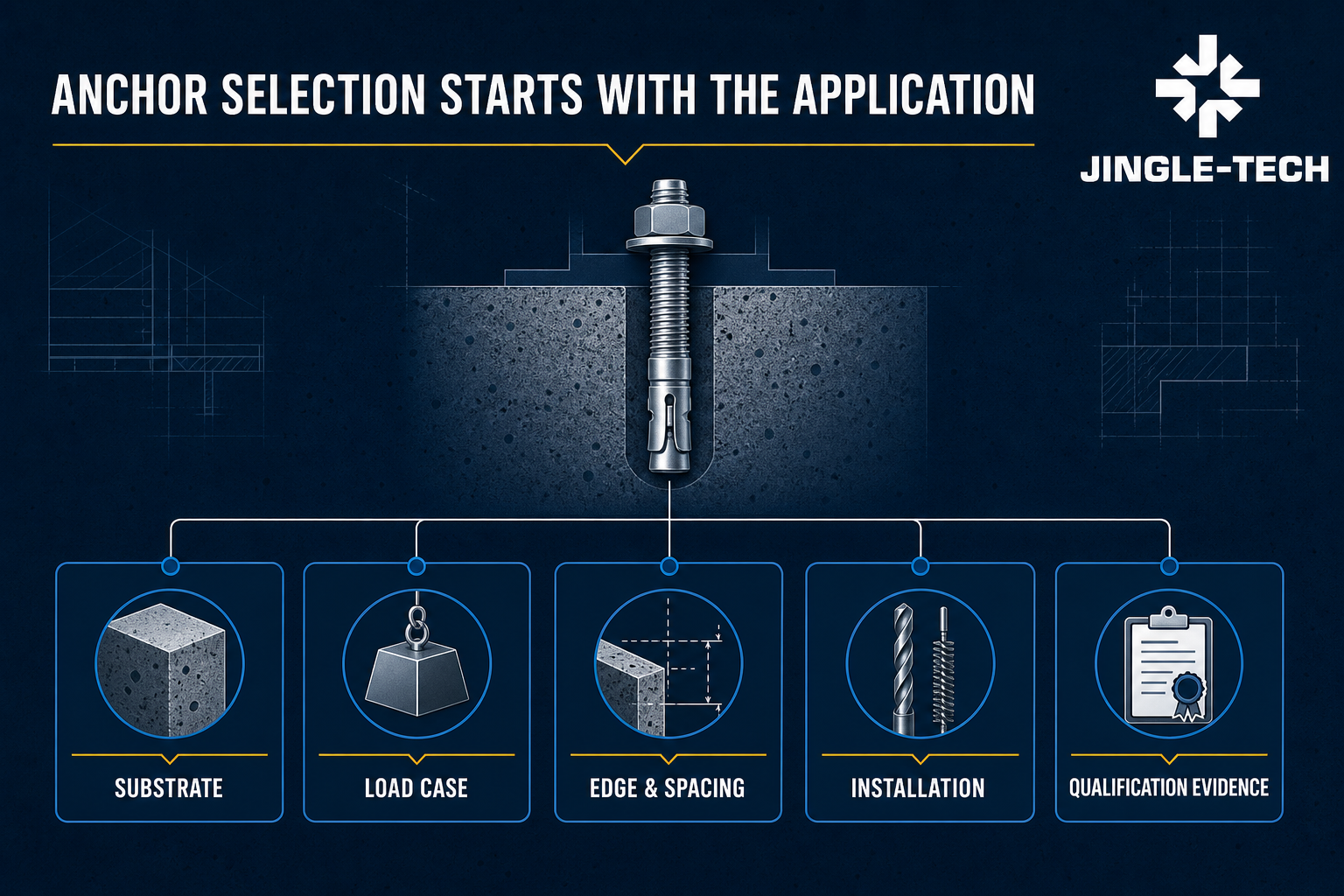
5. 재료 및 부식 방지를 시스템으로 지정
'아연 도금', '아연 도금', '스테인리스'는 완전한 내구성 사양이 아닙니다. RFQ에 모재와 등급 또는 합금을 입력합니다. 코팅 시스템을 정의하고, 프로젝트에서 필요한 경우 코팅 두께를 정의합니다. 노출, 디자인 생활, 감동적인 소재, 필요한 증거도 여기에 속합니다. 작은 부분을 확인하세요. 본체, 클립, 슬리브, 너트, 와셔 및 액세서리는 하나의 보호 시스템을 공유할 수 없지만 이들의 조합은 의도적이고 호환 가능해야 합니다.
매설된 부분과 노출된 부분은 하나의 앵커임에도 서로 다른 환경에서 살아갈 수 있습니다. 습기, 염화물, 화학 물질, 열, 틈새, 이종 금속 접촉 및 설치 손상 등이 모두 중요합니다. 반짝이는 표면은 코팅에 대해 아무것도 증명하지 못합니다. “스테인리스”는 하나의 보편적인 재료가 아닌 제품군이며, 지배적인 사양이 없는 코팅 이름은 성능을 확립하지 못합니다. 프로젝트 설계자나 부식 전문가가 필요한 시스템을 정의해야 합니다.
또한 제조업체가 코팅 관련 치수와 설치 동작을 어떻게 제어하는지 물어보세요. 마감은 스레드 맞춤, 너트 회전, 구동 또는 확장 구성요소가 이동하는 방식에 영향을 미칠 수 있습니다. 적격 제품이 특정 재료와 코팅으로 정의된 경우 변경은 단순한 외관 이상의 의미를 가질 수 있습니다. 서면 변경 통지를 요구하고 승인 증거를 검토합니다.
6. 구매 사양에 설치 부분을 추가하세요
올바르게 선택한 앵커라도 잘못된 구멍, 손상된 나사산, 불완전한 설정, 제어되지 않은 토크, 누락된 구성품 또는 승인된 지침과의 편차로 인해 손상될 수 있습니다. 따라서 설치는 조달된 프로세스입니다. 프로젝트 팀은 제품을 승인하기 전에 어떤 드릴, 비트, 청소 장비, 세팅 도구, 토크 도구, 깊이 제어, 접근, 교육 및 검사 방법을 사용할 수 있는지 알아야 합니다.
필드 제어 시퀀스
- 최근 승인된 문서를 확인하세요. 도면 개정, 앵커 일정, 제품 보고서, 설치 지침을 작업 현장에서 확인하세요.
- 보강 및 숨겨진 서비스를 찾습니다. 프로젝트에서 승인한 조사 또는 스캔 계획을 사용합니다. 승인된 설계 검토 없이 앵커를 재배치하지 마십시오.
- 완전한 제품을 확인합니다. 지정, 크기, 재료, 구성 요소, 표시, 보고서 번호 및 포장을 제출물과 일치시킵니다.
- 지정된 대로 정확하게 구멍을 준비하십시오. 구멍 직경, 깊이, 드릴링 모드, 비트 상태 및 청소 단계는 제품마다 다릅니다.
- 지정된 도구를 사용하여 앵커를 설정합니다. 해당하는 경우 필요한 순서, 도구, 설정 표시 및 토크를 따르십시오. 일반적인 값으로 대체하지 마십시오.
- 검사 및 기록. 필요한 특별 검사, 샘플링, 위치 기록, 설치자 식별 및 부적합 프로세스를 적용합니다.
콘크리트 드릴링을 통해 호흡 가능한 결정질 실리카가 생성될 수 있습니다. 미국에서는 OSHA의 건설 표준 29 CFR 1926.1153은 고용주가 나열된 작업에 대해 특정 통제를 구현하거나 대체 노출 통제 조항을 따를 것을 요구합니다. 현장 안전 계획, 현지 법률, 도구 지침 및 고용주 프로그램이 작업을 관리합니다. 본 조달 가이드는 이를 대체하지 않습니다.
구매 주문을 발행하기 전에 프로젝트에서 요구하는 언어로 설치 지침을 요청하세요. 특수 공구가 품목으로 식별되고 교체 마모 부품을 구별할 수 있는지 확인합니다. 유통을 위해 포장은 실과 마감재를 보호하는 동시에 수령, 보관, 설치자에게 발급을 통해 제품 명칭과 로트 ID가 눈에 띄게 유지되어야 합니다.
7. 공급업체가 추측하지 않고 인용할 수 있는 RFQ 작성
고품질 콘크리트 앵커 RFQ에는 판매 문구가 포함되어 있어 길지 않습니다. 가정을 노출시키기 때문에 유용합니다. 모든 입찰자에게 동일한 통제 패키지를 제공합니다. 각 공급업체에게 모든 라인에 대해 '준수', '일탈', '대안' 또는 '포함되지 않음'을 명시하는 규정 준수 매트릭스를 반환하도록 요청하세요.
| RFQ 블록 | 제공할 정보 | 공급업체 응답 필요 |
|---|---|---|
| 프로젝트 및 관할권 | 국가, 위치, 채택된 코드/에디션, 프로젝트 사양, 권한 및 제출 경로. | 해당 경로에 대해 제공되는 정확한 제품 증거. 해결되지 않은 충돌. |
| 응용 프로그램 및 그림 | 연결 도면, 개정, 고정 장치, 구멍 패턴, 설치 방향 및 기능. | 제품 명칭, 치수, 설치 방법 및 도면 리뷰 코멘트 |
| 디자인 입력 | 엔지니어가 승인한 작업, 구체적인 데이터, 기하학, 지진/화재/피로 또는 기타 요구 사항 | 각 요구사항과 관련된 섹션 및 매개변수를 보고합니다. 일반 용량 청구가 없습니다. |
| 재료 및 마감 | 재료 등급/합금, 코팅 사양, 노출 및 호환성 요구 사항. | 구성요소별 재료/마감, 인증서, 표시 및 편차 목록. |
| 설치 패키지 | 사이트 제약, 사용 가능한 도구, 언어, 설치 프로그램 및 검사 요구 사항. | 현재 지침, 도구 목록, 설정 제어, 교육/검사 의무 및 제외 |
| Quality and traceability | Required certificates, inspection records, lot definition, retention, labels and change control. | Sample records and a map from raw material/process lots to carton and shipment identity. |
| Commercial data | Quantity per size, annual demand, delivery schedule, destination, packaging and Incoterm. | Price basis, tooling, samples, tests, documents, minimum batch, schedule assumptions, validity and exclusions. |
If design is still in development, issue the RFQ in stages. Stage one can request a technical shortlist and evidence index. Stage two can quote only the engineer-approved options. Stage three can cover samples or a pilot lot with a defined inspection plan. This prevents a preliminary conversation from being mistaken for a released production specification.
8. Audit the manufacturer behind the specific anchor
A company may manufacture many metal fasteners and still rely on outside parties for forming, heat treatment, coating, assembly, testing, or packaging. Outsourcing is not automatically a defect. Trouble begins when nobody can draw the boundary: who owns the product, who controls an outside source, where the lot identity travels, and who checks a process change against the qualified configuration.
Sketch the route of the quoted item from incoming stock to release. Depending on the product, the stops may include forming or machining, thread production, heat treatment, finishing, assembly, inspection, marking, and packing. Whenever the route leaves the supplier's site, name the person or organization that approves the source, holds the specification, carries the lot identity, reviews the result, and closes corrective action. If an evaluation covers the product, identify the report holder and document how the offered item connects to that report.
| Audit area | Evidence to request | Warning sign |
|---|---|---|
| Product identity | Controlled drawing, critical characteristics, marking and packaging example. | Report number is shown, but the supplied designation cannot be found in its scope. |
| Material and process | Material certificate example, route card, special-process specification and lot map. | Material or coating may change based on availability without approval. |
| Inspection | Characteristic, method, instrument, sample/frequency, acceptance limit and record. | “Final QC” is offered without measurable acceptance criteria. |
| Evaluation maintenance | Current report, listing status, surveillance or quality documentation as applicable. | An expired, withdrawn, or unrelated document is presented as universal approval. |
| Change control | Written rules for material, geometry, tooling, site, process, sub-supplier and packaging changes. | Changes are communicated only after shipment. |
| Nonconformance | Segregation, disposition authority, root-cause example and traceable corrective action. | Rework or sorting is performed without an approved instruction and verification. |
Request blank document formats before qualification: certificate of conformity, material certificate linkage, dimensional report, coating or process record, packing list, and nonconformance response. The title of a certificate matters less than whether its data can be tied to the correct part, revision, lot, and shipment.
9. Compare quotations on total risk, not unit price
Concrete anchor cost is affected by material and finish, diameter and length, manufacturing route, evaluation scope, lot size, testing and documentation, packaging, special tools, logistics, and the level of application support. A quote that excludes the setting tool, prescribed washer, inspection document, special packaging, or evaluation-related component is not directly comparable with a complete system quote.
Normalize quotations in one worksheet. Separate unit price, tooling, samples, testing, documentation, setting equipment, packaging, freight, duty, and recurring versus one-time costs. Record the technical deviations beside the commercial lines. A cheaper line that changes material, coating, approval, embedment, or packaging is an alternate, not a saving. Route that alternate back through engineering before it enters the comparison.
Build the schedule in stages rather than accepting one unexplained lead-time number. Show technical review and approval first; then tooling where needed, material, production, outside processing, inspection, documents, packing, and transport. Mark buyer-held decisions in one color and outside-supplier dependencies in another. An estimate becomes a commitment only when its assumptions are written down.
10. Use samples and a pilot lot to prove the supply process
A sample should answer a written set of questions. Was it made from the proposed material and route? Does it carry the required identification? Does the complete installation system work with site tooling? Do dimensions and components match the approved submittal? Can its records be traced? A polished sample with no connection to the planned production process provides limited evidence.
For a pilot lot, exercise the real path from purchase-order review through packaging. Verify drawing revision, product designation, incoming certificates, process lot controls, inspection records, labels, installation instructions, tools, carton quantities, damage protection, and export documents. Any deviations should be closed in writing before repeat orders.
Hypothetical sourcing scenario
Scenario—illustrative only, not a real JINGLE project: A buyer is sourcing post-installed anchors for an equipment base retrofit. The first RFQ lists only diameter, length, and quantity. Bidder A quotes a wedge-style anchor; Bidder B quotes a concrete screw. Prices cannot be compared because the concrete condition, actions, fixture geometry, approval route, material, and installation constraints are missing.
The team pauses the quote, obtains engineer-approved inputs, identifies the applicable evaluation requirements, scans the existing member, and issues a revised RFQ with a compliance matrix. One product remains within the approved scope and fits the available installation sequence. The commercial decision is then made between technically compliant offers. The value comes from removing ambiguity, not from assuming one anchor family is universally better.
11. Build an internal sourcing path across related components
Concrete anchors rarely sit alone in an industrial sourcing program. Teams may also need to qualify a custom fastener manufacturer, a custom screw manufacturer, a structural bolt manufacturer, or a custom nut manufacturer. Keep each product family's governing standard, evidence, and acceptance plan distinct while reusing the same disciplined RFQ and change-control method.
Related procurement teams can continue with a hose clamp manufacturer, a lifting anchor manufacturer, or a precast concrete accessories manufacturer. Note that precast lifting anchors are handling-system components and should not be confused with post-installed anchors used to attach fixtures to hardened concrete.
Where a program includes machined interfaces or combined sourcing, review the evidence expected from a precision CNC machining parts manufacturer and an OEM fastener and machined parts supplier. The common discipline is controlled requirements; the technical acceptance criteria remain product-specific.
12. Concrete anchor manufacturer FAQ
What information is needed for a concrete anchor quote?
Provide the project location and code route, connection drawing and revision, engineer-approved actions, concrete data, cracked/uncracked condition, geometry, fixture thickness, environment, material/finish, product evaluation requirements, installation constraints, inspection documents, quantities, packaging, destination, and schedule. If any field is unresolved, label it.
Wedge anchor or concrete screw: which should I shortlist?
There is no winner by category. The two systems engage the hole differently, install differently, and can carry different approval scopes. Let the design, concrete, geometry, product report, site access, tooling, inspection plan, and exposure narrow the choice.
Can an anchor approved for uncracked concrete be used in cracked concrete?
Do not make that substitution unless the responsible design professional confirms it and the product-specific evaluation evidence covers the required condition. The design team's concrete condition must match the product's qualified scope.
How do I verify an ICC-ES report for a concrete anchor?
Use the current report from ICC-ES, then match the report holder, product designation, size, material, code edition, approved uses, design data, installation, conditions of use, inspection, and product identification to the offered and delivered item. Do not rely on a cropped logo or report number alone.
Are adhesive anchors interchangeable with mechanical anchors?
No generic interchange should be assumed. Adhesive anchors form a separate qualified system with product-specific requirements for adhesive, element, hole preparation, cleaning, temperature, cure, storage, sustained loading, installer qualification, and inspection. Any change requires project review.
What is the minimum order quantity for custom concrete anchors?
There is no universal minimum. One order may be constrained by purchased material; another by tooling, furnace or coating batches, tests, packing, or documents. Request three separate quantity discussions—prototype, pilot, and repeat production—and make the supplier show what each assumption changes.
What drives concrete anchor price?
Key drivers include product type, material, finish, size, manufacturing route, approval maintenance, quantity, inspection and certificates, packaging, setting tools, logistics, and support scope. Compare complete compliant systems, not unit prices attached to different assumptions.
Can a manufacturer make an anchor from my drawing?
A drawing can support a manufacturability review, but it does not by itself establish code compliance or design suitability. For regulated or safety-relevant structural use, the project may require product-specific qualification and evaluation. Confirm that path before investing in tooling or production.
Should I request pull testing on site?
Field testing, proof loading, sampling, acceptance criteria, and interpretation must be defined by the project documents and responsible design professional. A field test does not automatically replace product qualification, anchor design, correct installation, or required inspection.
What documents should arrive with the shipment?
The list is project-specific. It may include a certificate of conformity, traceability data, material or process certificates, inspection results, packing list, product identification, current installation instructions, and any approved project submittal references. Agree on format and lot linkage before ordering.
How should distributors prevent product mix-ups?
Preserve the manufacturer's product designation, size, material, lot, report reference, labels, and instructions through repacking and order fulfillment. Physically segregate similar products, control substitutions, and ensure the installation document follows the correct item.
Can the supplier select the anchor for me?
A supplier can explain product scope, identify missing information, and help compare options against a defined application. Final design, code interpretation, suitability, and approval belong to the responsible project professionals and authority having jurisdiction.
13. Send a decision-ready inquiry
A useful inquiry is a compact technical package, not a price-only request. It gives the supplier enough context to surface product evidence and deviations before price pressure takes over. Begin with the controlled drawing, revision, application, and jurisdiction. Add the engineer-approved design inputs, concrete and exposure information, required material and finish, approval route, and installation limits. Close with documents, quantity, packing, destination, and the requested schedule.
The supplier's reply should name the product without shorthand. It should point to the evidence, map compliance, supply dimensions and installation information, state material and finish, and show how a lot can be traced. Keep quotation assumptions, exclusions, and change control in that same reply. Engineering, quality, and purchasing can then review one record instead of three versions of the story.
Discuss your concrete anchor RFQ
Authoritative references
- American Concrete Institute: ACI CODE-318-25 — structural concrete code requirements, including anchoring to concrete.
- American Concrete Institute: ACI CODE-355.2-24 — qualification requirements for post-installed mechanical anchors in concrete.
- American Concrete Institute: ACI CODE-355.4-24 — qualification requirements for post-installed adhesive anchors in concrete.
- American Concrete Institute: ACI CODE-355.5-24 — qualification requirements for post-installed reinforcing bar systems used under development and splice provisions.
- ICC Evaluation Service: approved acceptance criteria register — includes AC193 for mechanical anchors in concrete elements.
- ICC Evaluation Service: Reports Directory and report-reading guide — explains report scope, installation, conditions of use, and identification.
- European Organisation for Technical Assessment: EAD 330232-02-0601 — mechanical fasteners used in concrete.
- European Organisation for Technical Assessment: EAD 330499-02-0601 — bonded fasteners and bonded expansion fasteners used in concrete.
- ASTM International: ASTM E488/E488M-22 — laboratory test methods for anchor strength in concrete elements.
- ASTM F1554-20 anchor-bolt specification — covers steel anchor bolts used with concrete foundations and expressly leaves mechanical expansion anchors outside its scope.
- OSHA 29 CFR 1926.1153 construction silica rule — the official U.S. requirement relevant to respirable crystalline silica during concrete drilling.
Official pages checked on 20 August 2026. Before using this guide on a job, confirm the editions and listings that the local jurisdiction actually accepts; any of them may change or be withdrawn.