Order a sample to answer a question

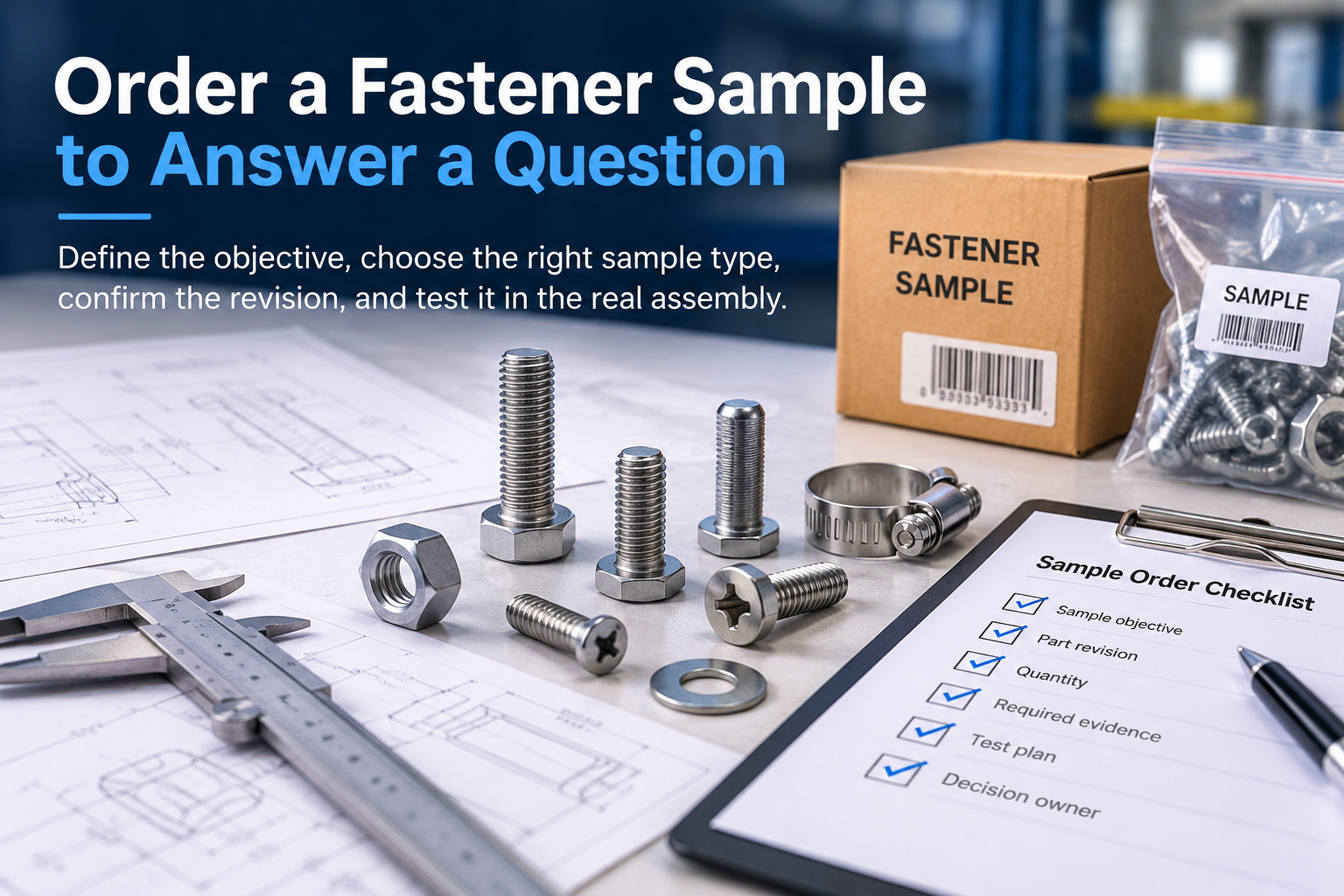
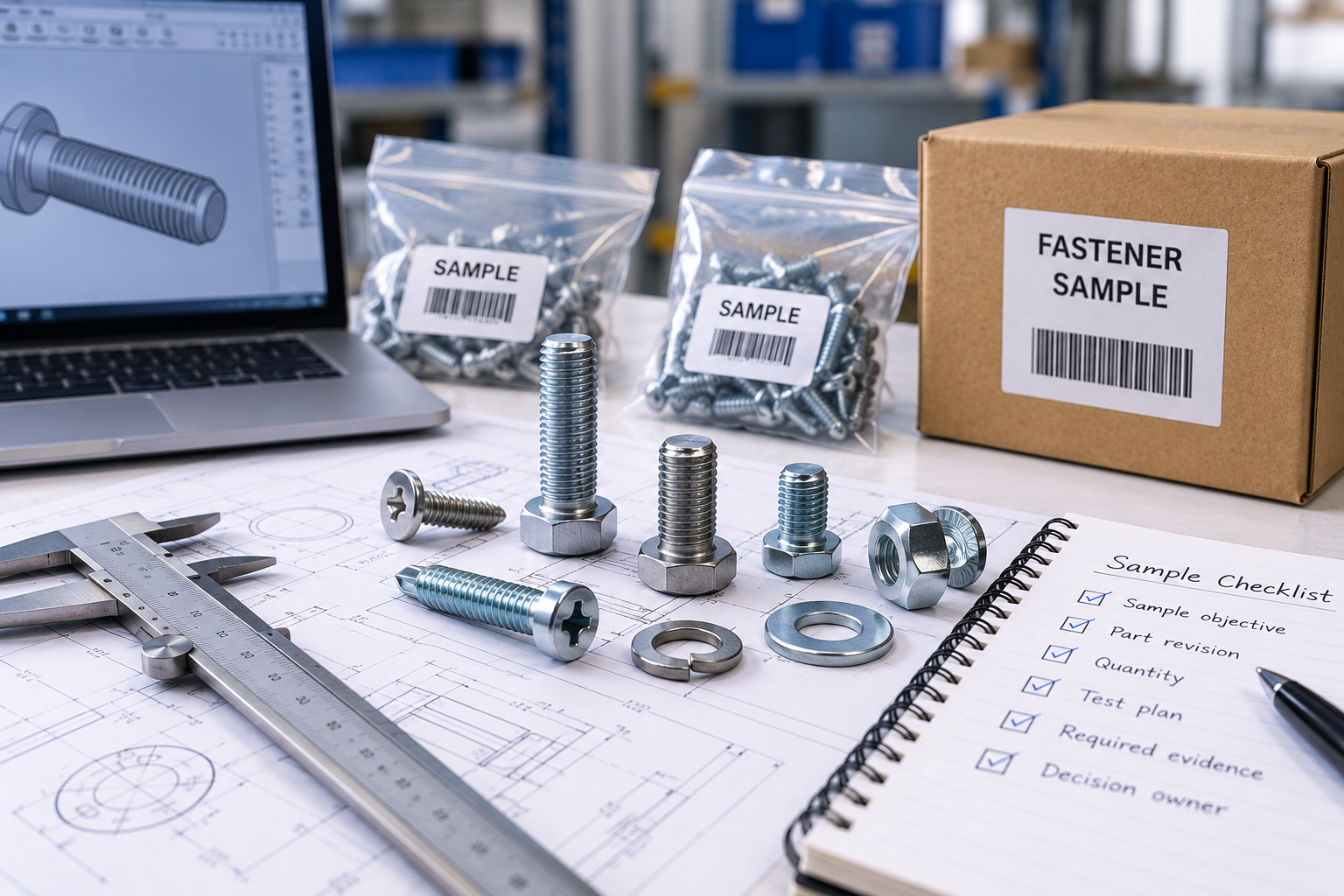
The most useful fastener sample orders begin with a written question. Does the screw engage the real mating part? Does the bolt seat under the available tool? Can the washer pass through the assembly process? Does the proposed package work with the warehouse barcode system? A sample without a defined purpose often produces a vague answer: it looks acceptable. A fastener sample order supplier should help separate three different needs. A catalogue sample checks a standard item. A modified or custom prototype checks a drawing concept. A production-intent sample checks the proposed manufacturing and control route. Treating these as the same can lead to a polished prototype being approved even though the bulk product will use different tooling, material or finishing. Before asking for a dispatch date, write the sample objective, part revision, quantity, required evidence, test plan and decision owner. That short step saves more time than rushing an undefined package through courier service.
Send JingleFix your fastener sample list and approval objectives
Decide which kind of sample you need
Standard catalogue sample
This sample is useful when the buyer is considering an existing bolt, nut, screw, washer, clamp or anchor specification. Confirm that the sample comes from the same defined product family, material, finish and size as the intended purchase. A nearby size can help an early concept review, but it should not be labelled as final approval.
Custom prototype
A prototype can check geometry, access or assembly before production tooling. It may be machined, hand-finished or made by another temporary process. Record those differences. A machined prototype does not automatically prove that a cold-formed, forged or stamped production part will match every characteristic.
Production-intent sample
This sample uses the proposed drawing, material, tooling, process route and finish as closely as practical. It is the best candidate for formal first-article or pilot approval, but the buyer should still confirm which features or records will be repeated on each production lot.
Packaging sample
For distributors and private-label buyers, the fastener may already be approved while the pack remains open. A packaging sample checks inner quantity, bag or box strength, label content, barcode, carton layout and traceability. Keep packaging approval linked to the technical part revision.
Freeze the revision before the sample is made
Sample programmes fail when drawings continue to move through email without a controlled baseline. Put the buyer part number, drawing number, revision and issue date on the request. If a 3D model and 2D drawing are both supplied, state which controls dimensions and which is reference only. Resolve differences before manufacturing. Use a deviation list for anything the sample supplier cannot meet exactly. A temporary material, nonproduction finish or alternate tolerance may be acceptable for one learning objective, but it must be visible. Mark the sample and report so it cannot be mistaken for an approved production part later. When the buyer changes a dimension after quotation, issue a new revision and ask the supplier to acknowledge it. Do not rely on a highlighted screenshot as the only change record.
Send the mating assembly and use case
Fasteners work inside assemblies. A thread may pass a gauge and still interfere with the customer's nut, insert or coated hole. A screw may meet its drawing and still split the actual board. A clamp may fit a mandrel and fail to seat on the real hose and fitting. Provide mating-part drawings or representative components where possible. Describe the installation tool, direction of access, target depth, speed, lubrication and any tightening method. Identify critical interfaces, such as under-head seating, washer bearing, pin fit, recess engagement or clamp position. For confidential assemblies, provide the minimum controlled information needed for the test and agree how returned or destructive components will be handled. A supplier cannot evaluate an interface that has been hidden completely.
Match documents to the sample stage
Not every early sample needs a complete production data book. Conversely, a formal approval sample should not arrive with only a packing slip. Define the evidence in proportion to the decision.
| Sample stage | Typical question | Useful records |
|---|---|---|
| Catalogue review | Is the standard item and size suitable for a trial? | Product designation, material or grade, finish and lot identity. |
| Concept prototype | Does the geometry assemble and function? | Prototype drawing, temporary process disclosure and dimensional check. |
| Production-intent | Can the proposed process make the controlled part? | Ballooned drawing, dimensional report, material and process records as agreed. |
| Functional trial | Does the fastener work in the real assembly? | Test setup, mating parts, installation conditions, observations and results. |
| Packaging approval | Can the part be received, stored and sold correctly? | Pack count, label artwork, barcode check, carton and pallet information. |
If a material certificate, coating record, hardness result or mechanical test is needed, identify the exact document and its relationship to the sample. A generic certificate from another lot does not prove the submitted pieces.
Write the evaluation plan before the parcel arrives
Assign the sample to named reviewers in engineering, quality, production, purchasing and packaging as applicable. Define the checks and who signs the decision. Without ownership, samples can sit on a desk until the commercial deadline forces an unstructured approval. A practical evaluation may include:
- identity, quantity, labels and damage on receipt;
- drawing and revision confirmation;
- critical dimensions, thread fit and visual workmanship;
- material, finish or document review within the agreed scope;
- assembly using production-representative mating parts and tools;
- functional testing under defined conditions;
- packaging and barcode checks;
- a written decision: approved, approved with conditions, revise and resubmit, or rejected.
Keep measured results separate from comments. "Feels tight" may be useful as an observation, but it needs a defined follow-up if the interface matters. Photograph unusual findings and identify the sample number in each record.
Do not confuse a good sample with a qualified process
One acceptable fastener proves only what the agreed evaluation actually checked. It does not prove long-term capability, every cavity, every raw-material heat or every future coating batch. Production approval needs a clear control plan for repeat orders. Ask what will change between sample and bulk production. Will the forming machine, tooling, heat treatment, coating source, sorting method or packaging line be different? Which characteristics will be checked on the first lot? What event requires buyer notification or reapproval? If the sample was selected from existing stock, confirm that the quoted production route can supply the same specification. If the sample was hand-picked or specially polished, the acceptance criteria should not depend on treatment that is absent from mass production.
Commercial points belong in the sample quotation
Sample cost is not only the price of a few pieces. Custom work may include drawing review, tooling, programming, material minimums, finishing, inspection, reports and courier charges. Ask the supplier to separate one-time and recurring items. Also ask whether any sample or tooling charge is credited later, but do not assume it will be. Lead time depends on the actual scope. A stock sample and a production-intent custom part are not comparable. The quotation should state the starting condition: for example, after drawing approval, material confirmation, tooling release or payment. Avoid promising a delivery date before these gates are closed. For cross-border shipments, clarify courier account, customs description, declared value, import charges and whether samples will be returned after destructive testing. Small parcels can still be delayed by incomplete paperwork.
Move from sample approval to the first order
After approval, issue a controlled record that identifies the sample, drawing, revision, material, finish, process exceptions and results. Attach clear photographs or a retained master sample when useful. Send the supplier the final signed status rather than assuming silence means approval. The first production purchase order should repeat the approved specification and list any additional controls. Do not replace the specification with "same as sample." Physical samples can age, be misplaced or become separated from their documents. The drawing and order requirements must remain the primary baseline. Consider a limited pilot lot when the application, tooling or supply chain carries meaningful risk. Define its acceptance and release separately from routine production. The pilot quantity should be chosen for the real programme, not copied from another project.
Sample RFQ checklist
- buyer and supplier part numbers;
- drawing, model, standard and revision;
- sample type and written objective;
- size, material, grade, finish and special process;
- mating parts and installation conditions;
- quantity for each reviewer or test;
- dimensions, documents and functional tests required;
- production-intent differences and allowed temporary deviations;
- label, packing and barcode needs;
- sample, tooling, inspection and freight charges;
- decision date and production programme assumptions.
Questions buyers ask about sample orders
Can I request free fastener samples?
Availability and charges depend on whether the item is in stock, customised, tested or specially packed. Confirm the sample, inspection, tooling and freight cost in the quotation rather than assuming a universal policy.
How many samples should I order?
Order enough for the defined evaluations, destructive tests, internal reviewers and retained references. The right number depends on the part and plan; it should not be chosen from a generic rule.
Can a machined prototype approve a cold-formed production bolt?
It may approve selected geometry or assembly features, but it does not automatically qualify the production process or its mechanical results. Record the temporary process and plan production-intent approval.
Should samples include certificates?
Only the documents needed for the decision should be requested, but they must be linked to the submitted pieces. Define the certificate and test scope before the samples are made.
What happens if one sample fails?
Record the failure against the requirement, contain the remaining samples, investigate the cause and decide whether to correct, resample or revise the design. Do not average away a meaningful nonconformance.
Can JingleFix arrange custom fastener samples?
Suitable drawing-based and sample-based projects can be reviewed. Feasibility, process route, tooling, quantity, documents, cost and timing are confirmed for the exact request.
Use the sample as a bridge, not a souvenir
A disciplined sample order creates a traceable link from an RFQ question to an approval decision and then to production controls. It gives the buyer evidence, gives the supplier a stable target and exposes open issues while they are still inexpensive to correct.
Contact JingleFix with your drawing, sample objective and planned production quantity