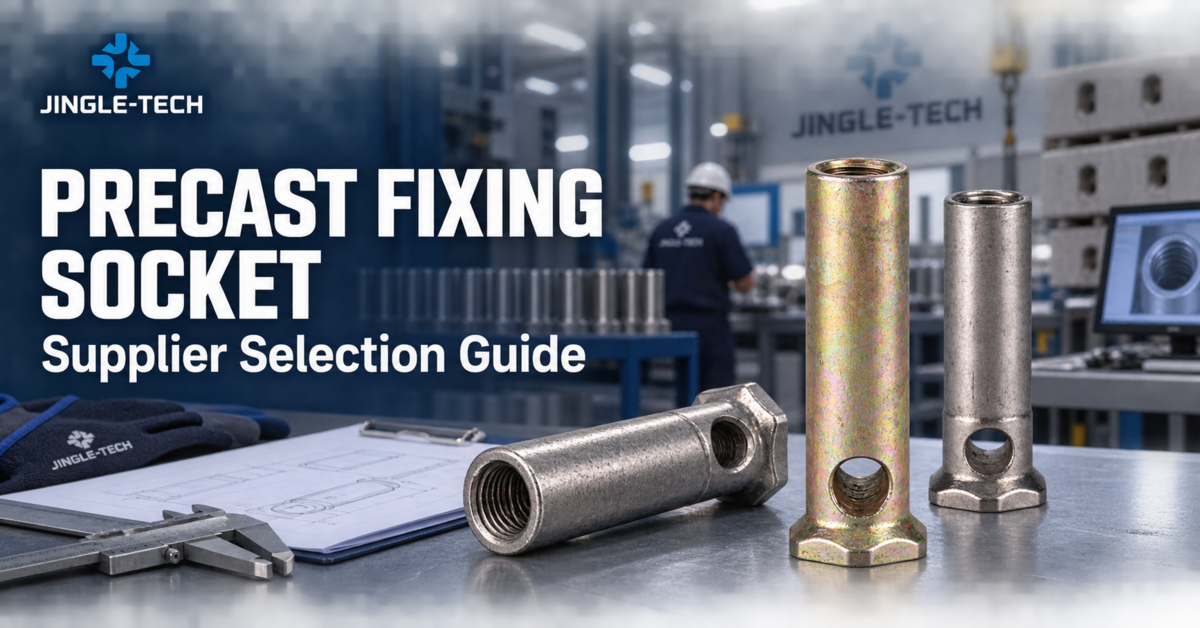
Why a Threaded Fixing Socket matters in precast and fixture work
A Threaded Fixing Socket looks simple enough on the drawing, but in practice it is one of those small components that can decide whether a precast panel, machine base, or facade element goes in cleanly or turns into a site problem. Engineers and sourcing teams usually notice sockets only when something goes wrong: a mismatch in thread size, poor alignment in the casting, corrosion after installation, or an anchor point that cannot take the intended load path. That is exactly why it pays to treat the socket as a design item, not a commodity afterthought.
For buyers working with precast concrete, embedded hardware, or removable fixing points, the decision is not just “which socket fits the bolt.” It is also about how the socket integrates with reinforcement, how it behaves during casting, and whether it can be supplied consistently across a project run. A reliable Precast Concrete Socket can reduce rework, speed up installation, and help keep lifting or fastening operations predictable on site.
What the socket is doing inside the structure
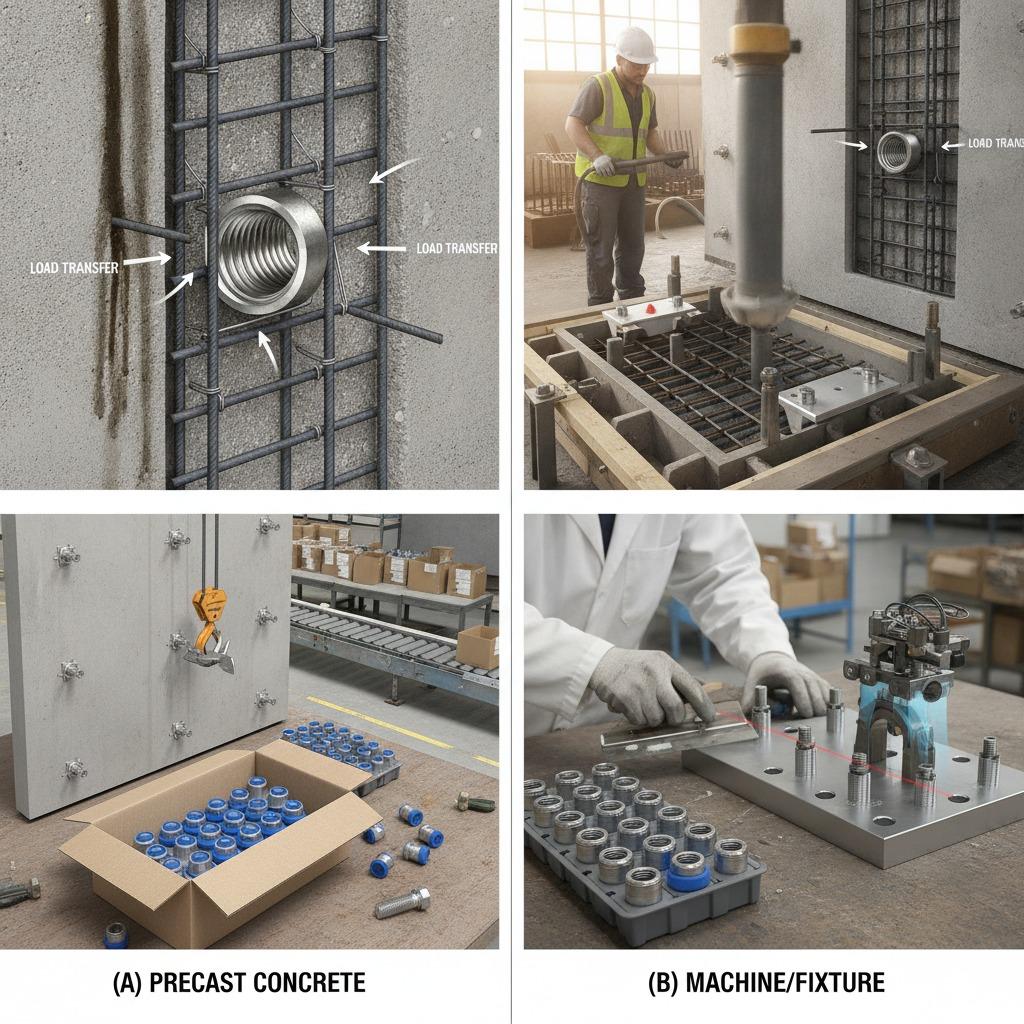
In plain terms, a threaded socket creates a reusable internal thread inside a concrete element or fabricated assembly. Once embedded, it provides a metal fixing point for bolts, tie rods, brackets, or temporary construction hardware. That function sounds straightforward, but the surrounding detail matters. The socket has to stay in position during pour or vibration, the thread has to remain usable after curing, and the load transfer has to match the design intent of the element.
On precast jobs, sockets are often selected to support connection points, lifting accessories, or temporary erection hardware. On equipment and structural applications, they may serve as concealed fixing points for covers, supports, or service access panels. The best choice depends on what the socket must do on day one and what it must tolerate years later.
Key selection points buyers should check
Thread size and compatibility
Start with the obvious: the internal thread must match the fastener or accessory to be used. That sounds basic, yet thread mismatch is still a common procurement headache when different contractors, regions, or drawing revisions are involved. If the fixing is part of a system, confirm the mating hardware early and keep the specification consistent.
Embedded environment
A socket used in concrete faces a different environment than one used in a fabricated steel assembly. Moisture exposure, chloride risk, vibration, and cleaning chemicals all influence material choice and surface finish. For exterior precast, buyers should be cautious about assuming that any steel socket will perform equally well. The environment often dictates more than the nominal load rating.
Installation method
Some sockets are positioned by formwork, others by simple jigs or reinforcement ties. The easier the installation method, the lower the risk of misalignment. That matters on production lines, where small setup errors multiply across hundreds of units. A socket that is difficult to hold straight is not a minor annoyance; it can become a repeat defect.
How socket quality affects the rest of the project
Buyers sometimes focus only on the price per piece, but socket quality influences downstream work in a very practical way. If the thread is damaged during casting or cleaning, installers may force the bolt and compromise the connection. If the socket sits proud of the surface when it should not, finish work becomes harder. If the embedding detail is inconsistent, the assembly team loses time checking every casting instead of trusting the part.
That is one reason sourcing teams should treat a Socket Insert Supplier as more than a catalog source. Consistency of geometry, repeatable threading, and sensible packaging all matter, especially when sockets are shipped in bulk to a precast yard or distributed across multiple subcontractors.
Common mistakes that create avoidable cost
One frequent error is specifying the socket without enough context around load direction and installation depth. Another is assuming the same part can be used across different concrete strengths, panel thicknesses, or exposure conditions without review. A third mistake is waiting until late-stage procurement to confirm the thread standard. At that point, changes ripple through drawings, inserts, and site hardware.
There is also a habit of underestimating handling damage. Threads are vulnerable. If sockets are not protected in transport or storage, dirt and impact can make a perfectly good part behave like scrap. It is a small thing, until the crew is standing on a slab trying to find the right bolt.
Practical buyer advice for sourcing
For sourcing managers, the best approach is to align the socket specification with the actual use case, then verify that the supplier can hold that detail consistently across the batch size you need. Ask how the socket is intended to be installed, how the thread is protected before use, and whether the supplier can support repeat orders without changing the geometry unexpectedly. If the project is repetitive, even a minor part variation can complicate production control.
Engineering teams should also keep drawings clear on orientation, embed depth, and any site-facing constraints. A well-defined socket detail saves everyone time, including the supplier. Ambiguity is expensive in embedded hardware because you usually discover it after concrete has already been poured.
A quick decision guide
If the socket is for precast concrete, focus first on embedment, positioning, and corrosion exposure. If it is for a machine or fixture point, focus on thread compatibility and service access. If the project involves repeated installation across a production run, prioritize consistency and handling protection. In many cases, the right choice is less about finding the “strongest” socket and more about choosing the one that fits the manufacturing process cleanly.
Next step for project teams
Before placing a purchase order, review the socket detail against the drawing set, installation method, and environment. That small review can prevent the usual mix of rework, field improvisation, and delayed installation. If your project depends on a dependable Threaded Fixing Socket, it is worth treating the supplier conversation as a technical review rather than a price check alone.