Quick answer for buyers

Do not buy lifting inserts from a catalogue photo alone. A useful quotation starts with the precast element, the lifting method and the matching lifting hardware. The supplier needs to know the concrete element type, insert style, concrete strength at lifting, lifting direction, thread type, edge distance, reinforcement condition, casting face, finishing needs and inspection documents.
For JINGLE Precast Accessories, do not smooth over missing job data. If the buyer is still checking the element weight, lift angle, insert spacing or concrete strength at first lift, write that line into the RFQ as [NEEDS JINGLE CONFIRMATION]. A blank line is easier to fix than a quiet guess.
Why lifting inserts should be bought as a system
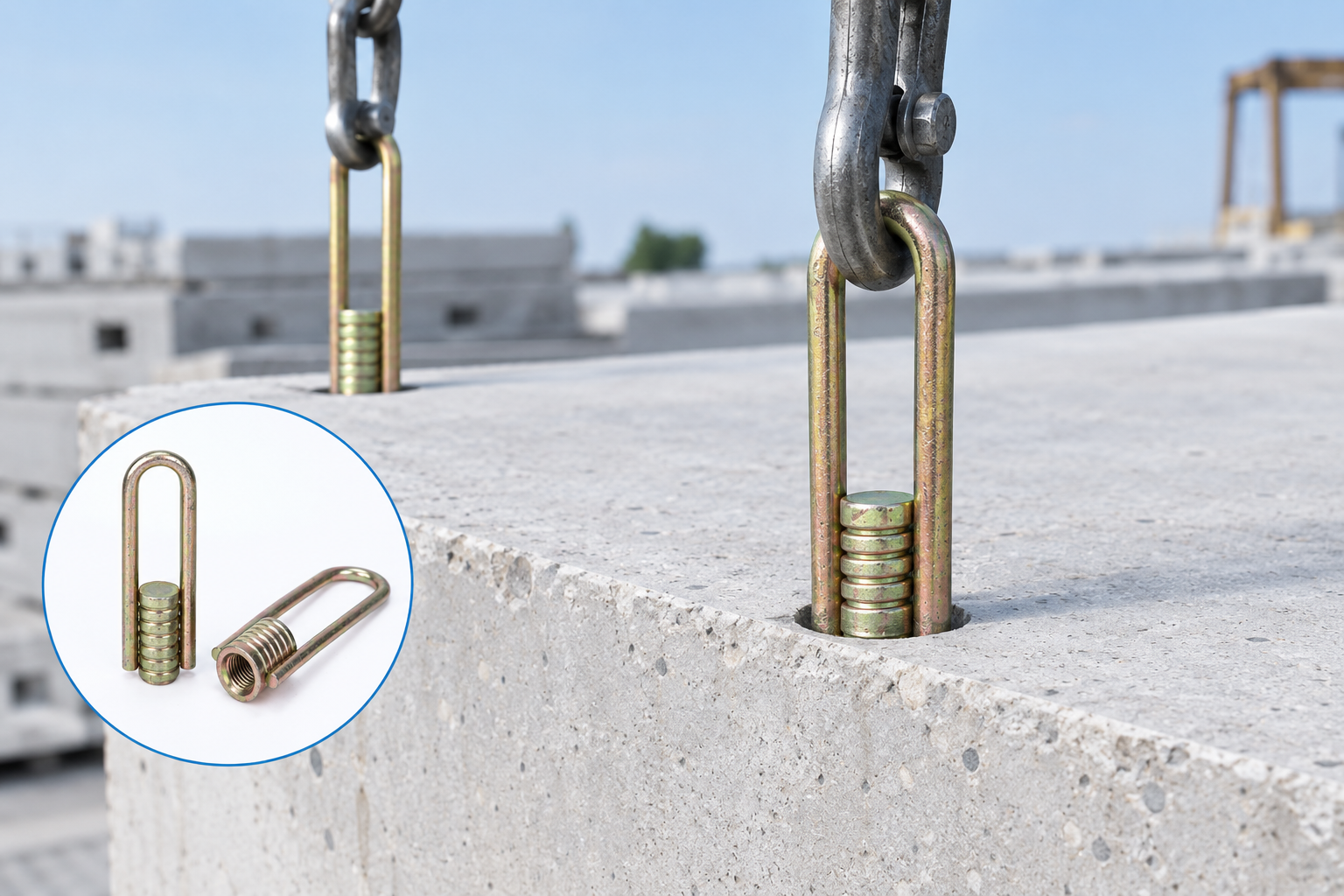
A lifting insert is small, but it works inside a load path. The insert is embedded in concrete, connected to a lifting loop, bolt, clutch or other hardware, and then used during stripping, yard movement, transport or erection. If one part of that path is mismatched, the whole lift becomes uncertain.
That is why a serious precast concrete lifting insert supplier will ask more questions than a normal hardware seller. The supplier should want to know what the insert connects to, where it sits in the element, and how the element will move before it reaches the site.
The safest buying habit is simple: choose the insert and the lifting hardware together. Avoid mixing an insert from one system with lifting gear from another system unless the project engineer has approved the match.
Define the lifting situation first
Before comparing prices, write down the lifting stage. The same element may be lifted more than once, and each lift may have a different risk.
Typical stages include:
- stripping from the mould;
- turning or tilting inside the plant;
- yard handling;
- truck loading;
- site unloading;
- final erection;
- temporary repositioning before fixing.
Each stage can change the load direction, sling angle, dynamic effect and concrete strength. A lifting insert that works for a straight vertical yard lift may not be suitable for an angled edge lift or a turning operation.
Information to send before asking for price
A supplier can give a cleaner offer when the RFQ is specific. Send the following details:
- precast element type;
- estimated element weight;
- number of lifting points;
- lift direction and sling angle;
- concrete strength at lifting;
- element thickness;
- edge distance and spacing between inserts;
- reinforcement around the insert;
- insert style required by the project;
- thread type if threaded hardware is used;
- surface finish after removal of the lifting accessory;
- required drawings, test data or quality documents;
- packing and label requirements.
If the element is thin, narrow, heavily reinforced or exposed-aggregate finished, say so early. These details often decide whether the insert is easy to place and whether the recess or fixing point can be patched neatly.
Embedment is not a small detail
The insert does not work only because the metal part is strong. It also needs the surrounding concrete and embedment to transfer load. If embedment is too short, edge distance too small or concrete strength too low at first lift, the supplier’s catalogue value may not apply to the real job.
Ask the precast lifting insert manufacturer:
| Question | Why it matters |
|---|---|
| What concrete strength is assumed? | First lift may happen before full design strength |
| What embedment is required? | Short embedment can reduce capacity |
| What edge distance is needed? | Edge breakout risk may control the lift |
| What lifting direction is covered? | Straight, angled and edge lifts are different |
| What matching lifting hardware is required? | Insert and hardware must fit as a system |
| What restrictions apply? | Prevents using the insert outside its data range |
Do not ask the supplier to “confirm capacity” without giving the job conditions. Capacity without conditions is not useful purchasing information.
Thread type and matching hardware
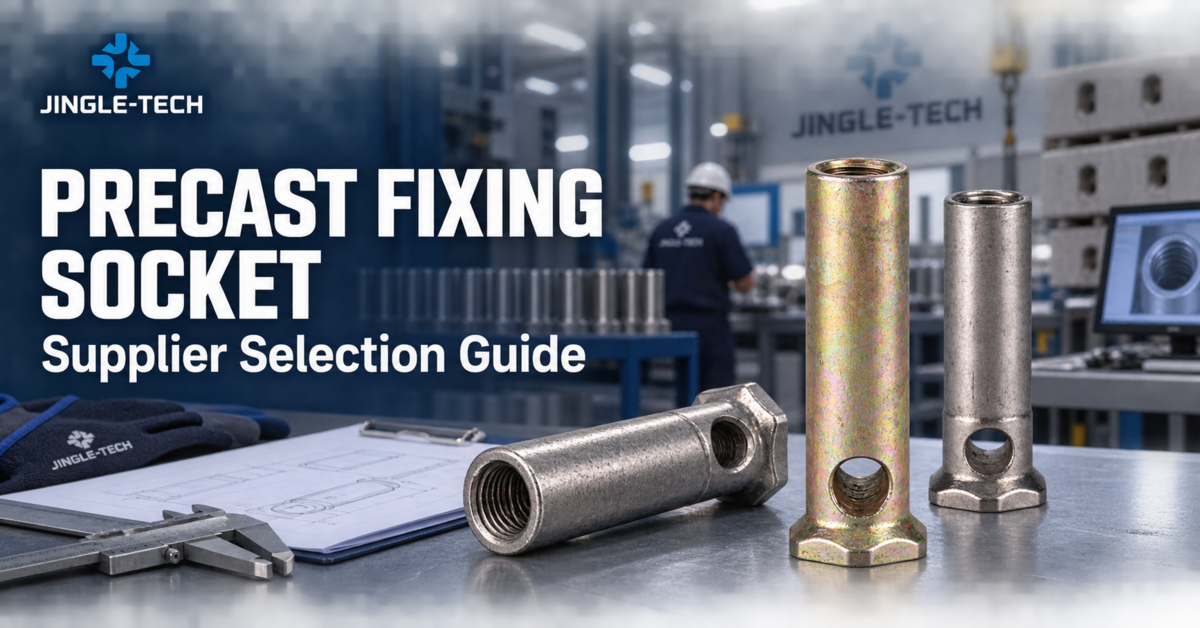
Many lifting inserts use a threaded connection. The problem is that thread names can be written casually in emails, and buyers may assume two threads are the same when they are not.
For a threaded lifting insert supplier, confirm:
- metric or round thread;
- thread size;
- thread depth;
- compatible lifting loop, eye bolt or swivel lifting device;
- cleaning plug or protection cap;
- whether thread protection is needed during casting;
- how the thread should be checked before shipment.
If the project already owns lifting hardware, send photos, markings and the exact thread information. Do not rely on appearance. A thread that feels close in a quick check can still be wrong under load.
Marking, traceability and inspection
For lifting accessories, identification matters. A box of unmarked inserts creates problems in the plant because workers cannot easily confirm length, thread type or batch.
Ask for clear marking or label control:
- product name;
- size or thread;
- insert length;
- batch or production reference;
- quantity per bag or carton;
- supplier name or code;
- project code if required;
- inspection record or certificate package if specified.
The marking method depends on the insert type. Some items may have direct marking, while others rely on bag and carton labels. The important point is that the plant can separate similar parts before casting.
Sample approval before bulk order
Samples are cheap compared with a wrong lifting insert in concrete. For a new supplier, new thread type or new element design, ask for samples before mass production.
Check samples against the real production setup:
- Fit the insert with the matching lifting hardware.
- Check the thread by hand and with the intended accessory.
- Place the insert in the mould or a mock-up zone.
- Check clash with reinforcement.
- Confirm cover and edge distance on the drawing.
- Check whether workers can fix it firmly during casting.
- Review the recess or surface repair after hardware removal.
- Confirm packing and label style.
If the sample needs a special former, plug, bolt or cap, include that accessory in the sample request. Many ordering mistakes happen because the insert arrives but the small companion parts are missing.
Production issues buyers often miss
The right insert on paper can still slow down the precast line. Ask the plant team about the practical side before ordering:
- Is the insert easy to hold in the mould?
- Can concrete flow around it?
- Will vibration move it?
- Can the thread be protected from concrete slurry?
- Can workers remove the former without chipping the edge?
- Is the insert visible enough for final checking?
- Does the packing match the casting sequence?
For export buyers, packing also needs attention. Mixed sizes in one carton, weak labels, missing caps or oil-contaminated parts can cause avoidable disputes when the shipment reaches the plant.
RFQ checklist
Send this checklist to the precast concrete lifting insert supplier:
- product name: lifting insert / threaded lifting insert / coil insert / lifting socket;
- element type and drawing;
- element weight;
- lifting point quantity;
- lifting direction and sling angle;
- concrete strength at lifting;
- element thickness;
- edge distance;
- reinforcement around insert;
- thread type and matching lifting hardware;
- required accessory parts;
- sample quantity;
- inspection and document needs;
- packing and label rule;
- delivery destination;
- unknown values marked as
[NEEDS JINGLE CONFIRMATION].
This format keeps the offer practical. It also makes it easier to compare two suppliers, because both are quoting against the same lifting situation.
Supplier comparison table
| Supplier answer | Buyer risk | Better response |
|---|---|---|
| “Standard insert” | Real lifting condition ignored | Ask for applicable element and lift conditions |
| “Any lifting loop fits” | Hardware mismatch | Ask for matching hardware and thread details |
| “Capacity is enough” | No conditions stated | Ask for concrete strength, direction and embedment basis |
| “No sample needed” | Fit problems hidden | Request sample and accessory check |
| “Packed in bulk” | Wrong size used in mould | Require separated labels by size and batch |
| “Certificate available” | Document may not match item | Ask which document and batch it covers |
The better supplier explains the working conditions, not only the product name.
Where JINGLE can help
JINGLE can help buyers organize RFQs for precast lifting inserts and related precast lifting accessories. Send the element drawing, lifting method, thread requirement, matching hardware, packing rule and document request.
If a detail is not confirmed yet, JINGLE can keep it visible as [NEEDS JINGLE CONFIRMATION] so the quote does not hide a missing engineering or purchasing decision.
FAQ
What is a precast concrete lifting insert?
It is an embedded lifting component used to connect a precast concrete element to lifting hardware during handling, transport or erection. The insert must match the element, concrete condition and lifting system.
Can I choose a lifting insert only by element weight?
No. Element weight is only one item. The buyer also needs lifting direction, number of lifting points, concrete strength at lifting, embedment, edge distance and matching hardware.
Are threaded lifting inserts interchangeable?
Not automatically. Thread form, size, depth, accessory fit and supplier data must match. A substitution should be reviewed before use.
Should I ask for samples?
Yes, especially for a new supplier, new thread type, new insert style or tight reinforcement layout. A sample check can catch fit and installation problems before bulk order.
What documents should a buyer request?
Ask for product drawing, material description, installation guidance, applicable use conditions, inspection record, packing list and label example. Project-specific design values should be reviewed by the project engineer.