Why structural connection hardware deserves more attention than it usually gets
Structural connection hardware is one of those topics that only becomes exciting after something goes wrong. In a building, machine frame, bridge component, solar rack, or industrial assembly, the connection point is where load paths are actually transferred. The surrounding members may be strong, but if the fastener, bracket, anchor, or connector is poorly chosen, the whole system inherits that weakness. For engineers and sourcing teams, the real decision is not just which part fits the drawing; it is which connection will hold up under load, vibration, corrosion, installation variability, and long-term inspection demands.
That is why this subject matters to buyers. Structural connection hardware affects safety, assembly speed, maintenance access, and the confidence a design team can have when the product leaves the plant or the jobsite. The right choice can reduce field rework. The wrong one can create hidden costs for years.
What counts as structural connection hardware
In practical terms, structural connection hardware includes the components used to join load-bearing elements. That can mean bolts, nuts, washers, anchors, threaded rod, brackets, clamps, plate connectors, anchor plates, and related fastening systems. In some sectors, it also includes custom fabricated connectors designed for a specific frame, enclosure, or support structure.
The category is broad, but the requirement is consistent: the hardware must carry or transfer load without introducing unacceptable movement, slip, fatigue damage, or corrosion risk. For that reason, buyers should avoid treating these parts as generic commodities. A fastener that is fine for light assembly may be a poor fit for structural service.
Key factors that drive selection
Load path and joint behavior
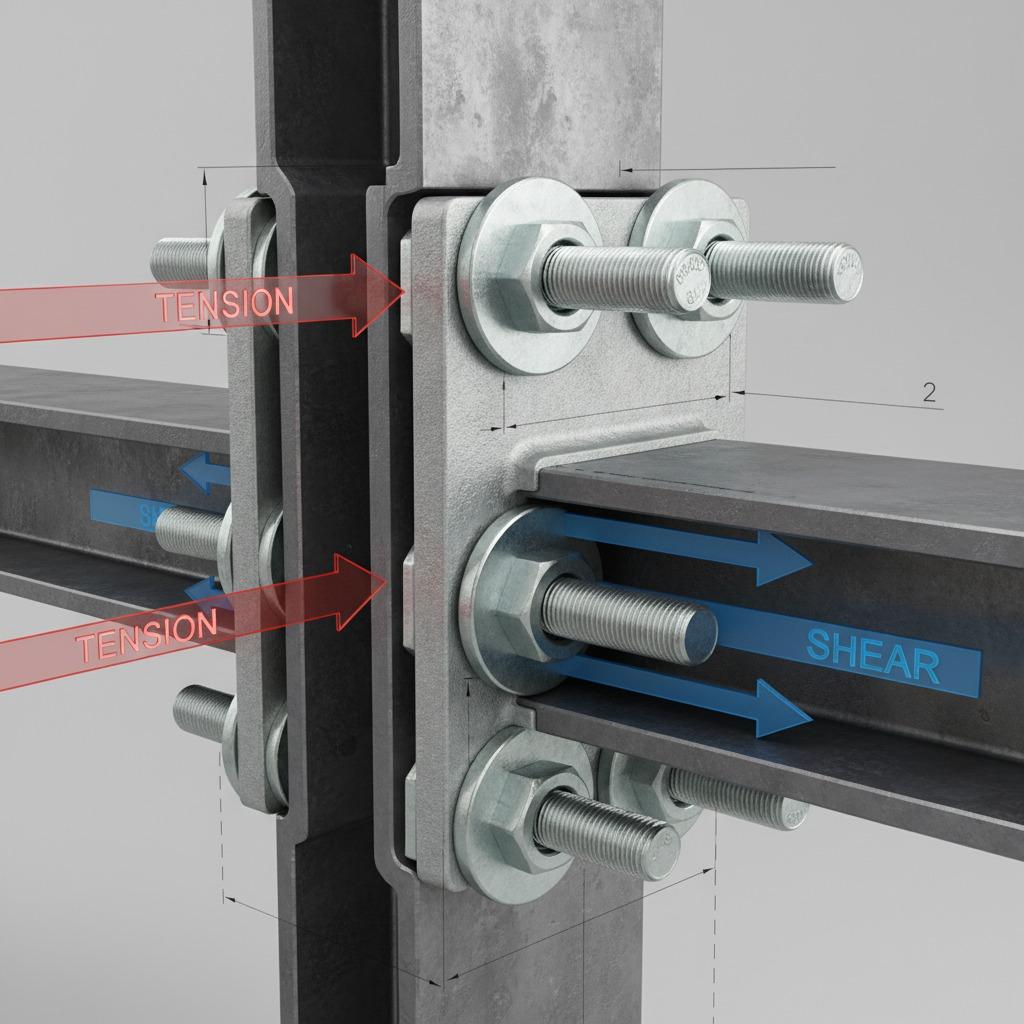
Start with the load, not the catalog. The joint may see tension, shear, bending, or a combination of all three. Some connections are meant to be rigid; others need controlled movement or slip tolerance. If the application involves dynamic loading, repeated vibration, or thermal cycling, that changes the specification in a meaningful way.
Material compatibility
Material choice affects strength, corrosion resistance, and galvanic behavior. Steel remains common for structural connection hardware because it is strong, familiar, and economical. Stainless steel may be preferred where moisture or chemicals are a concern, though it is not a universal upgrade. Aluminum, coated carbon steel, and specialty alloys each bring tradeoffs. The useful question is not which material is best in the abstract, but which one matches the service environment and adjacent components.
Coatings and surface protection
Coatings matter more than many procurement teams expect. A connector can meet the basic size and strength requirement and still fail early if the finish does not suit the environment. Outdoor, marine-adjacent, and washdown applications demand more care than dry indoor assemblies. Buyers should also consider whether coatings affect thread engagement, torque values, or inspection visibility. That small detail can become a field problem if no one planned for it.
Installation and access
Hardware selection should reflect how the part will actually be installed. If access is limited, an elegant design on paper may become a labor-heavy one in practice. Engineers should think through tool clearance, tightening sequence, and whether the installation team can verify proper seating. A connection that is difficult to install consistently is a connection that is difficult to trust.
Common mistakes buyers and engineers still make
One common mistake is over-specifying strength and under-specifying the environment. Another is assuming all “heavy-duty” hardware performs similarly. It does not. Dimensional consistency, thread quality, coating performance, and documentation all affect usable quality. A third mistake is forgetting the surrounding structure. The strongest connector in the world will not help if the mating material is too thin, too soft, or improperly prepared.
There is also a procurement trap: comparing hardware only on unit price. Structural connection hardware often looks inexpensive on paper, but the real cost appears during installation, inspection, or replacement. If a slightly more engineered part reduces assembly time or rework, that is not a premium; it is a cost control measure.
A practical buyer checklist
Before placing an order, ask whether the supplier can support the required material, geometry, surface finish, and packaging. Confirm how the parts will be identified and whether traceability is important for your project. Review drawings carefully for thread direction, hole pattern, head style, and any special installation constraints. If the design is custom, confirm how revisions will be controlled so the production team does not mix versions.
For engineers, it helps to treat the connection as a system rather than a single item. The base material, mating hardware, protective coating, and installation method all influence performance together. For sourcing managers, the key is consistency: the same part should behave the same way from lot to lot.
When custom hardware makes sense
Standard parts cover many applications, but custom structural connection hardware is worth considering when geometry is unusual, load conditions are specific, or installation speed matters. Custom parts can also simplify a complex assembly by reducing the number of separate pieces. That said, custom does not automatically mean better. It should solve a real assembly or performance problem, not create a new sourcing burden.
What decision this article should help you make
If you are choosing structural connection hardware, the main decision is whether the part is simply “compatible” or genuinely appropriate for service. Compatible parts can fit. Appropriate parts can survive the application with fewer surprises. That distinction is worth a careful review before the first production run, not after the first maintenance call.
If you are evaluating suppliers or preparing a specification, start with the load case, environment, and installation method. Then narrow the field to the few hardware options that support those realities. That approach is slower than buying by habit, but it usually saves time later. And in structural work, later is where the expensive problems show up.