Mounting Bolts That Don’t Fail: How to Choose the Right Fastener for Critical Installs
In every heavy installation—whether you're mounting a motor to a steel frame, securing a bracket to concrete, or fixing a TV wall mount—mounting bolts are the unsung heroes. Their job isn’t just to hold; it’s to hold under weight, vibration, and time.
But not all mounting bolts are created equal. Understanding the types, applications, and supply considerations helps reduce costly rework and safety risks.
Where Mounting Bolts Matter Most
Mounting bolts are designed to secure components to surfaces or supporting structures, often under load, vibration, or environmental stress. Common applications include:
-
Wall-mounted devices: TVs, AC units, control panels, routers
-
Engine and motor mounts: automotive engines, industrial machinery
-
Equipment installation: compressors, generators, HVAC units
-
Structural frame assembly: metal brackets, ceiling mounts, support rails
-
Electronics and panel installation: enclosures, racks, fixtures
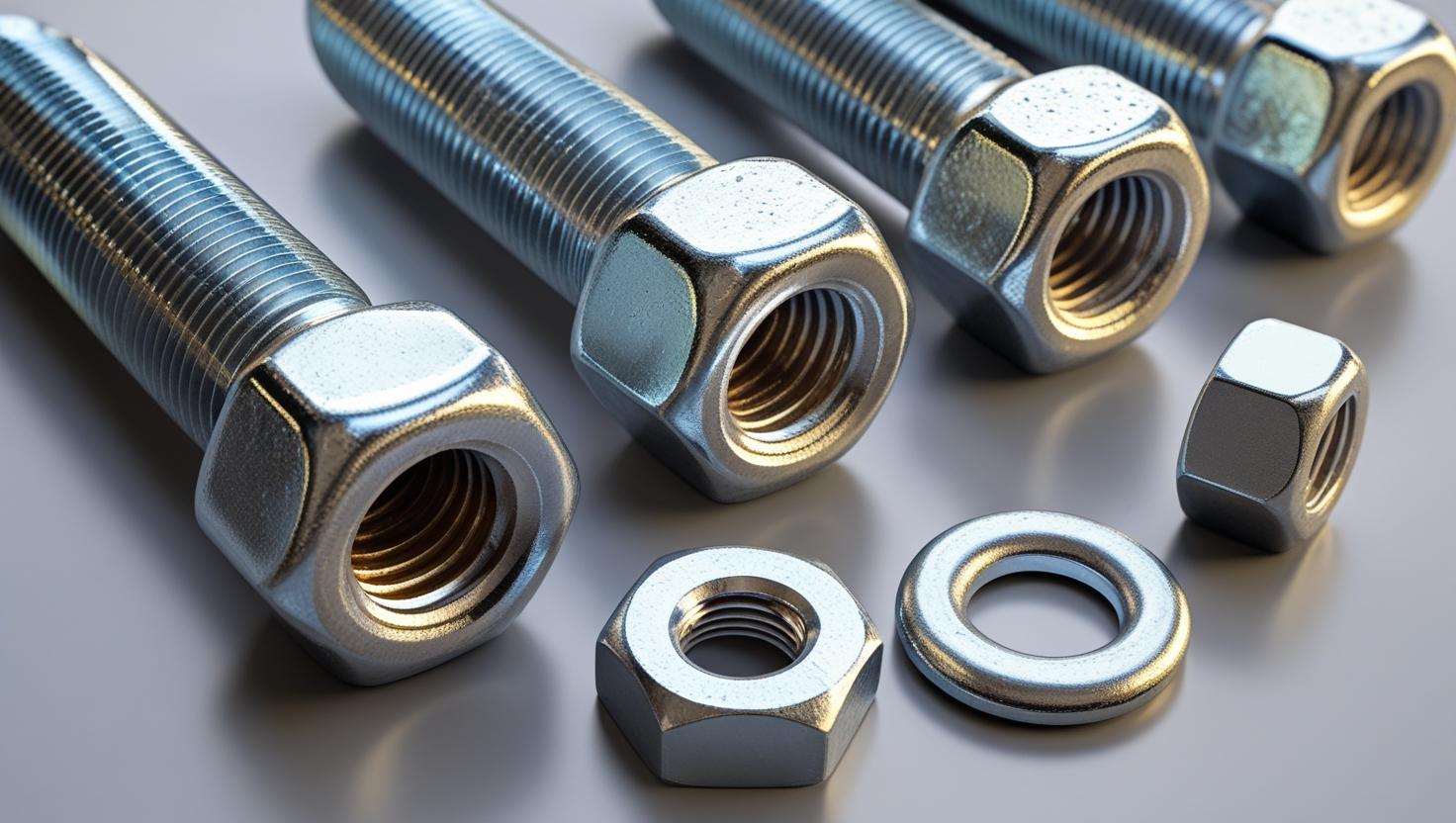
These fasteners are typically paired with washers and nuts, and may pass through drilled holes, anchors, or embedded channels—depending on the surface.
Common Mounting Bolt Types & Their Functions
| Type | Application | Key Feature |
|---|---|---|
| Hex head bolts | General equipment and metal mounting | Easy to tighten with power tools |
| Carriage bolts | Wood or decorative surface mounts | Smooth dome head, anti-tamper |
| Anchor bolts | Concrete & masonry | Expansion grip or chemical set |
| Flange bolts | Automotive & engine mounts | Wider bearing surface, no washer needed |
| Shoulder bolts | Moving joints or fixed pivots | Precision alignment under load |
Each type has specific dimensional tolerances, drive features, and thread profiles that must match its environment.
Typical Failures and How to Avoid Them
1. Bolt loosening due to vibration
Risk: Equipment becomes unstable, especially motors or rotating components
Solution: Use mounting bolts with lock washers, thread locker, or nylon-insert lock nuts
2. Rust or corrosion at anchor point
Risk: Structural failure in wall-mounted or outdoor equipment
Solution: Choose hot-dip galvanized, zinc-plated, or stainless steel bolts rated for exterior or corrosive environments
3. Thread stripping or over-torqueing during install
Risk: Reduced load capacity, safety hazard
Solution: Match the bolt material grade to the tool torque settings. Use grade 8.8 or 10.9 steel for industrial jobs
Why Installation Kits Improve Project Success
Many contractors, installers, and product manufacturers now prefer pre-packed mounting bolt kits, especially when:
-
Devices ship with mounting hardware
-
Installation speed and consistency matter
-
Multiple bolt sizes are used across components
-
Compliance requires part traceability and batch documents
A good mounting bolt kit includes:
-
Correct bolt length & diameter
-
Matching washers and nuts
-
Finish options for environment
-
Clear size labels
-
Optionally: installation guides, torque specs, or alignment tools
Trusted Supply Makes the Difference
Unreliable fastener supply results in:
-
Field delays
-
Increased return rates
-
Product liability concerns
-
Incomplete installation packages
At Jingle, we provide mounting bolts in standard and custom specifications with:
-
OEM kit services: size-mixed sets, polybagging, barcoding
-
Global compliance documents: CO, CI, PL, RoHS
-
Low MOQ for testing, large batch flexibility for rollout
-
Export cartons with custom label design
-
Material grades: carbon steel, stainless steel, hot-dip galvanized, black oxide
When It Has to Hold—Trust the Mounting Bolt That’s Built for It
Whether you’re installing a bracket in a commercial space, supplying kits for industrial engines, or hanging shelves in your home—the mounting bolt you choose matters. Get it wrong, and you risk rework or safety hazards. Get it right, and it disappears into a job well done.
🛠️ Browse our fastener catalog
📩 Request a custom mounting bolt kit or quote