Metal Fasteners Supplier: Delivering Strength and Reliability Across Industries
The Importance of Metal Fasteners in Modern Engineering
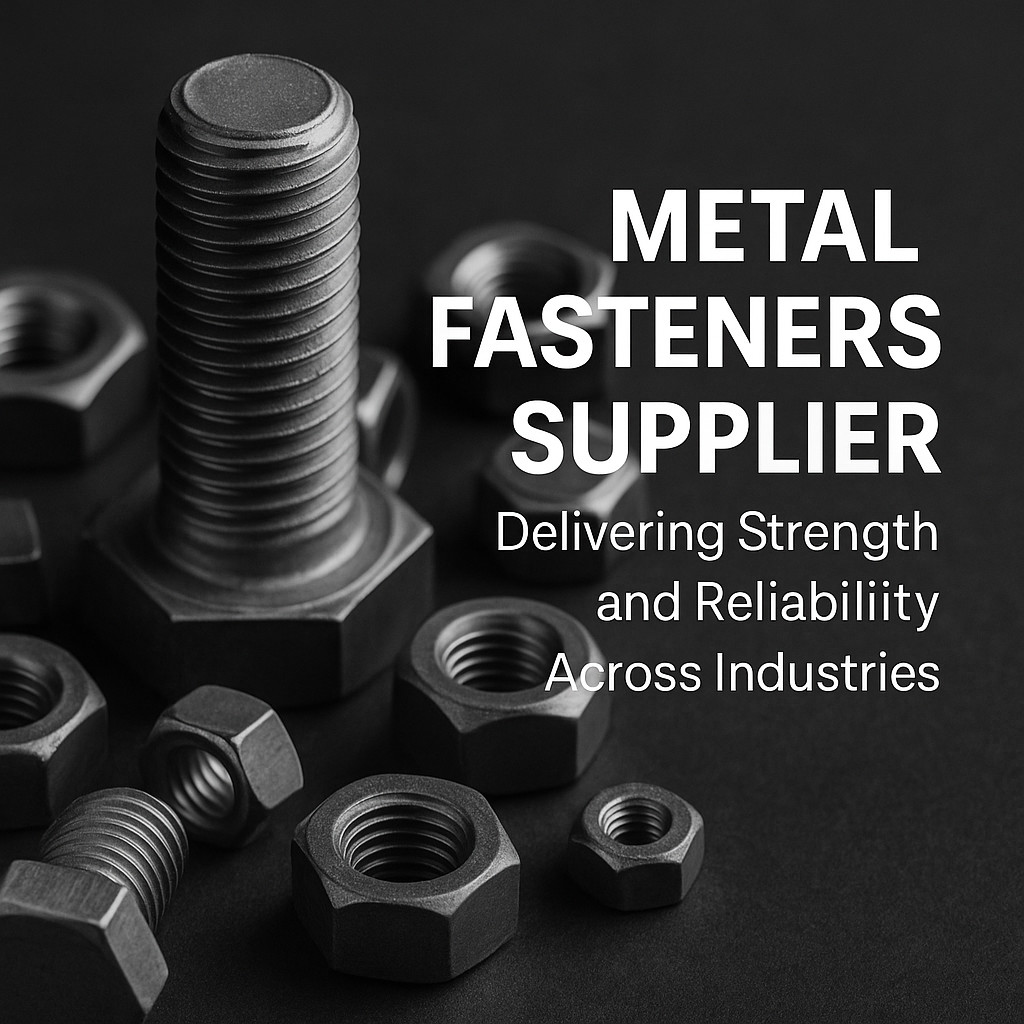
Metal fasteners—bolts, nuts, anchors, washers, and screws—are critical to the performance of construction, automotive, energy, and machinery systems. Their durability and load-bearing capacity ensure long-term safety. Choosing the right metal fasteners supplier determines not only quality, but also cost efficiency and reliability across global projects.
Standards That Define Reliability
Global industries rely on certified standards. ISO ensures consistent production quality, while ASTM International defines material and performance benchmarks. The Industrial Fasteners Institute (IFI) further provides technical guidance for industrial use. Working with a certified supplier eliminates uncertainty and aligns projects with international requirements.
Key Factors That Affect Fastener Pricing
When sourcing fasteners in bulk, buyers often ask: why do prices vary?
-
Material: Carbon steel, stainless steel, and alloy steel differ significantly in cost.
-
Surface Treatment: Zinc plating, hot-dip galvanizing, or special coatings impact both durability and pricing.
-
Quantity: Higher volumes reduce unit cost; mixed container loads may affect logistics fees.
-
Customization: Non-standard dimensions or OEM labeling adds production steps.
-
Logistics: Shipping method (FOB, CIF, DDP) and destination affect final landed cost.
Understanding these factors helps buyers make informed decisions and negotiate effectively.
Typical Delivery Cycles and Logistics Options
Reliable delivery is as important as product quality. A professional supplier should provide:
-
Production Lead Time: 25–45 days depending on order size and customization.
-
Stock Items: Immediate shipment for standard bolts and nuts.
-
Shipping Options: Sea freight for bulk, air freight for urgent projects.
-
Packaging: Export-grade cartons, pallets, and customized labeling to protect goods during transit.
ERP-based supply chain management, as implemented at JINGLE, ensures accurate scheduling and on-time delivery.
Applications Across Industries
Metal fasteners serve diverse engineering needs:
-
Infrastructure: Bridges, tunnels, and high-rise structures rely on high-strength bolts and anchors.
-
Automotive: Assembly lines require precision nuts and bolts to maintain safety standards.
-
Energy: Wind, solar, and oil & gas projects depend on corrosion-resistant fasteners in extreme conditions.
-
Machinery: Heavy-duty threaded rods and washers withstand constant vibration and stress.
-
Aerospace & Defense: Lightweight alloy fasteners balance strength and reduced weight.
Product & Application Quick Reference
| Product Type | Common Materials | Typical Applications | Recommended Finish |
|---|---|---|---|
| Hex Bolts & Nuts | Carbon Steel / SS | Bridges, machinery, automotive parts | Zinc plating / Hot-dip galvanizing |
| Threaded Rods | Alloy Steel | Industrial machinery, construction | Plain / Galvanized |
| Anchors | Stainless Steel | Concrete, infrastructure, tunnels | Stainless / HDG |
| Washers | Carbon Steel | Automotive, machinery assemblies | Zinc plating |
| Specialty Fasteners | Custom Alloys | Aerospace, defense, renewable energy | Coated / Customized |
Quality Testing and Certification
How can buyers ensure they are receiving reliable fasteners? Professional suppliers should offer:
-
Tensile and Hardness Tests: To verify strength.
-
Salt Spray & Corrosion Tests: For coatings and stainless steel.
-
Dimensional Inspections: Using automated measuring systems.
-
Batch Traceability: Full documentation linked to ISO standards.
JINGLE provides in-house laboratory testing for every batch, ensuring compliance with ISO, ASTM, and CE standards.
Why JINGLE Excels as a Metal Fasteners Supplier
-
Full Range: Bolts, nuts, rods, anchors, washers, and customized fasteners.
-
Certified Systems: ISO and CE compliance across all production.
-
Large-Scale Capacity: Over 10,000 tons annual output.
-
OEM/ODM Solutions: Tailored designs, packaging, and labeling.
-
Global Experience: Stable long-term supply to 30+ countries.
Future Trends in Metal Fasteners
The industry is shifting toward:
-
Eco-friendly production to meet sustainability targets.
-
Smart manufacturing with IoT and AI-enabled inspections.
-
Advanced coatings for marine and renewable energy applications.
-
Customization demand for unique engineering projects.
FAQ: Common Questions About Metal Fasteners Supply
Q1: What is the typical MOQ?
A: Standard MOQ is around 1 ton per item, but mixed orders are possible.
Q2: Can I request OEM packaging?
A: Yes, JINGLE offers fully customized labeling, boxes, and pallets.
Q3: What certifications are provided?
A: ISO 9001, CE, and material test reports are included with shipments.
Q4: What are typical shipping terms?
A: Common terms include FOB, CIF, and DDP, depending on client preference.
Building Reliable Partnerships Through Certified Supply
Metal fasteners may be small, but they are fundamental to global projects. Partnering with a certified supplier ensures safety, consistency, and efficiency.
For certified metal fastener solutions tailored to your industry, contact JINGLE today.