How to Choose a Reliable Lifting Anchor Manufacturer Straight Talk for Precast Concrete Buyers
Most people treat lifting anchors as a minor line item. They’re not. When a lifting anchor fails, everything stops — production, transport, installation. Sometimes people get hurt. That’s why the manufacturers who treat these products like ordinary hardware usually don’t last long in this business.
If you’ve been buying precast hardware for a while, you already know price is only the starting point. What actually matters is whether the factory can hold dimensions tight, keep the steel consistent, answer technical questions without delay, and ship on time without excuses. Everything else is secondary.
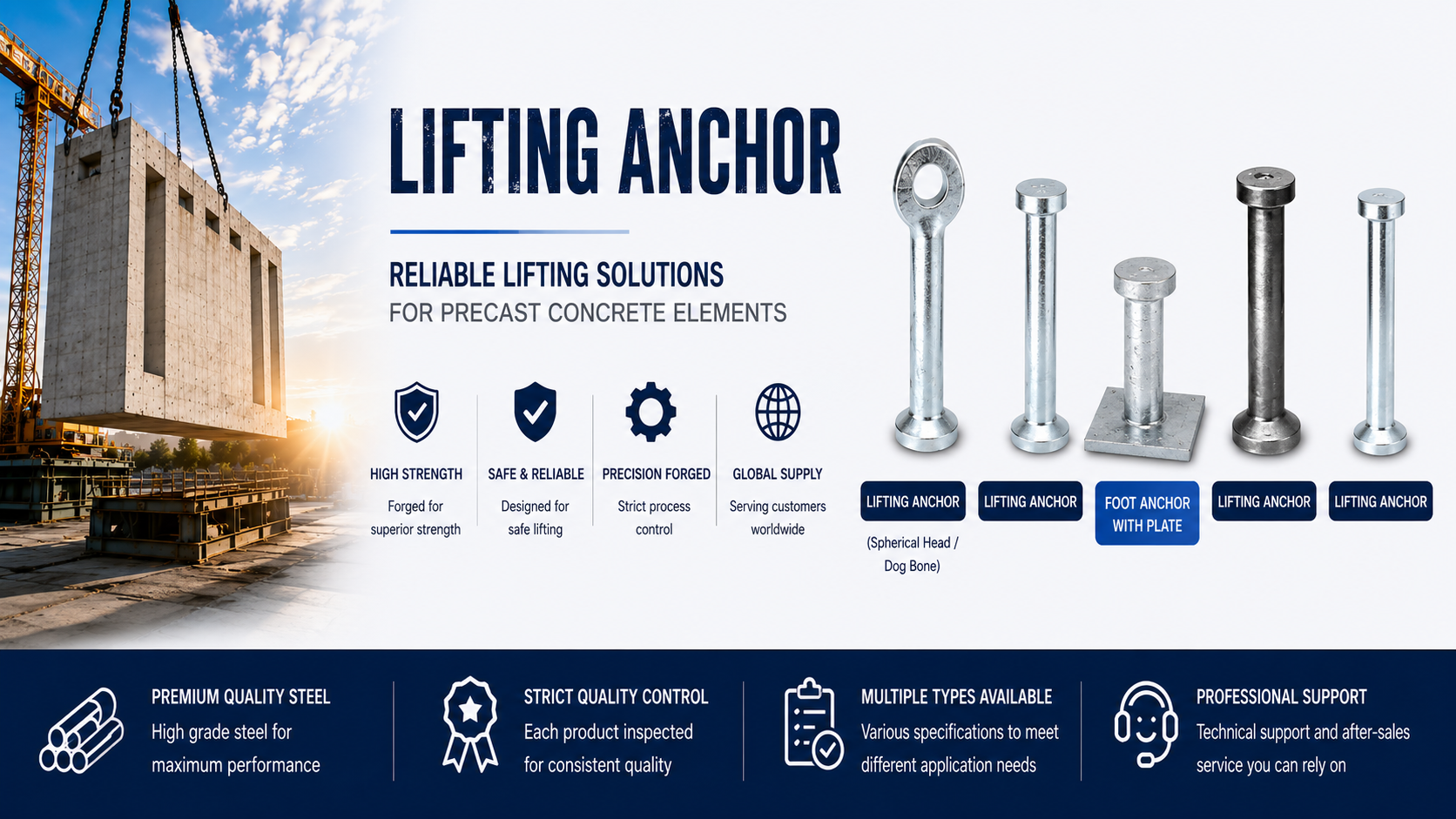
There’s also the naming mess. The same product goes by half a dozen different names depending on the market. In Australia and much of Asia it’s often called a Dog Bone Anchor. Europe prefers Spherical Head Lifting Anchor or Transport Anchor. North America usually says Concrete Lifting Anchor. Engineering drawings just call it a Precast Lifting Anchor. Once you know the different labels, comparing suppliers becomes a lot simpler.
What You’re Actually Buying
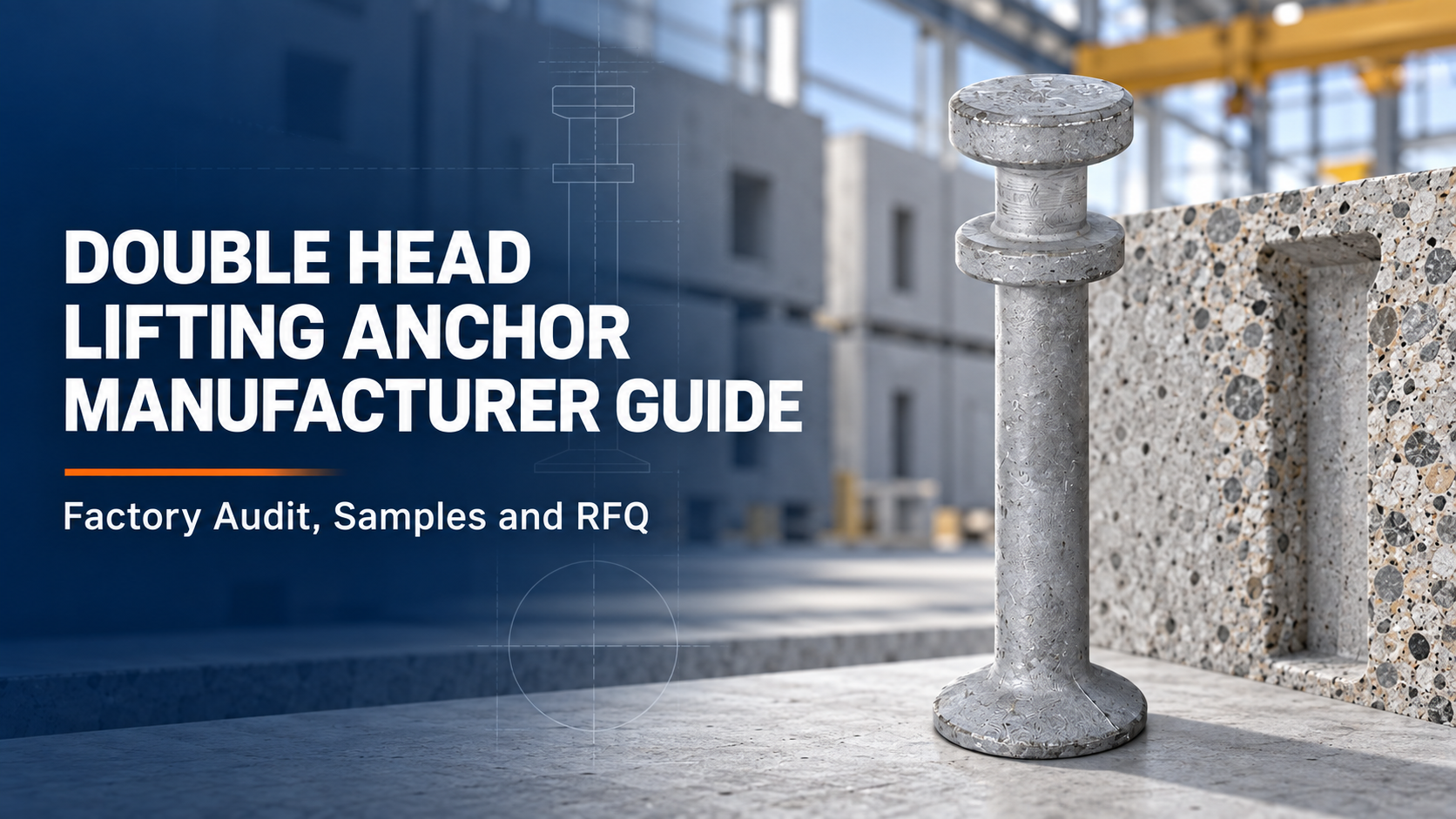
A lifting anchor (commonly the dog-bone or spherical-head type) is a forged steel piece cast permanently into the concrete element. The clutch locks onto the enlarged head, the crane takes the load, and the panel or beam moves. The head shape is deliberate — strong enough to hold, shaped so crews can connect and disconnect fast on site.
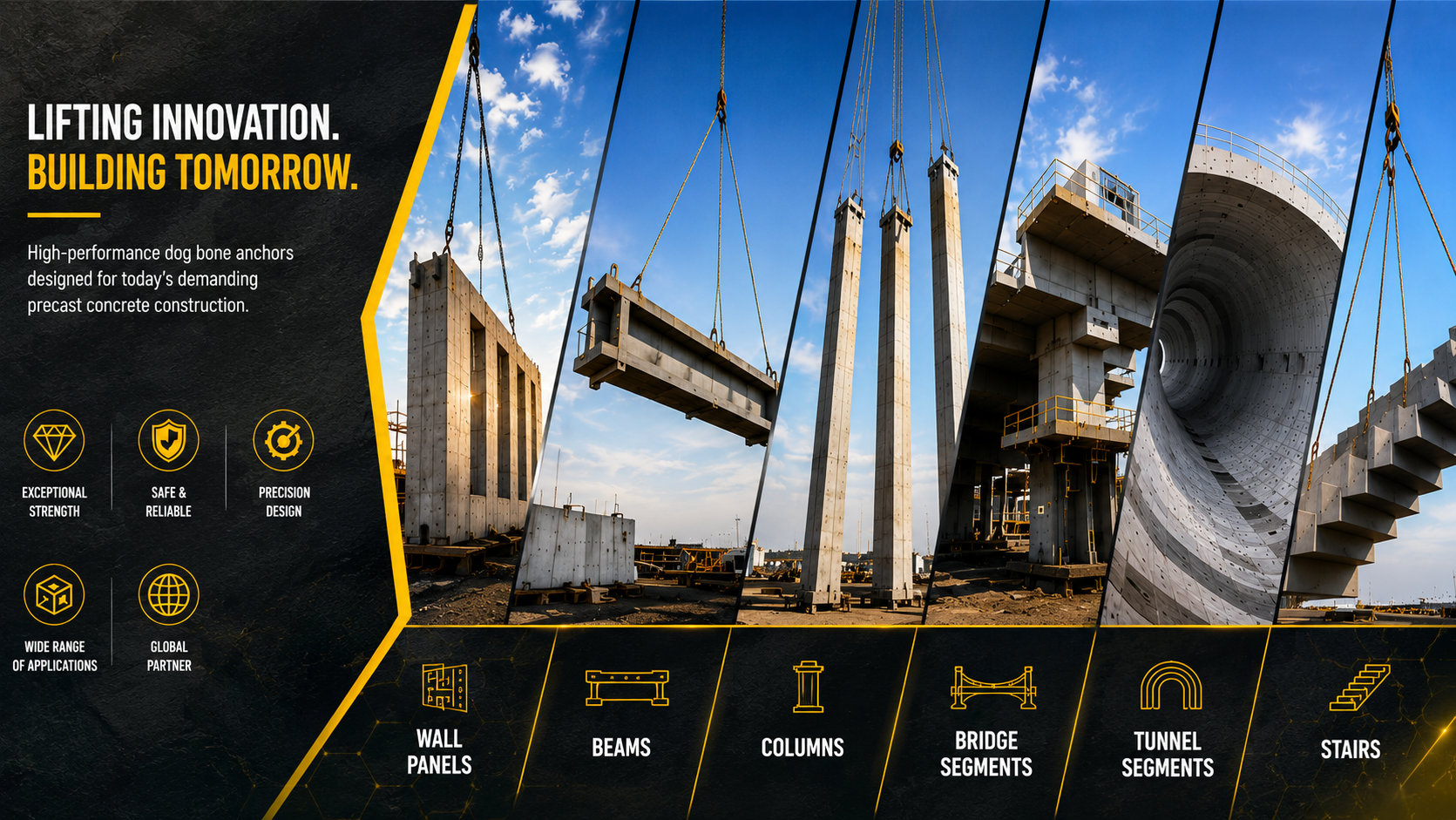
You’ll find these anchors in wall panels, beams, columns, bridge segments, tunnel linings, stairs, modular units, retaining walls and most industrial precast work. Because every lift is safety-critical, the manufacturer has to keep dimensions and material properties steady. Small variations that look harmless on paper can stop a clutch from locking properly or change how the load travels through the concrete.
Names You’ll Hear in Different Markets
| Common Name | Where You’ll Hear It |
|---|---|
| Dog Bone Anchor | Australia, New Zealand, Asia |
| Dog Bone Lifting Anchor | International B2B trade |
| Spherical Head Anchor | Europe |
| Spherical Head Lifting Anchor | Europe |
| Transport Anchor | Germany and Europe |
| Concrete Transport Anchor | International |
| Concrete Lifting Anchor | North America |
| Precast Lifting Anchor | Global |
| Precast Concrete Lifting Anchor | Engineering documents |
Design details can differ slightly between factories, but these names generally point to the same type of forged lifting anchor made for compatible clutches. A proper manufacturer lists the equivalent names in their catalogues so you can check compatibility without guessing.
What Separates a Solid Manufacturer from an Average One
Most buyers start with price. The ones who’ve been burned a few times look deeper.
Consistency comes first. Every lifting anchor needs the same head geometry and overall size. Even small deviations can stop a clutch from engaging. Factories that invest in proper forging equipment and calibrated inspection tools tend to deliver more reliable batches.
Material traceability is next. Good suppliers can link every finished batch back to the original steel heat. That paperwork matters on infrastructure and commercial jobs where someone will eventually ask for it.
Engineering support is where the better manufacturers pull ahead. Making these anchors involves more than just forging steel. Experienced teams understand load requirements, how the anchors behave in different concrete mixes, realistic tolerances, surface protection options, export packaging and the documentation projects need. That knowledge starts to matter the moment you need a non-standard size or a custom solution.
Delivery performance rounds out the picture. Late shipments stop production lines. Factories that run their own production usually plan better, keep lead times more predictable and can sometimes move faster when something urgent comes up. For companies buying regularly, that reliability is worth a lot.
Where These Lifting Anchors Get Used
You’ll find them across several sectors.
Residential projects now rely heavily on precast wall panels and floor slabs. The anchors make lifting, transport and installation cleaner and help keep the overall programme moving.
Commercial buildings — offices, shopping centres, hospitals, schools — use precast to shorten schedules and keep quality more consistent. Reliable lifting anchors let crews handle the heavy pieces without constant worry.
Infrastructure work such as bridges, rail and highways often involves multi-tonne elements. The anchors have to perform under serious loads, batch after batch.
Industrial facilities and modular construction also depend on them. In modular work especially, the same anchors get used repeatedly during manufacturing, transport and final installation, so consistency becomes non-negotiable.
Direct Factory or Trading Company?
This question comes up a lot. Trading companies can make the first contact easier, especially if volumes are small or you’re new to the market. Once you start buying regularly, most experienced buyers prefer dealing straight with the manufacturer. The differences look roughly like this:
| Direct Manufacturer | Trading Company |
|---|---|
| Factory production control | Production outsourced |
| Better process transparency | Limited manufacturing visibility |
| OEM customisation available | Depends on factory partner |
| Faster engineering communication | Multiple communication layers |
| Stable quality management | Varies by supplier |
| Better long-term cost control | Additional sourcing margin |
Working directly usually means clearer visibility into production, faster answers from the people who actually make the product, better chances of getting custom work done, and tighter control over both quality and cost over time.
Final Thoughts
The right lifting anchor supplier is the one that keeps delivering the same quality, answers technical questions properly and doesn’t leave you chasing shipments or dealing with unexpected variations. Price will always be part of the discussion, but the real cost of a poor choice shows up later — on the production line, during transport or on the construction site. Checking manufacturing capability, material control, engineering support and delivery track record takes a bit more time up front. It usually pays for itself many times over.