When Standard Fasteners Fall Short: The Value of Custom OEM Solutions
Why Standard Fasteners Are Not Enough
While catalog fasteners provide convenience for many applications, large-scale and high-demand projects often require more. A long-span bridge may demand oversized anchor bolts, offshore wind turbines require extreme corrosion resistance, and rail systems need fasteners that endure decades of vibration. In these cases, custom OEM fasteners are not optional—they are essential.
Core Problems Solved by Custom OEM Fasteners
OEM customization addresses challenges that cannot be met with standard products:
-
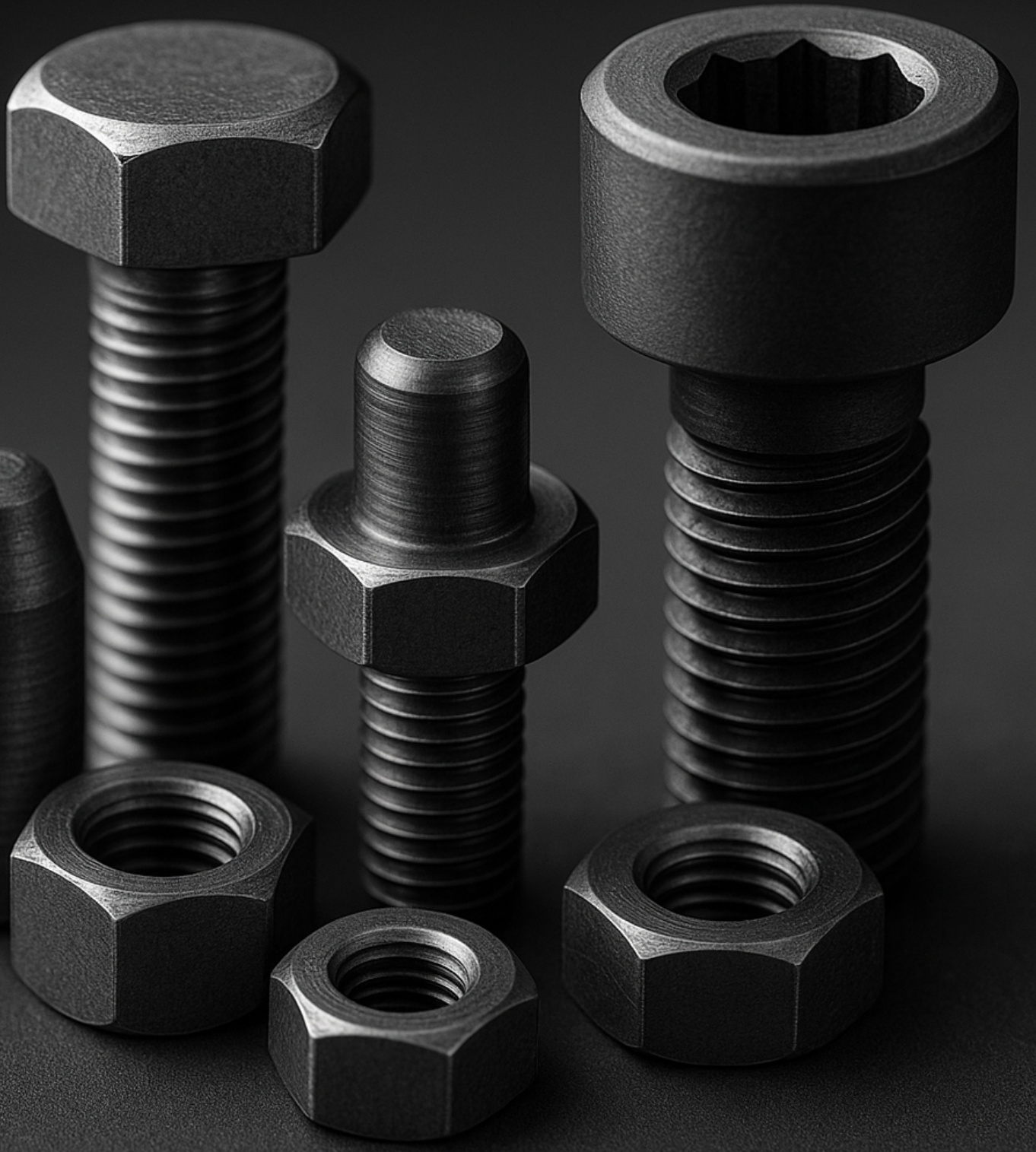
Non-Standard Dimensions: Unique lengths, diameters, or thread profiles tailored to project designs.
-
Material Performance: High-alloy steel, stainless steel, or titanium for extreme environments.
-
Advanced Surface Treatments: Anti-corrosion, fatigue-resistant, or eco-friendly coatings.
-
Full Certification and Traceability: Compliance with international standards such as ISO, ASTM, and IFI, with documented testing for every batch.
Custom fasteners are not simply “alternatives”—they are engineered solutions to ensure safety and compliance in complex systems.
JINGLE’s Strength in OEM Manufacturing
As a professional OEM fastener manufacturer, JINGLE offers complete capabilities to support global industries:
-
OEM Customization: Non-standard bolts, nuts, screws, and rivets designed for unique requirements.
-
Certified Quality: ISO and CE compliance, with in-house tensile, hardness, and corrosion testing.
-
Factory Capacity: Annual output exceeding 10,000 tons to meet the demands of distributors and large projects.
-
Material Expertise: Alloy steel, stainless steel, and titanium processing for high-performance applications.
-
Global Logistics: ERP-driven traceability and factory-direct delivery ensuring consistency and reliability worldwide.
This concentrated capability allows JINGLE to provide not only products but also the confidence needed for industrial distributors, wholesalers, and engineering teams.
Real-World Applications of Custom OEM Fasteners
Custom fasteners play a decisive role in sectors where standard parts cannot keep pace:
-
Infrastructure: Oversized anchor bolts and special connectors for bridges, tunnels, and seismic structures.
-
Renewable Energy: Corrosion-resistant fasteners for offshore wind farms and solar plants in desert climates.
-
Rail and Transport: Vibration- and fatigue-resistant designs ensuring safety in rail networks and high-speed systems.
-
Machinery and Automotive: Lightweight, non-standard fasteners for specialized equipment and electric vehicles.
Each of these industries faces unique pressures, and custom OEM solutions provide the adaptability and assurance needed to succeed.
The Future of OEM Custom Fasteners
The demand for custom fasteners will only increase as projects become larger, more complex, and more sustainability-focused. Key developments include:
-
Eco-Friendly Coatings: Replacing hazardous plating with compliant alternatives.
-
Lightweight Design: Expanding the use of titanium and composite materials.
-
Digital Traceability: Lifecycle management through batch coding and transparent certification.
These trends show that OEM customization is not just meeting current needs but shaping the future of industrial fasteners.
Fasteners That Redefine Reliability
Custom OEM fasteners represent more than hardware—they embody precision, compliance, and adaptability. In industries where standard solutions fall short, OEM fasteners define the reliability that projects depend on.
Learn how JINGLE delivers custom OEM fasteners designed for scale, certified for quality, and trusted worldwide: Contact JINGLE.