Choosing a Concrete Fixing Anchor Without Guesswork
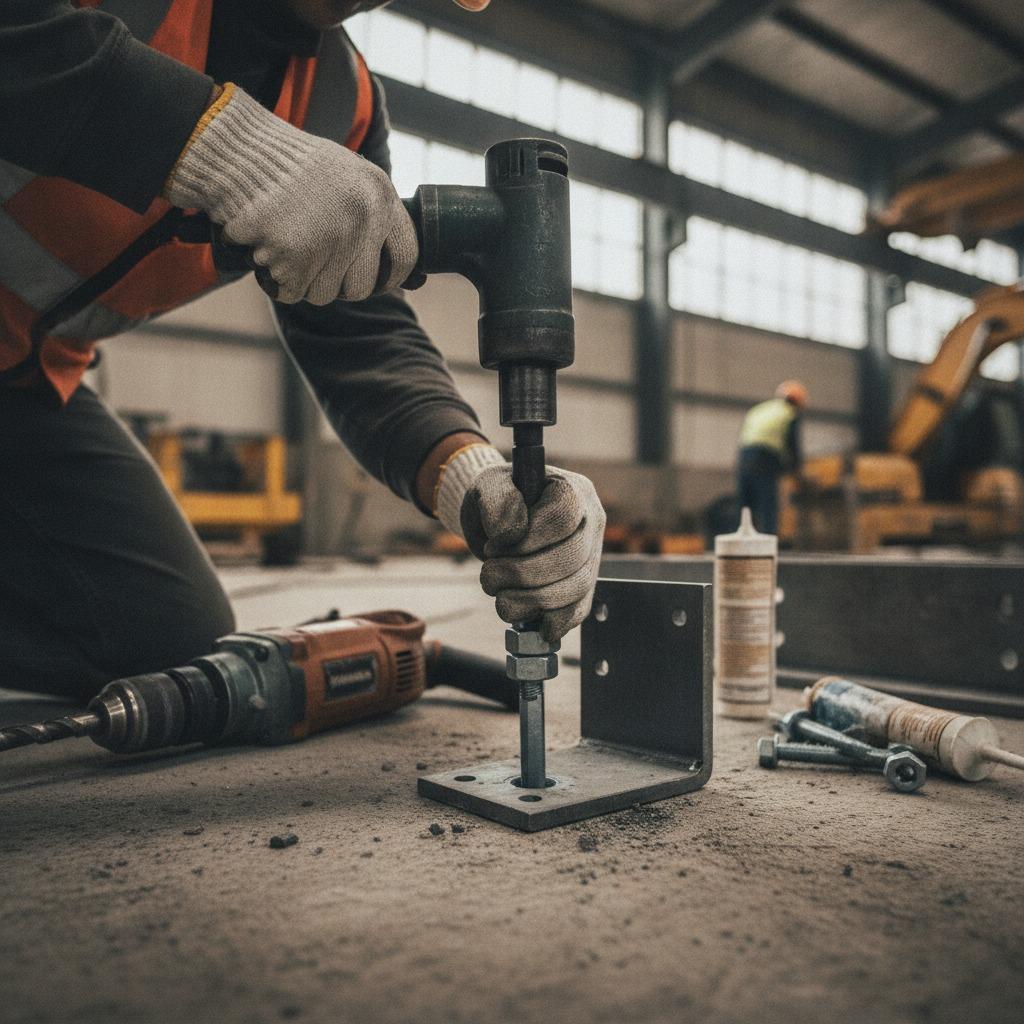
A concrete fixing anchor looks simple on a drawing, but in the real world it carries a lot of responsibility. Engineers, buyers, and production teams use these fasteners to hold brackets, frames, machinery guards, cable trays, handrails, and other fixtures to concrete surfaces that may be cracked, aged, dusty, or only accessible from one side. The anchor is often a small line item. The consequences of choosing the wrong one are not small.
What matters most is not just whether the anchor fits the hole. It is whether it performs in the actual substrate, under the actual load, in the actual installation conditions. That is the decision this article helps you make: when a concrete fixing anchor is the right choice, what type to specify, and what details to check before you place an order or approve an installation method.
Why anchor selection matters more than the hardware itself
Concrete is not a uniform material. It varies by age, compressive strength, crack condition, moisture, edge distance, embedment depth, and the quality of the drilled hole. A fastening solution that works beautifully in one slab can become unreliable in another. That is why buyers should be wary of treating all anchors as interchangeable.
In manufacturing and industrial environments, the anchor usually does three jobs at once: it transfers load, it resists vibration or movement, and it helps maintain alignment. If any of those functions are compromised, you may see looseness, creep, surface cracking, or a maintenance issue that becomes a downtime issue.
Common concrete anchor types and where they fit
Mechanical expansion anchors
These are widely used when the base concrete is sound and the load path is well understood. They expand against the hole wall and are typically favored for straightforward installations. They can be practical for structural and non-structural fixtures alike, but they are sensitive to hole quality and edge distance.
Wedge-style anchors
A wedge-style concrete fixing anchor is often selected for heavy-duty fastening where a strong mechanical grip is needed. It is a familiar option for steel plates, machine supports, and fixed frames. The tradeoff is that it needs proper installation discipline. If the hole is oversized or poorly cleaned, performance can suffer.
Sleeve anchors
Sleeve anchors are often used for medium-duty applications and for fixtures that need a little flexibility during installation. They can be useful when fastening through non-uniform fixtures or when a larger clamping surface helps. They are not the answer for every load case, though. Buyers sometimes over-specify them when a simpler fastener would do, or under-specify them when the application is more demanding than it first appears.
Chemical anchors
When the project involves cracked concrete, closer edge conditions, or higher-performance requirements, chemical anchoring systems may be considered. These rely on a resin and threaded rod or rebar to create a bond in the drilled hole. They can offer strong results, but only if installation steps are followed carefully. Hole cleaning matters here more than many teams expect, and that detail is easy to miss on a busy jobsite.
What buyers should check before specifying an anchor
The first check is load. Not just the headline load, but whether it is static, dynamic, or subject to vibration. Then look at the concrete itself: cracked or uncracked, old or new, and how close the anchor will sit to an edge or another fastener.
Also confirm:
Hole size and drill method
Anchor performance depends on the right diameter and depth. A mismatch here is one of the most common causes of installation trouble.
Installation access
Will workers have enough room to torque the anchor correctly? If not, the “best” anchor on paper may be awkward in practice.
Service environment
Moisture, chemicals, temperature swings, and outdoor exposure all influence material choice. Stainless or coated options may be worth considering, depending on the environment.
Maintenance expectations
If the fixture may need removal or repositioning later, that should shape the anchoring method from the start.
Common mistakes that cost time later
A frequent mistake is assuming all concrete is structurally equivalent. Another is choosing an anchor based only on price or catalog familiarity. Teams also forget to factor in edge distance, which can be a real problem near slab edges, openings, or thin sections.
One more practical warning: poor hole cleaning can quietly undermine a project. It is not glamorous, but it is often the difference between a secure installation and one that fails inspection or loosens in service.
Practical advice for sourcing and installation teams
If you are comparing suppliers, ask for the anchor type, intended substrate conditions, and installation requirements in plain language. Good suppliers should be able to describe where their product is most suitable, not just list dimensions. For engineering teams, it helps to standardize preferred anchor families by application: one for light-duty fixture mounting, another for heavy-duty structural attachments, and another for more demanding conditions.
That kind of standardization reduces field variation, but leave room for exceptions. Concrete rarely behaves exactly as expected.
FAQ: quick answers on concrete fixing anchors
Can one anchor type cover every application?
Usually not. Load, substrate condition, and exposure matter too much for a one-size-fits-all answer.
Are chemical anchors always stronger?
Not always. They can be excellent in the right conditions, but only when specified and installed correctly.
What should matter more: price or installation reliability?
Reliability. A low-cost anchor that causes rework is not actually low cost.
If you are sourcing anchors for production or field use, the safest next step is to define the application conditions first, then compare anchor types against those conditions instead of against catalog labels alone. That small discipline usually pays off.