Welcome to our website
logo

Cap Screws for Industrial Reliability

  • blog
Posted by JINGLE On Aug 04 2025

Jingle precision cap screws with hex socket heads for industrial use

Cap Screws for Industrial Reliability: What Engineers Need to Know

What Are Cap Screws and Why Do They Matter?

Cap screws, often known assocket cap screwsorhex socket bolts, are threaded fasteners designed for high-strength, load-bearing assemblies. Unlike general-purpose bolts, they’re precision-made, typically with tighter tolerances, deeper threads, and high-tensile materials such as alloy steel or stainless steel.

Used extensively in:

  • CNC and machining equipment

  • Automotive assemblies and brake systems

  • Robotics and automation frames

  • Structural steel and aluminum joints

Their strength, reliability, and clean design make them a preferred choice for engineers requiring bothmechanical performanceandassembly efficiency.

Real-World Challenges in Cap Screw Sourcing

If you’ve sourced cap screws before, you may have run into one or more of these issues:

  • Inconsistent thread qualitycausing misfits or stripping

  • Lack of hardness certificationfor high-torque applications

  • Dimensional variancemaking them incompatible with automated feeds

  • Poor corrosion resistance, especially in marine or humid environments

  • Incomplete documentation, affecting customs clearance and compliance

Whether you’re an OEM buyer or a maintenance lead, these problems cost time, increase warranty claims, and risk project integrity.

Choosing the Right Cap Screw for Your Application

Not all cap screws are created equal. You should match based on:

Application Best Cap Screw Type Material
High-load mechanical parts Socket head cap screw Alloy Steel (Grade 12.9)
Corrosive outdoor settings Button head cap screw SS304 / SS316
Space-constrained assemblies Low-profile cap screw Zinc-plated Steel
Aesthetic finish Black oxide cap screw Stainless or carbon steel

Jingleoffers a wide variety of cap screws in both metric and inch sizes, customizable to client drawings or kits.

From Bulk Supply to Custom Kits: What Makes a Great Supplier

Bulk buyers and OEMs often face gaps in logistics or communication. A capable cap screw supplier must offer more than just SKUs:

  • Custom packagingper application scenario

  • Batch traceability and inspection reports(ISO, RoHS, etc.)

  • CAD drawing support and technical consulting

  • Flexible MOQfor pilot and mass production

  • Fast response and documentation readiness: CO, CI, PL, MSDS, etc.

AtJingle, we provide OEM services, component bundling, and cap screw kits tailored for automated production lines or maintenance workflows—helping clients avoid rework and downtime.

Secure and Streamline Your Assembly with the Right Cap Screws

When mechanical reliability matters, cap screws are not the place to compromise. Choosing the right grade, finish, and supplier ensures both performance and efficiency across every application.

Need socket cap screws for high-torque assemblies? Or corrosion-resistant fasteners for marine use?Jingleis ready to support your next build.

🔗Explore our products
📩Talk to our teamfor technical advice or custom quotations.
Featured Blogs
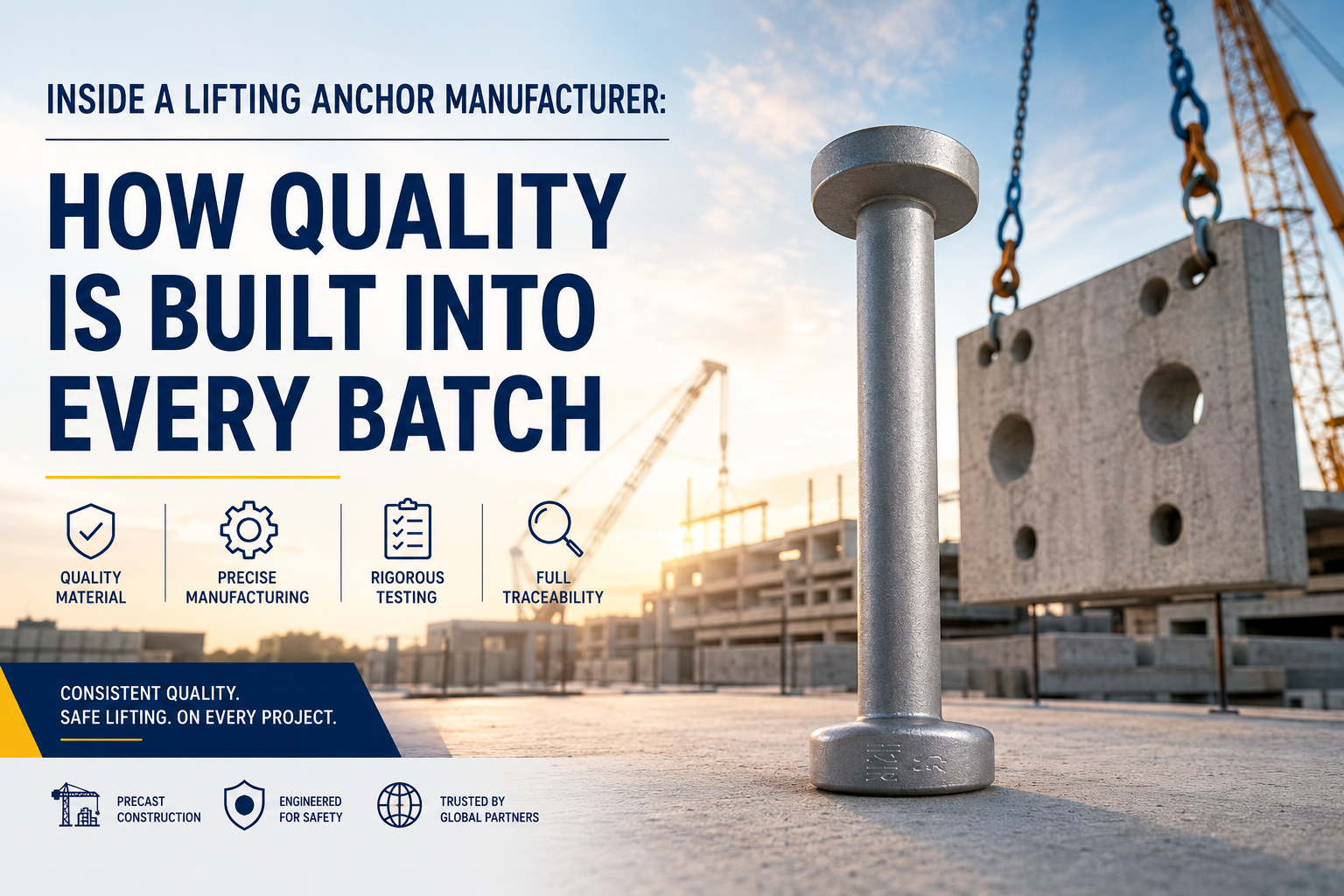
Inside a Lifting Anchor Manufacturer: How Quality Is Built Into Every Batch

Inside a Lifting Anchor Manufacturer: How Quality Is Built Into Every Batch

This article takes precast buyers inside the manufacturing process, explaining how lifting anchor quality is controlled from material receipt and forming to heat treatment, critical-dimension inspection, surface finishing, testing, marking, traceability, and repeat production. It also provides factory-audit questions, a document checklist, common warning signs, and practical FAQs.

Inside a Lifting Anchor Manufacturer: How Quality Is Built Into Every Batch

Inside a Lifting Anchor Manufacturer: How Quality Is Built Into Every Batch

This article takes precast buyers inside the manufacturing process, explaining how lifting anchor quality is controlled from material receipt and forming to heat treatment, critical-dimension inspection, surface finishing, testing, marking, traceability, and repeat production. It also provides factory-audit questions, a document checklist, common warning signs, and practical FAQs.

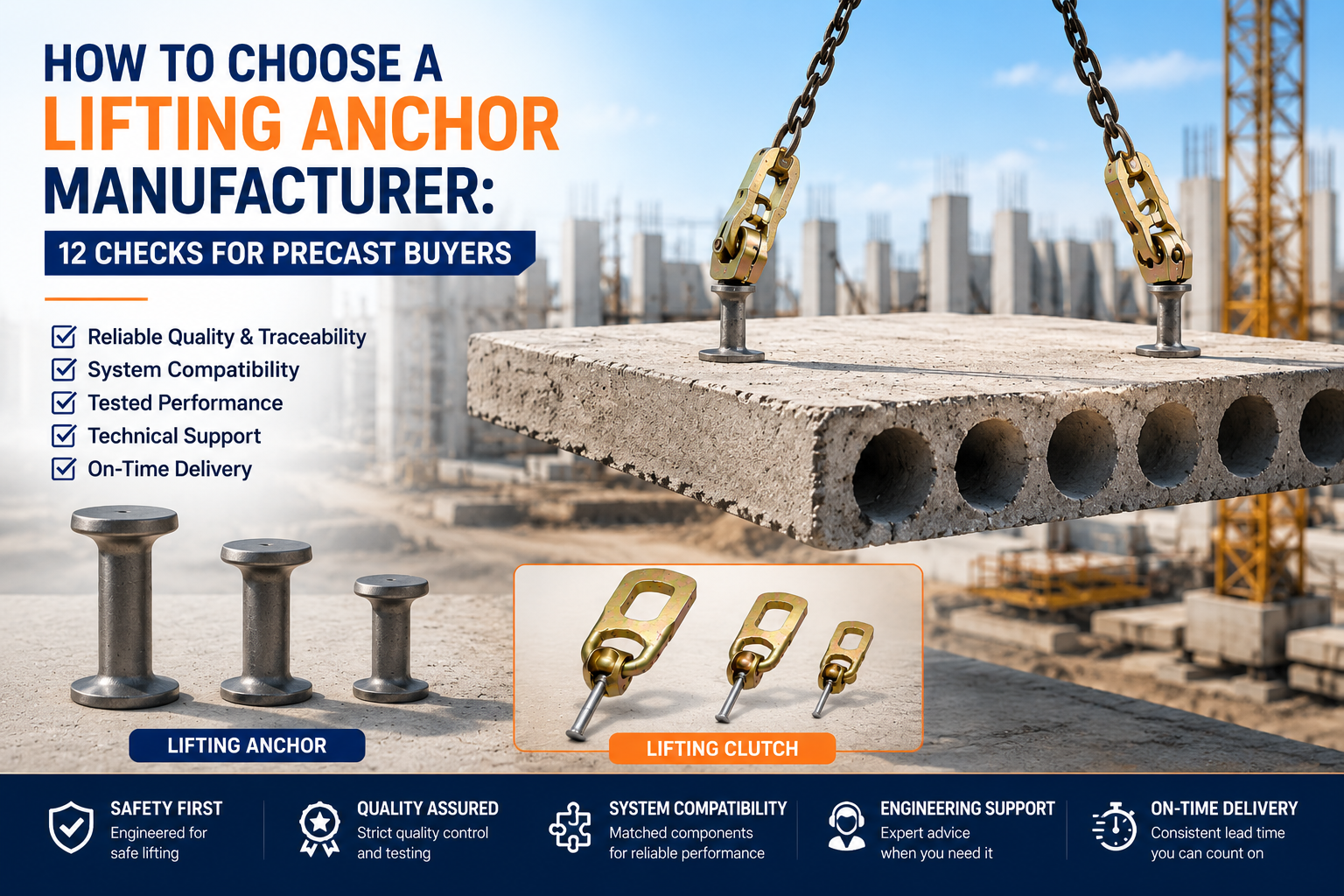
How to Choose a Lifting Anchor Manufacturer: 12 Checks for Precast Buyers

How to Choose a Lifting Anchor Manufacturer: 12 Checks for Precast Buyers

This guide helps precast concrete buyers evaluate lifting anchor manufacturers based on application fit, system compatibility, technical documentation, material and process control, traceability, testing, quality management, production readiness, and engineering support. It includes a supplier scorecard, an RFQ checklist, common warning signs, and practical FAQs.

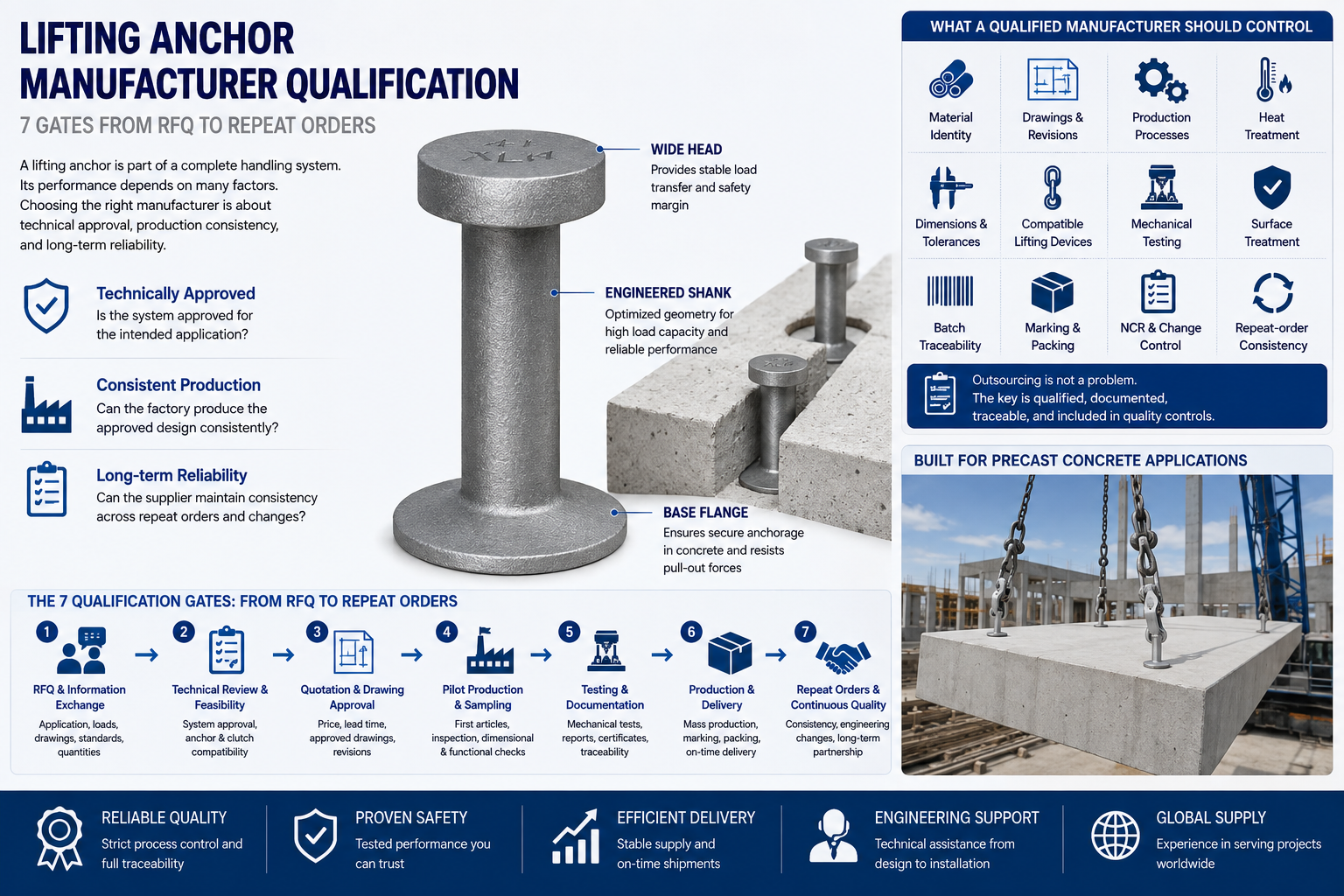
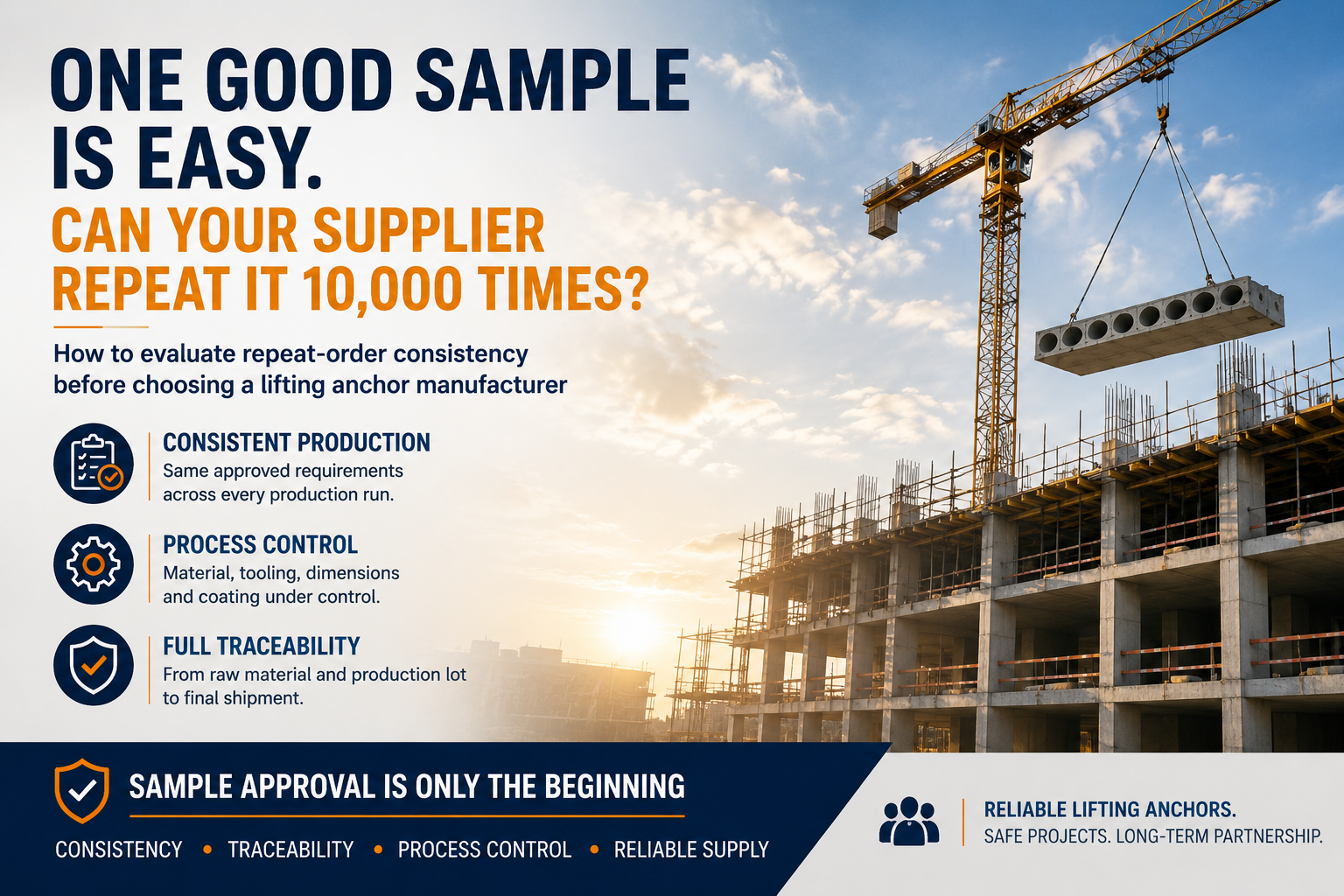
Lifting Anchor Manufacturer Qualification: 7 Gates From RFQ to Repeat Orders

Lifting Anchor Manufacturer Qualification: 7 Gates From RFQ to Repeat Orders

This guide explains how precast concrete buyers can qualify a lifting anchor manufacturer through seven decision gates, covering application review, system compatibility, factory process control, technical evidence, sample approval, pilot production, traceability, and repeat-order management. It also provides an audit table, RFQ checklist, cost model, warning signs, and practical FAQs.

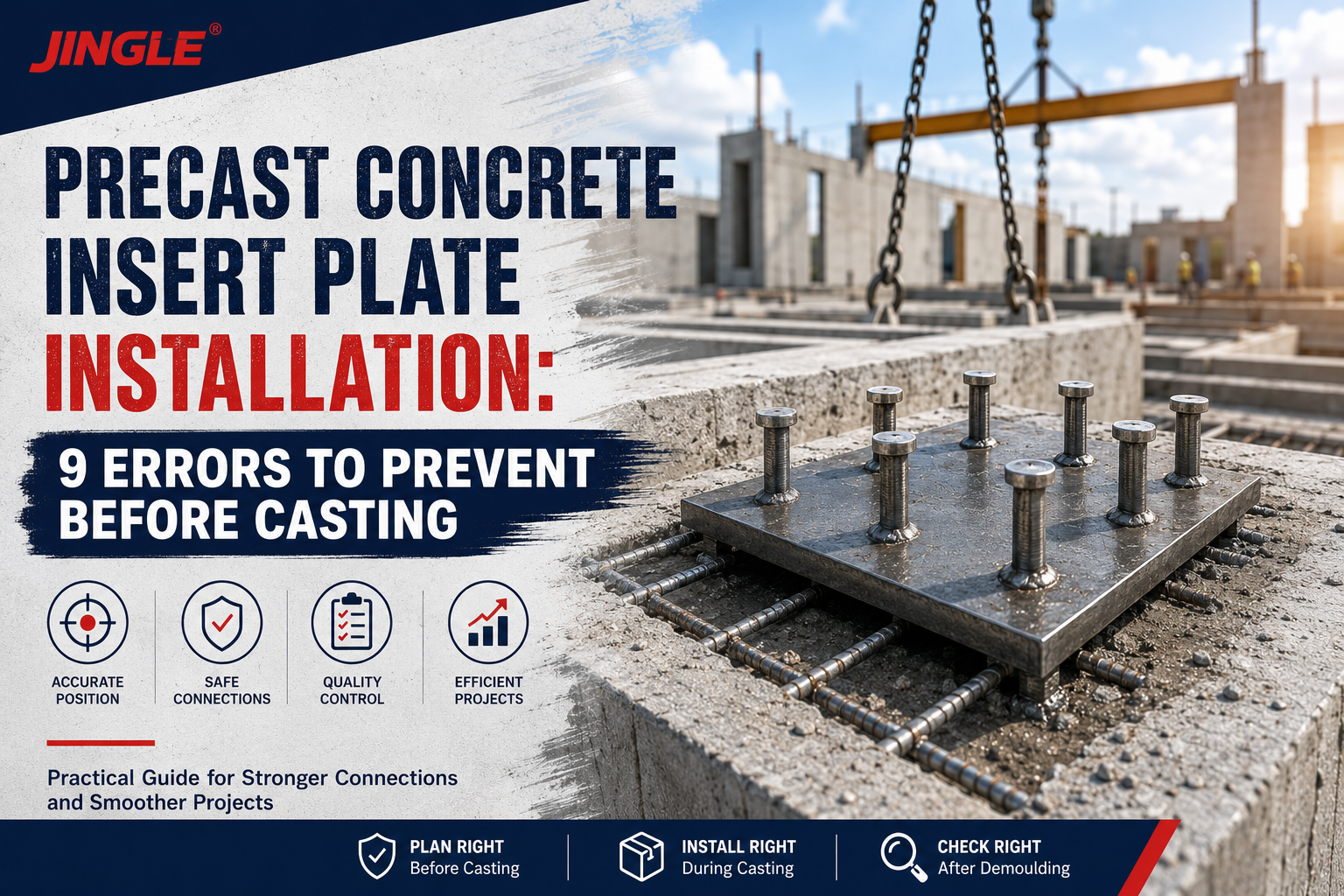
Precast Concrete Insert Plate Installation: 9 Errors to Prevent Before Casting

Precast Concrete Insert Plate Installation: 9 Errors to Prevent Before Casting

Learn how to prevent positioning, reinforcement, welding, coating, concrete-placement, and inspection errors when installing precast concrete insert plates before casting.

How to Specify Precast Concrete Insert Plates with Welded Studs

How to Specify Precast Concrete Insert Plates with Welded Studs

A practical guide for engineers and procurement teams evaluating precast concrete insert plates. Learn how to define plate material, stud layout, weld quality, surface finish, reinforcement clearance, inspection records, and supplier requirements before approving production.