Why Automotive Manufacturers Rely on Certified Fasteners and Custom CNC Parts
Automotive Tolerance Isn’t Forgiving—Every Flaw Costs
In automotive production,a single fastener defect can result in mass recalls, production halts, or brand damage. Whether you're a Tier 1 supplier or OEM, the pressure to deliver100% consistent, certified, and durable componentsis non-negotiable.
A 2024 Deloitte report shows thatautomotive warranty costs reached $49 billion globally, with fastening or mechanical misalignment accounting for 13% of failures in passenger vehicles.
Real Problems Automotive Engineers Face
| Issue | Risk | Needed Solution |
|---|---|---|
| Thread stripping or bolt failure | Product recalls | Certified tensile and fatigue testing |
| Tolerance mismatch in CNC parts | Assembly line disruption | ±0.01 mm machining accuracy |
| Rust in structural fasteners | Long-term safety risk | Anti-corrosion treatment |
| Non-traceable batches | Compliance failure | ISO/TS traceability & part ID |
Certified Fasteners for Safety-Critical Components
Use Case: Seat Frame & Suspension Assemblies
Safety components requireload-bearing bolts with exact hardness, thread quality, and finish.
JINGLE’s Solution
-
ISO TS16949 boltswith 10.9 and 12.9 grade material
-
Batch-tested for proof load, hardness, and impact
-
CE, ISO, and third-party SGS reports available
Result:Automakers meet strict QA protocols, reduce warranty claims, and gain approval during factory audits.
Custom CNC Parts for EV, Hybrid, and Smart Systems
Use Case: Sensor Mounts & Control Brackets in New Energy Vehicles
EVs and hybrid systems involve electronics integration withtight spatial constraints. Standard parts don’t work.
JINGLE’s Solution
-
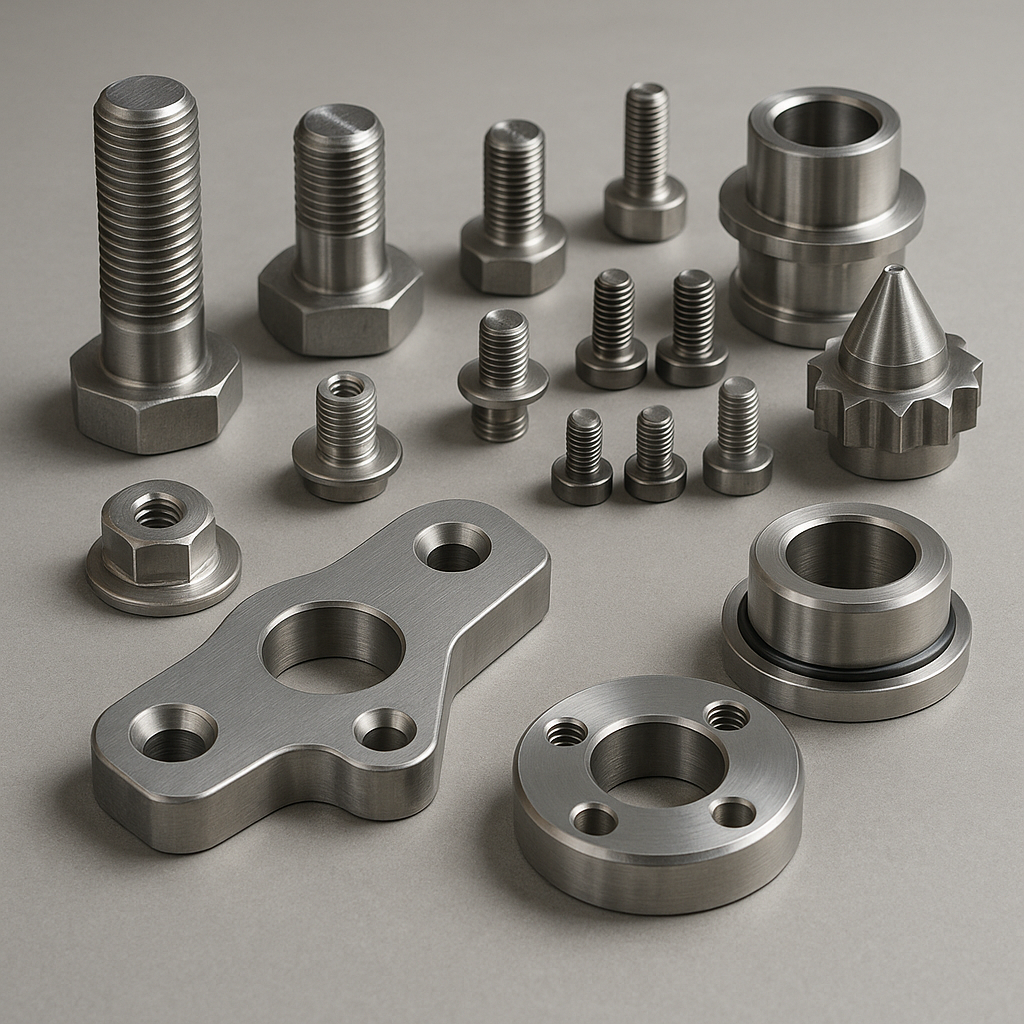
Custom CNC components for vehicleswith multi-axis turning and contour milling
-
Surface finishing: anodizing, passivation, PTFE for insulation or heat resistance
-
MOQ flexibility for pilot production and testing runs
Result:Seamless integration with modern vehicle platforms, enabling innovation without sourcing bottlenecks.
OEM Fasteners Built for Process Consistency
Use Case: Global Production across 3 Plants
When one supplier’s part fails tolerance across lots, it derails the synchronized supply chain.
JINGLE’s Solution
-
ERP-linked production & lot tracking
-
OEM fasteners for car productiondelivered with barcoded packaging, inspection records, and batch references
-
Repeat orders guaranteed to match original spec exactly
Result:Global teams receive identical parts, minimizing rework and maintaining production rhythm.
What Makes JINGLE a Fit for Automotive Projects?
| Capability | Automotive Value |
|---|---|
| TS16949 + ISO9001 compliance | Meets audit and quality system demands |
| In-house lab (spectral, hardness, impact) | Independent verification, peace of mind |
| CNC accuracy to ±0.01 mm | Zero-fit error for tight assemblies |
| Full batch traceability | Meets OEM documentation requirements |
| Support for drawings, prototyping, and PPAP | Complete from R&D to mass production |
Choosing the Right Fastening Partner Isn’t Optional
The most successful automotive suppliers know:cost is secondary to consistency, documentation, and response time. Working with a reliable partner like JINGLE ensures:
-
Zero-fit failures
-
No compliance gaps
-
Faster project ramp-ups
-
Fewer line stops or late-stage QA issues
If you're sourcingcertified fasteners for automotive,custom CNC components for vehicles, orOEM fasteners for car production, we’re ready to support you with speed, documentation, and technical precision.