A nylon ring does not make every lock nut equivalent

Nylon insert lock nuts are easy to recognise and easy to underspecify. A coloured insert in a hex nut may look familiar, but an industrial buyer still needs to define the nut style, thread, property requirement, insert material, finish, prevailing torque criteria and mating bolt. Without those details, two offers may describe visibly similar parts that are not interchangeable. A capable nylon lock nut manufacturer should ask where the joint will operate, how it will be assembled, whether the nut is intended for reuse, which bolt it mates with and what evidence the buyer expects. Those questions are not sales friction. They prevent a standard catalogue item from being placed into a service condition its insert or coating was never selected to handle. For the first RFQ, send the governing standard or drawing, size and pitch, nut style, material or property class, coating, mating bolt, temperature and chemical exposure, quantity, packaging and inspection requirements. Mark any approved alternatives clearly.
Ask JingleFix to review a nylon lock nut specification
Choose the nut family before discussing colour
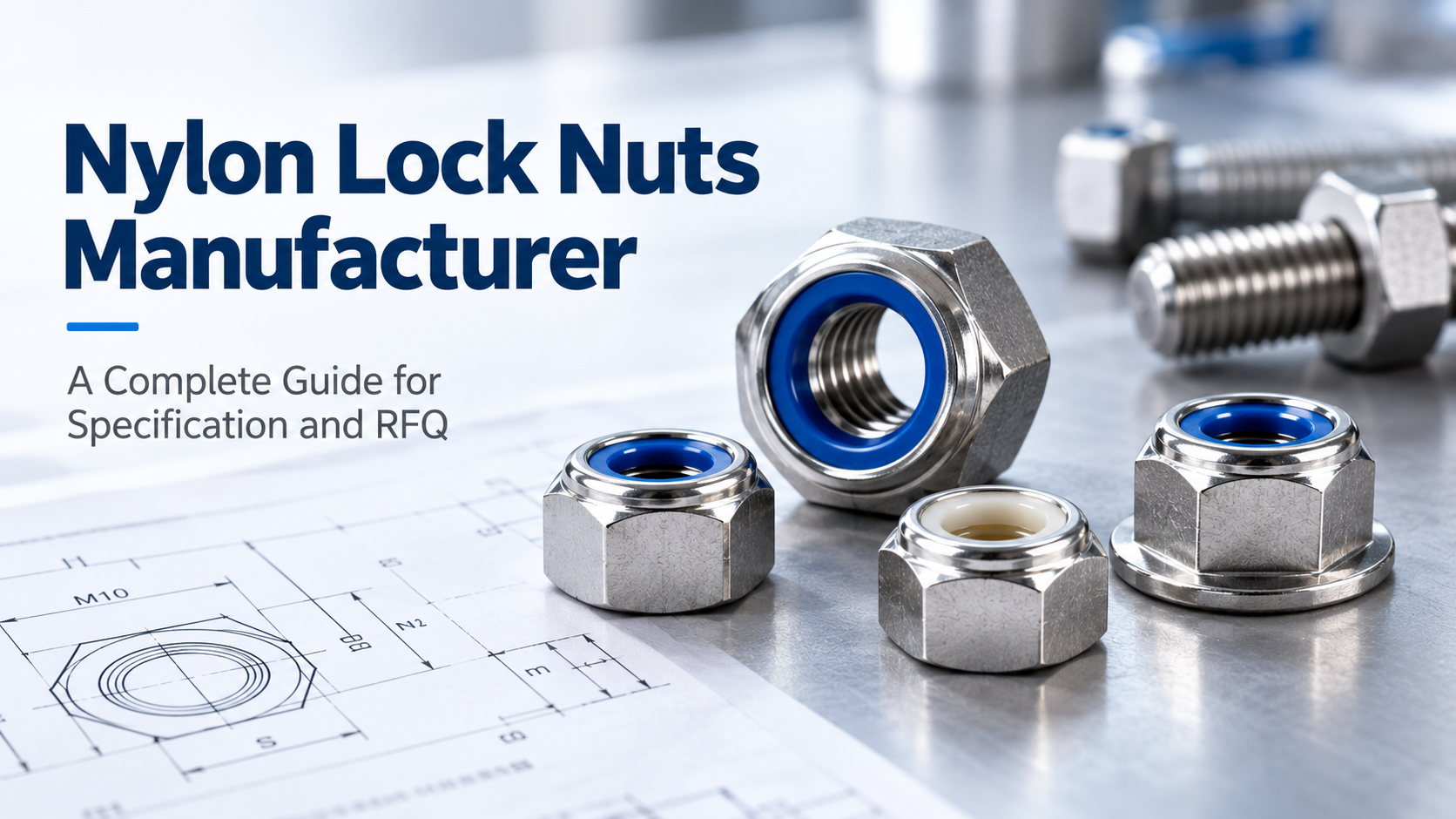
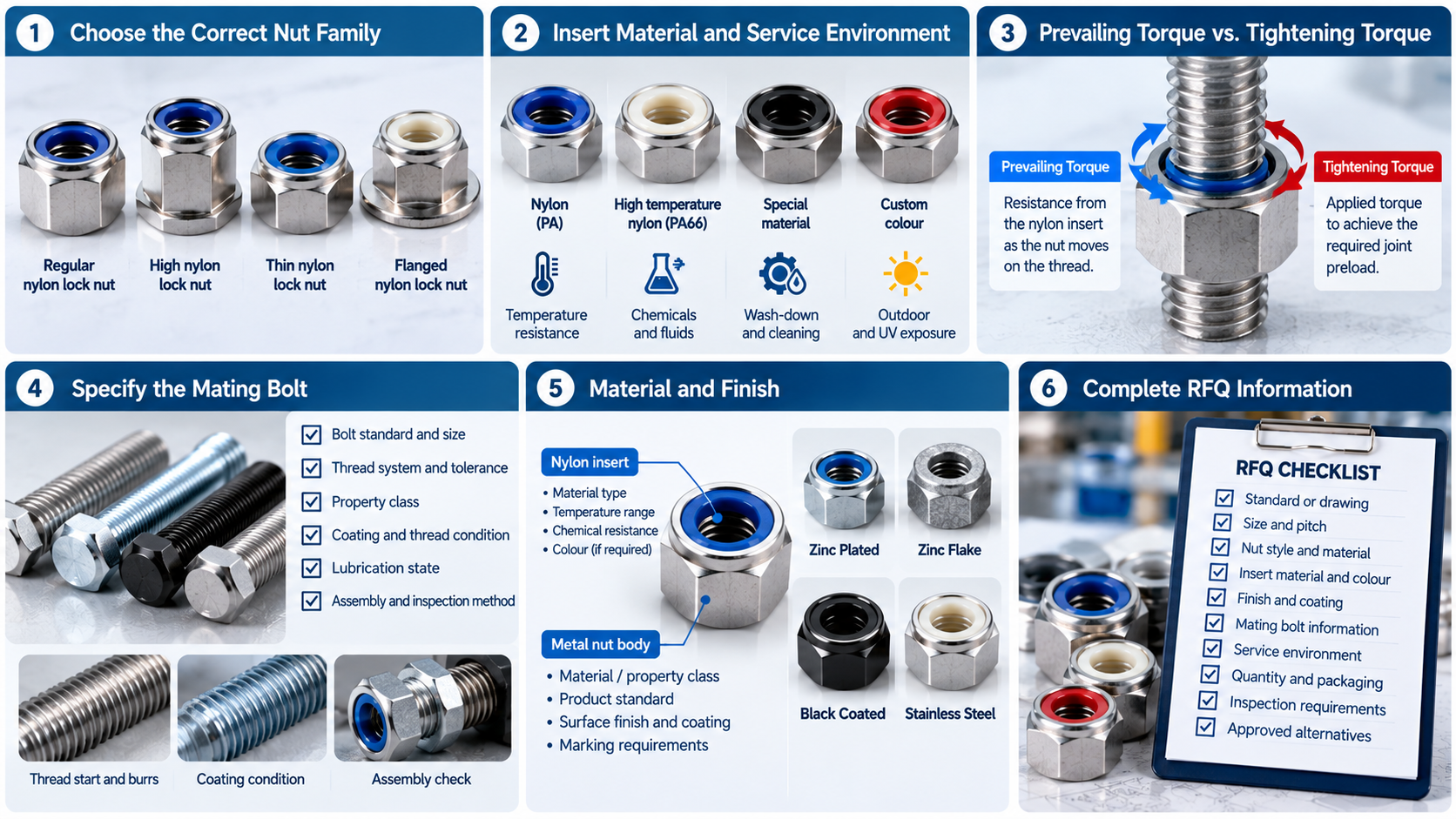
Buyers may use names such as nyloc nut, nylon lock nut, nylon insert nut or prevailing torque nut for several geometries. Regular, high, thin and flanged styles are not the same product. Coarse and fine threads may also be covered by different standards. The quotation should state the exact family rather than relying on a photograph. ISO 7040:2025 is one current reference for regular prevailing torque hexagon nuts with a non-metallic insert. Its published scope includes steel and stainless steel nuts with metric coarse pitch threads in specified ranges and product grades. That does not mean every nylon insert nut should be ordered to ISO 7040. A buyer may use another national standard, customer drawing or inch-series specification. The point is to name the correct document and edition. The insert colour is rarely enough to identify the polymer, temperature range or performance. If colour has a warehouse or branding purpose, define it separately from the technical insert requirement. Do not approve a substitution because the replacement ring appears to be the same shade.
The insert must match the service environment
The non-metallic insert creates a prevailing torque as the bolt thread passes through it. Its behaviour can be affected by temperature, fluids, cleaners, fuels, oils, ultraviolet exposure, ageing and repeated installation. The relevant limits depend on the actual insert material and nut design. The RFQ should describe normal and peak service temperatures, duration at temperature, nearby chemicals, wash-down process and outdoor exposure. If the application includes sterilisation, paint baking, engine heat or aggressive fluids, request product-specific compatibility data and engineering approval. A general statement that "nylon is heat resistant" is not an acceptance criterion. Storage also deserves attention. Define shelf-life or storage controls only when supported by the selected product and supplier information. Keep packages clean, dry and identified, and avoid mixing lots after inspection. If the buyer has a controlled storage standard, include it in the order.
Prevailing torque is different from tightening torque
This distinction prevents many purchasing and assembly errors. Prevailing torque is the resistance created by the locking feature as the nut moves on the mating thread without bearing against the joint. Tightening torque is the applied installation torque used to create a target joint condition. They are related during assembly but are not interchangeable values. When prevailing torque testing is required, specify the governing method, the mating test bolt, thread condition, speed, temperature, number of cycles and acceptance limits. A test performed with a different bolt finish or tolerance may not represent the production assembly. Likewise, a successful prevailing torque result does not prove that the joint achieved the required preload. If the joint relies on a controlled preload, the engineer must define the tightening procedure, lubrication state and validation. The lock nut supplier should not invent a universal installation torque from diameter alone.
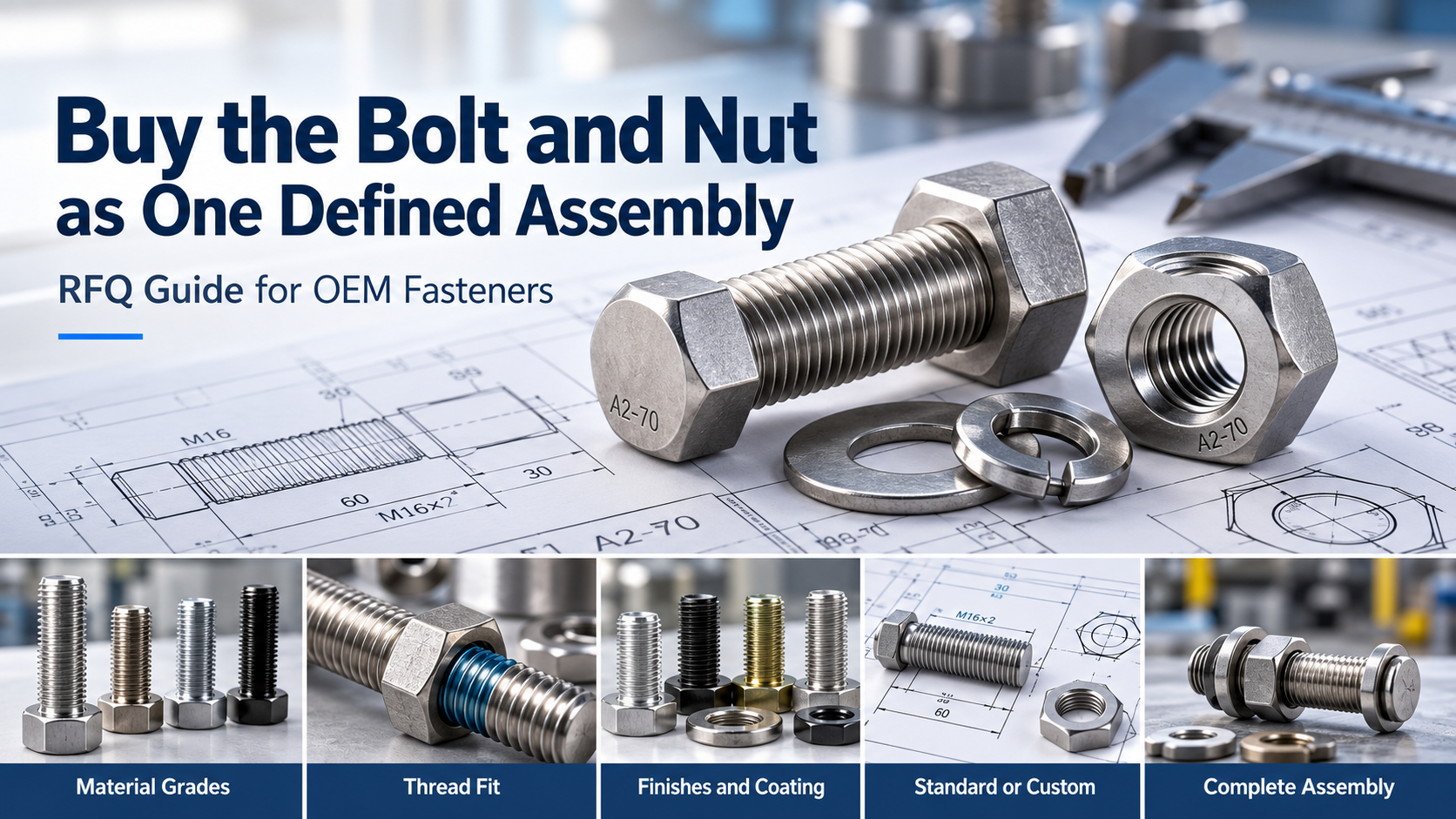
Specify the mating bolt as part of the system
An internal thread cannot be evaluated in isolation. State the mating bolt standard, thread tolerance, property class, coating and thread condition. Confirm that the nut property requirement is suitable for the bolt and joint. A change from plain to coated threads, or from one tolerance to another, can alter assembly behaviour. The production check should use an agreed mating thread or test mandrel. Buyers should define whether the test component is plain, plated, lubricated or otherwise conditioned. For incoming inspection, record the gauge or mating-part method so different inspectors do not apply different acceptance rules. Thread damage can occur before the insert is reached. Check thread start, burrs, coating build-up and free-running engagement as well as the locking section. A nut that binds on damaged threads is not demonstrating useful prevailing torque.
Material and finish need separate lines on the RFQ
The metal nut body and the insert have different functions and should be specified separately. For the body, define the applicable material or property requirement, product standard, dimensions and marking. For the insert, define the approved material or performance specification and any service limits. Surface finish affects corrosion resistance, appearance and thread behaviour. Zinc plating, zinc-flake coating, passivation for stainless steel or another system must be described with the relevant specification and any topcoat or lubricant. If the finish changes after sample approval, review thread fit and prevailing torque again. Avoid broad claims such as "rust proof" or "suitable for marine use." Corrosion performance depends on the complete material and coating system, exposure, joint geometry and mating parts. Agree any corrosion test method and acceptance criteria only when it represents the purchase requirement.
What a complete quotation should show
| RFQ field | Buyer input | Expected supplier response |
|---|---|---|
| Product identity | Nut style, standard, edition, drawing and revision. | Exact offered designation and documented deviations. |
| Thread | System, diameter, pitch, tolerance and mating bolt. | Gauge method and mating-thread assumptions. |
| Nut body | Material or property requirement, dimensions and marking. | Offered material, process route and certificate scope. |
| Insert | Material or performance need, colour and environmental limits. | Insert identification, product-specific limits and change control. |
| Locking performance | Test method, cycles, conditions and acceptance values. | Sample or lot test plan and report format. |
| Surface | Coating, thickness, topcoat, lubricant and appearance. | Process specification and impact on thread fit. |
| Logistics | Quantity, pack count, labels, barcodes and destination. | Price basis, production assumptions and packing proposal. |
Sample approval should answer a written question
Before ordering samples, decide what the sample must prove. A catalogue sample may confirm dimensions and assembly fit. A custom-colour or custom-coated sample may confirm appearance and thread behaviour. A production-intent sample may be used for a defined prevailing torque test. These are different purposes. Record the sample part number, revision, nut style, insert specification, finish, lot and mating bolt. Use the intended installation tool and environment where practical. If the buyer plans to reuse the nut, define the number of cycles and acceptance method rather than assuming unlimited reuse. Approval should identify any remaining production controls. A hand-built sample or small pilot lot may not represent full-rate tooling, sorting and packaging. Confirm what must be repeated on the first production batch.
Inspection and traceability for repeat orders
At incoming inspection, check identity before testing. Similar nut styles and thread pitches are easy to mix. Confirm labels, part number, lot, size, finish and insert colour against the order. Then apply the agreed dimensional, thread and prevailing torque checks. Ask the supplier to define a production lot and retain the link between metal body, insert batch, surface process and final packing when the project requires that level of traceability. If full linkage is not needed, state the simpler requirement rather than requesting an undefined "full traceability" package. For distributor or private-label orders, keep the technical lot code on inner packs even when retail branding changes. Barcode content, pack count, label placement and carton marks should be approved before mass packing.
Common procurement mistakes
- Ordering by a photo: the image does not define the standard, thread, nut height, insert or finish.
- Using insert colour as a material certificate: colour can be changed and does not prove polymer identity.
- Confusing prevailing torque with joint tightening torque: one measures locking resistance; the other is part of the installation method.
- Ignoring the mating bolt: thread tolerance, coating and lubrication affect the result.
- Assuming unlimited reuse: repeated assembly must be validated for the specified product and application.
- Changing coating without rechecking: finish changes can affect thread fit and torque behaviour.
RFQ checklist for a nylon lock nut manufacturer
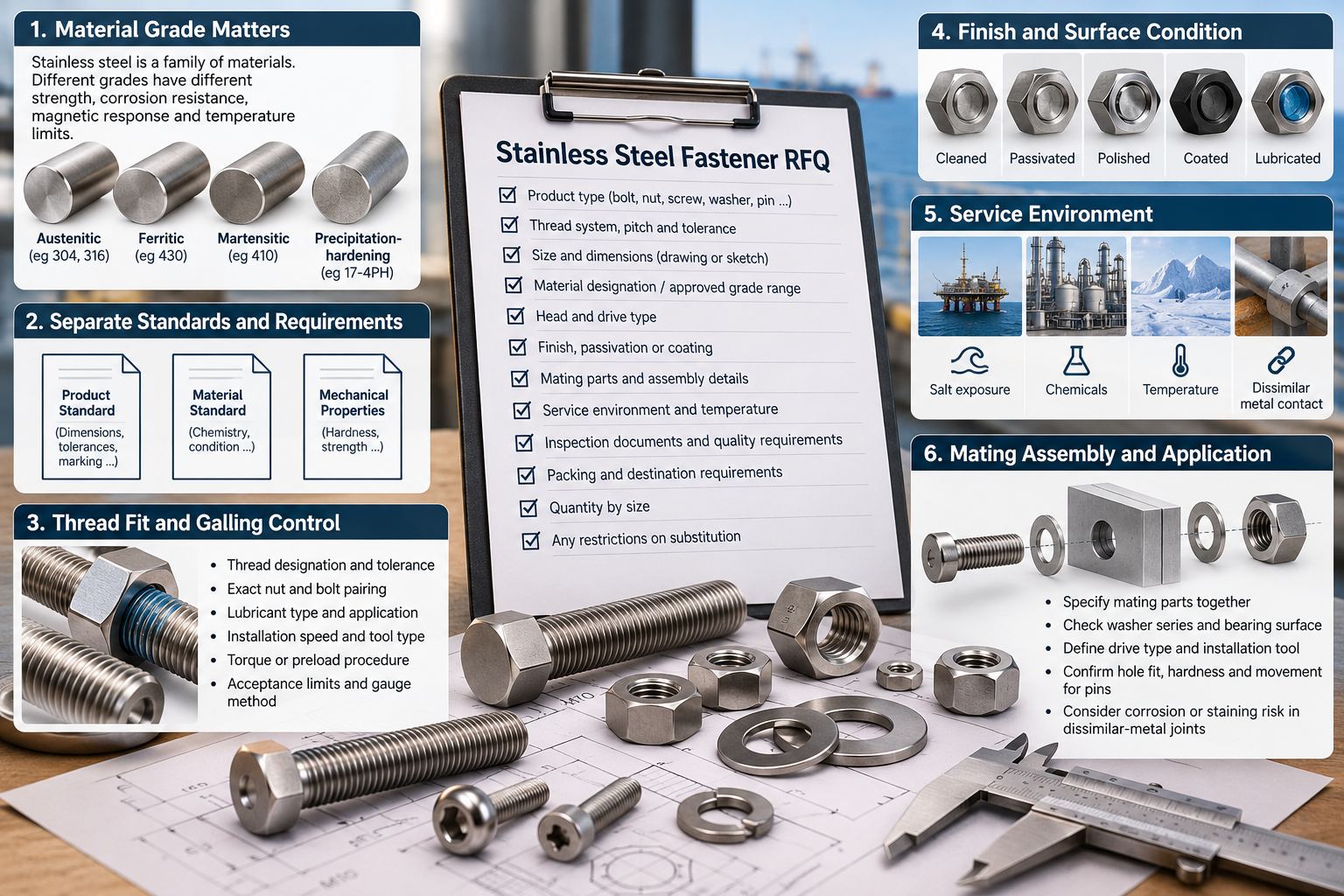
- standard or drawing and revision;
- regular, high, thin or flanged nut style;
- metric or inch thread, diameter, pitch and tolerance;
- nut body material or property requirement;
- insert material or required performance and colour;
- mating bolt standard, property class and finish;
- service and storage temperature plus chemical exposure;
- surface treatment, lubricant and corrosion requirement;
- prevailing torque method, cycles and acceptance criteria;
- sample, inspection, certificate and traceability scope;
- quantity, packaging, labels and delivery terms.
Buyer questions
Are all nylon insert lock nuts reusable?
No universal reuse claim is appropriate. Reuse depends on the product standard, insert, mating thread, service condition and required prevailing torque after each cycle. Define and test the intended cycle count.
Can the insert colour be customised?
Colour options may be evaluated for a specific item and order. The buyer must still confirm that colour does not replace the technical insert specification and that tooling, quantity and approval requirements are acceptable.
Can nylon lock nuts be used at high temperature?
The answer depends on the insert material, temperature profile, exposure time and joint requirement. Obtain product-specific data and engineering approval. An all-metal prevailing torque nut may be considered where the applicable design requires it.
Which standard should an RFQ cite?
Use the standard that governs the actual nut family and thread series. ISO 7040:2025 is one current reference for regular metric coarse-pitch nuts with non-metallic inserts, but other styles and projects may require another standard or drawing.
What should be included with a shipment?
That should be agreed before production. Depending on the order, the package may include a conformity statement, dimensional results, prevailing torque results, material or coating records and lot-linked packing labels.
Turn a familiar part into a controlled purchase
Nylon lock nuts are standard-looking components with several interacting variables. A reliable purchase fixes the nut family, mating thread, insert environment, surface condition, test method and traceability before price comparison. That gives the manufacturer a stable target and gives the buyer evidence that can be checked on repeat orders.
Contact JingleFix with your nylon lock nut drawing, mating bolt and service conditions
Technical reference
For the current catalogue entry and published scope, see ISO 7040:2025. Confirm the applicable document and edition for the actual order.
As a nylon lock nuts manufacturer, JingleFix can review your technical drawings, insert materials, thread specifications and quality requirements before quotation.