What OEM Clients Need from a Fastener and CNC Parts Supplier
When Customization Isn’t Optional
OEM clients often deal with multiple markets, tight launch schedules, and strict compliance requirements. Generic components aren’t enough—they needreliable, consistent, and customizable fastener and CNC solutionsthat align with brand standards, engineering specs, and global regulations.
According to McKinsey’s 2024 Manufacturing Trend Report,over 70% of product launch delays in hardware-driven industries are caused by component sourcing or quality mismatches—often from ill-equipped suppliers.
Top Challenges Faced by OEM and ODM Buyers
| Pain Point | Risk | OEM Needs |
|---|---|---|
| Inconsistent product specs | Failed testing or client rejection | Drawing-matched fastener/CNC production |
| No documentation | Regulatory penalties | ISO certificates, RoHS/REACH, PPAP support |
| Limited custom capability | Design compromise or delays | Flexible CNC prototyping and machining |
| Poor communication | Costly rework or timeline drift | 24h response, full visibility, tech collaboration |
Custom Fasteners for OEM Projects
Scene: Consumer Hardware Brand Launch
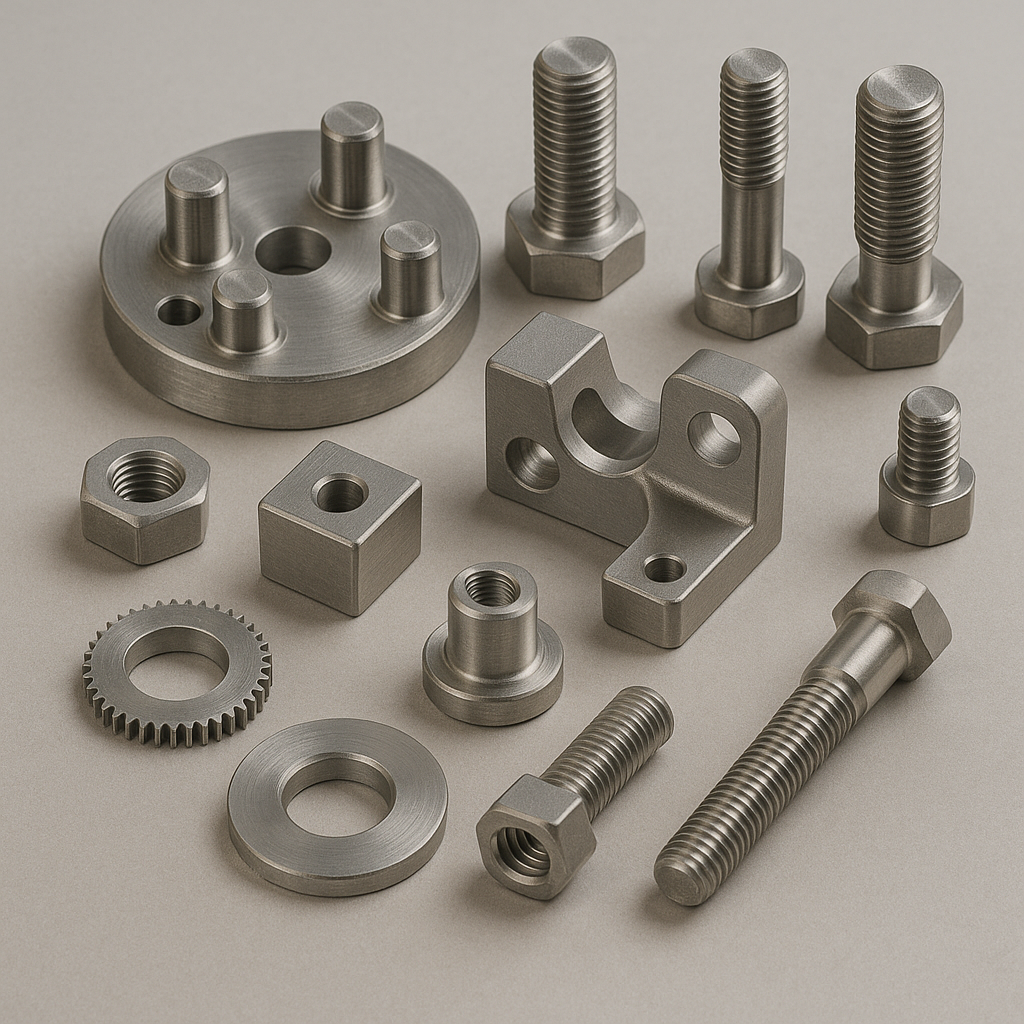
A client developing outdoor smart lighting needed fasteners withunique length + head style + corrosion resistanceto match product aesthetics and coastal durability.
JINGLE’s Solution
-
Custom fasteners for OEMbased on product specs
-
Special surface finish (e.g., black zinc-nickel)
-
Low-MOQ trial run with rapid tooling setup
Result:Design integrity preserved, early market release achieved, zero defect returns after 18 months.
CNC Parts for Prototyping and Production
Scene: Niche Automotive Accessory OEM
The client required small batches of CNC-milled brackets for a new under-hood product, but also needed scale-up capacity once the market response was validated.
JINGLE’s Solution
-
CNC parts for product developmentdelivered with ±0.01 mm tolerance
-
Smooth transition from pilot production to 10,000+ pcs batch
-
Full dimensional reports and anodized finish options
Result:Fast go-to-market and brand expansion with a single supplier throughout the lifecycle.
ISO-Certified Processes and Full Documentation
Scene: EU-Based Appliance OEM Expanding to Asia
Local regulations required documentation for every component, including safety-critical bolts and metal enclosures.
JINGLE’s Solution
-
ISO-certified fasteners for OEMwith third-party testing
-
RoHS, CE, material traceability, and PPAP Level 3 support
-
Digital record archive and naming system for long-term repeatability
Result:Fast customs clearance, smooth supplier audits, and growing multi-year partnership.
What to Look for in an OEM Supplier
| Must-Have | Why It Matters |
|---|---|
| Technical drawing support | Ensures perfect product–component alignment |
| Flexible MOQ and prototyping | Supports early-stage innovation |
| Surface treatment & material options | Matches end-use, brand design, and regional needs |
| Full documentation and testing | Accelerates certification and compliance |
| Stable capacity & on-time delivery | Keeps your launch plan on track |
Partnering with JINGLE Means Peace of Mind
If you're managing new product launches, sourcingcustom fasteners for OEM, scalingCNC parts for product development, or seeking anODM fastener manufacturing partnerwith documentation, testing, and engineering support—we can help.
With decades of experience, global delivery, and proven quality systems, we help OEM clients launch faster, fail less, and scale more reliably.