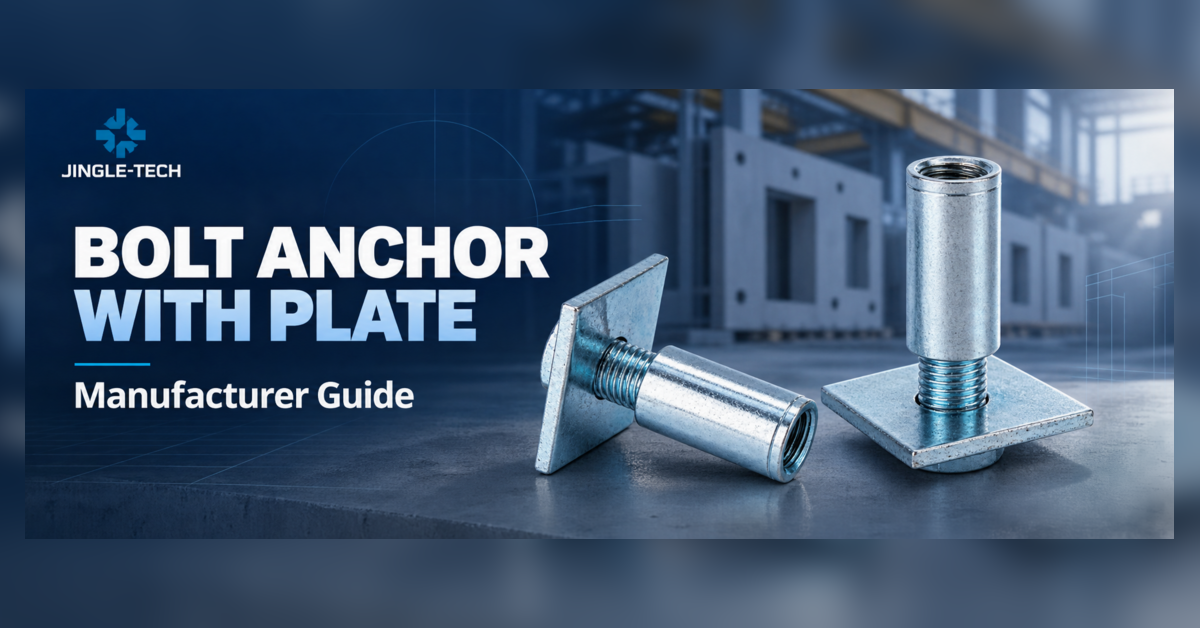
What a lifting socket actually does in precast work
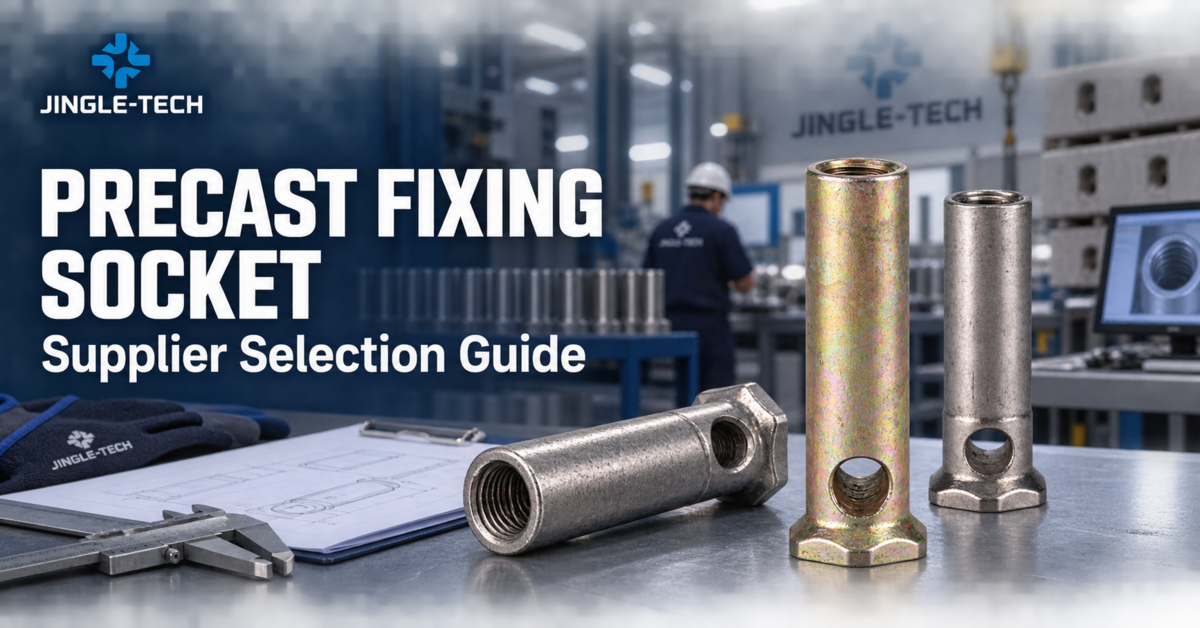
A lifting socket is a small component with an outsized role in precast handling. It gives a crane or lifting insert a secure connection point so a panel, beam, slab, or other precast unit can be moved without improvisation. For engineers, sourcing managers, and product teams, the real question is not whether the part is simple. It is whether the socket is compatible with the load path, the concrete element, the lifting hardware, and the way the job will be executed on site.
That matters because precast projects fail in inconvenient places. A misfit lifting point can slow production, complicate formwork, create rework in the yard, or force the field crew into awkward rigging decisions. None of those outcomes are expensive in the same way, but all of them are expensive enough.
Why buyers pay attention to the socket, not just the lift
A lifting socket is usually one piece of a broader family of precast accessories, yet it often determines how cleanly the rest of the handling system works. If the socket selection is off, the lifting eye may not seat properly. If embedment is wrong, the concrete around the insert may be overstressed. If the geometry does not match the lifting plan, operators may need extra shackles, adapters, or field workarounds.
That is why the best procurement discussions start with use case, not part number. Ask what is being lifted, how many lift points are planned, what the stripping and erection sequence looks like, and whether the same insert will be reused across multiple product families. A socket that works well for one wall panel may be a poor choice for a heavier utility piece or a congested reinforcement cage.
Common factors that influence socket selection
Load path and orientation
The first job is to understand how the load enters the concrete element. Vertical lifts are not the same as angled lifts, and the practical stress on the insert changes with rigging geometry. Even when the stated lift looks modest, off-axis loading can create a more demanding condition than the number alone suggests.
Concrete placement and embedment
A lifting socket has to be set accurately before the pour and held in position through vibration and consolidation. That makes the surrounding reinforcement and the formwork arrangement just as important as the socket itself. If the socket shifts, the lifting point may no longer align with the rigging plan, and even small deviations can be irritating on a repetitive production line.
Compatibility with other precast accessories
In most plants, the lifting socket does not live alone. It works alongside anchors, lifting eyes, ferrules, spreader beams, and other precast accessories that support handling, installation, or temporary fixing. Compatibility is not just about thread size or mating hardware. It also includes practical access for tightening, stripping, inspection, and site attachment.
What a good buying specification should cover
A useful specification does not need to be fancy, but it should be complete. At minimum, it should define the element type, expected lift conditions, the planned lifting hardware interface, embedding requirements, and any project-specific handling constraints. If the insert will be used repeatedly, buyers should also think about standardization. Plant teams usually prefer fewer variants, as long as those variants still match the real lifting demands.
One caution that is easy to miss: do not let convenience override geometry. It is tempting to choose one socket family for everything in the yard, but mixed product lines often need different details. The cheapest part on paper can become the costliest one once a panel has to be reworked or a crew waits on the slab edge.
Quick reference: what teams usually compare
When teams compare options for a lifting socket, they usually look at load capacity, dimensional compatibility, ease of setting in the form, corrosion behavior for the intended environment, and the practical availability of matching lifting hardware. Some projects also care about how well the insert nests around reinforcement or fits into thin sections where cover space is limited.
That sounds straightforward, but the real comparison is often between safe margin and production convenience. Engineers may prioritize structural certainty. Production managers may prioritize speed and repeatability. Sourcing teams are usually trying to avoid a part that is special-order in everything except the one dimension that is wrong.
Common mistakes in procurement and fabrication
The most common mistake is treating the socket as a commodity fastener. It is not. It is a load-transfer component embedded in concrete, and that changes everything about traceability, placement, and inspection.
Another frequent problem is assuming the field crew will adapt. Sometimes they can. Sometimes they should not. If the hardware requires a particular tool, thread engagement, or installation sequence, that needs to be clear before the casting date, not after the panel is on the truck.
A smaller but still real issue is mixing terminology across teams. One group may refer to the socket, another to the insert, another to the lifting point. In the paperwork, that can create confusion when ordering related precast accessories or checking drawings against shop practice.
Practical buyer advice for engineers and sourcing teams
If you are evaluating a lifting socket for a new project, start by asking for the full application context rather than a bare catalog description. Confirm the element type, the intended rigging approach, and the conditions under which the part will be embedded and used. For repetitive production, ask whether the same socket can serve multiple SKUs without compromising handling.
It also helps to keep a short internal approval note that records why a particular insert was chosen. That sounds bureaucratic until the first design revision arrives. Then it becomes useful history.
FAQ
Is a lifting socket the same as a general anchor?
Not exactly. A lifting socket is used specifically as part of a lifting or handling arrangement. Some anchors serve multiple roles, but the intended function should always be checked before use.
Can one socket type suit every precast element?
Usually not. Geometry, load path, access, and reinforcement layout often differ enough that one universal choice becomes a compromise.
What should buyers verify before placing an order?
Verify the element application, the mating lifting hardware, the installation method, and the compatibility with other precast accessories already specified for the job.
Next step
If you are standardizing lifting hardware for a precast line or reviewing a project specification, start with the lifting plan and work backward from there. That is the safest way to avoid a part that looks right on paper but complicates the actual build. For many teams, the best outcome is not the most elaborate socket. It is the one that fits the process, the reinforcement, and the people who will have to use it.