Lifting Anchor: What It Does and Why Buyers Should Care
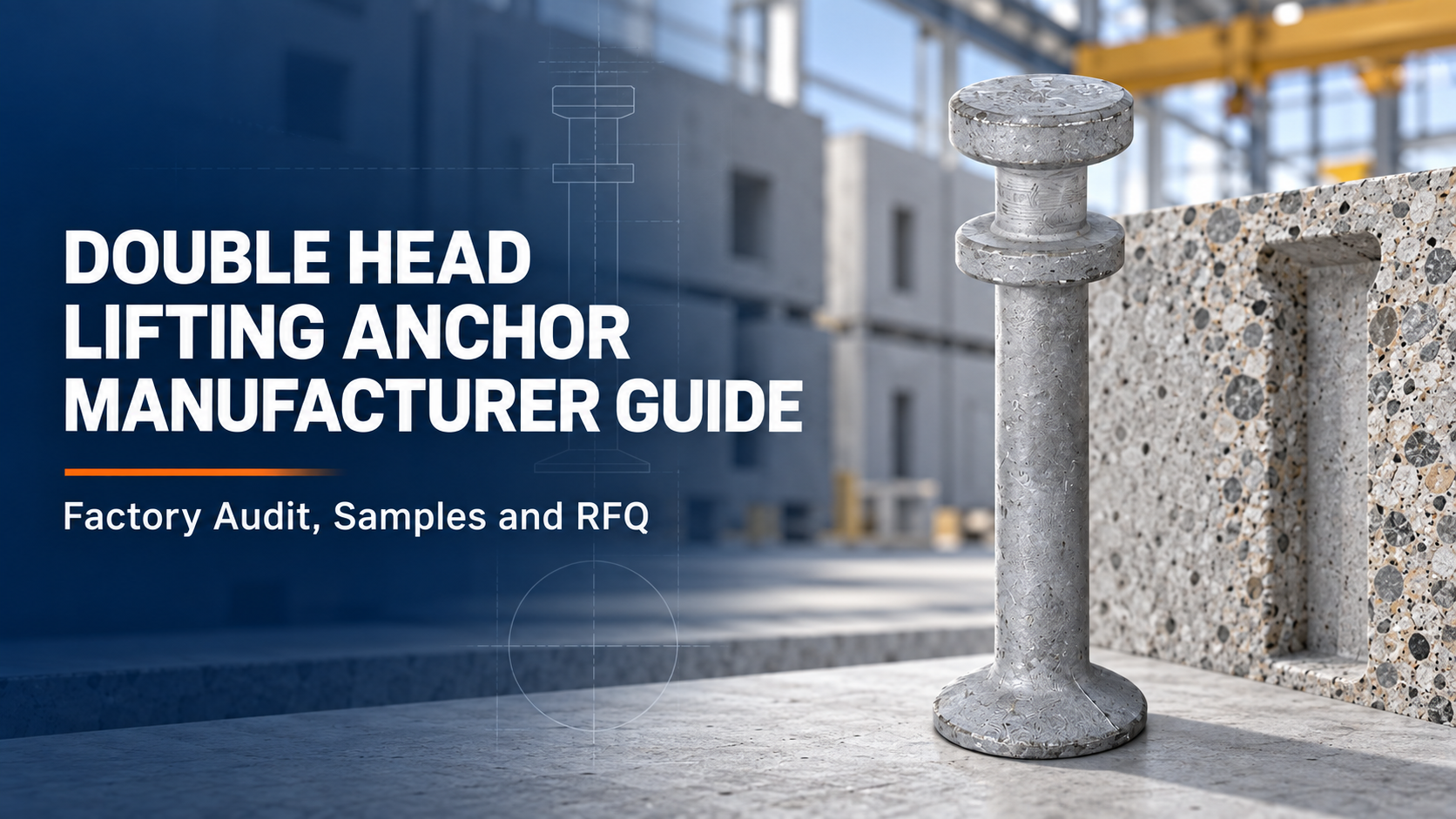
A lifting anchor is a small component with a large job: it gives precast concrete elements a safe pickup point during handling, transport, and installation. On a jobsite, that usually means the difference between smooth movement and a risky improvisation with slings, hooks, or field-made fixes. For engineers, sourcing managers, and product teams, the real question is not whether a lifting anchor is useful, but which type fits the concrete element, the lifting method, and the way the part will be produced.
That matters because lifting hardware is not a generic accessory. It has to work with the geometry of the cast piece, the embedment depth, the concrete strength at handling time, and the type of lifting clutch used on site. If any one of those variables is wrong, the result can be damage, delays, or a lift that simply cannot proceed safely.
What a Good Lifting System Usually Includes
In precast work, the anchor itself is only one part of the system. A practical setup often involves a lifting anchor cast into the concrete, a compatible lifting clutch for connection during handling, and a forming aid such as a Rubber recess former to create the recess or pocket needed around the anchor.
That relationship is easy to overlook when teams buy components separately. But compatibility is the point. The recess former shapes the cavity accurately during casting, the anchor transfers the load into the concrete, and the lifting clutch provides the temporary connection during hoisting. If those parts are not designed to work together, the assembly may still look acceptable in the mold, yet perform poorly in the yard.
Common Applications in Precast Production
Lifting anchors are used across a wide range of precast products, including wall panels, beams, slabs, stairs, and utility components. The load profile is not always straightforward. A panel may be lifted vertically one day and tilted or rotated the next. A heavier structural element may require multiple anchors and a carefully planned rigging pattern.
This is where buyers should slow down a little. A lifting anchor selected only by catalog name can be the wrong choice if the product is thin, edge-sensitive, or likely to see repeated handling before final installation. In those cases, the mold design, anchor placement, and concrete cover all deserve as much attention as the hardware itself.
Selection Criteria That Actually Matter
The most useful buying decisions usually come down to a few practical checks.
1. Match the anchor to the element geometry
Thin sections, narrow edges, and complex profiles leave less room for error. The anchor position should suit the concrete shape and expected load path, not just the mold layout.
2. Confirm compatibility with the lifting clutch
A lifting clutch is not interchangeable in the casual sense. The connection geometry, working capacity, and intended anchor style need to line up. If the fit is awkward, crews compensate in the field, and that is rarely a good sign.
3. Pay attention to recess formation
The Rubber recess former helps create a clean, repeatable recess around the anchor. That matters for both stripping and later use, since a poor recess can interfere with clutch engagement or leave a finish defect that needs repair.
4. Consider production repeatability
For plants making high volumes, consistency is often more valuable than a small material saving. A reliable anchor system should install cleanly, release cleanly, and present the same geometry from piece to piece.
Common Mistakes in the Buying Process
One frequent mistake is treating all lifting hardware as if it were just another embedded accessory. It is not. The anchor is part of a load-transfer system, and its performance depends on concrete quality, curing, placement accuracy, and the lifting method used downstream.
Another common issue is overconfidence in “close enough” substitutions. A different clutch, a different recess former, or a slightly altered embedment arrangement may seem minor on paper, but the field does not usually reward approximate fits. If the parts are not designed together, the lift can become the testing ground.
There is also a production-side mistake worth flagging: teams sometimes optimize for molding convenience and forget the stripping phase. A recess that is easy to cast but awkward to release can slow the line and create inconsistent finished parts.
Practical Advice for Engineers and Sourcing Teams
Before placing a purchase order, ask for the full component relationship, not just the anchor. Which lifting clutch is intended? What recess former is used? How is the anchor positioned in the mold, and what sequence does the plant follow during casting and stripping?
If the supplier can explain those points clearly, that is usually a better sign than a long list of marketing claims. Buyers should also request enough technical information to compare one system against another. The goal is not simply to buy a lifting anchor, but to buy a lifting method that can be repeated safely in production and on site.
FAQ
Is a lifting anchor a standalone solution?
Usually not. It works as part of a system with the lifting clutch and the recess former, plus correct concrete design and installation practice.
Why use a Rubber recess former?
It helps create a consistent recess around the embedded anchor, which supports proper clutch engagement and cleaner finishing.
What is the biggest buyer risk?
Buying components that look compatible but have not been matched as a system. That can create fit issues, poor recess geometry, or handling problems later.
Next Step
If you are specifying lifting hardware for a precast line, start with the lift itself: the element weight, the handling sequence, and the anchor-clutch-recess relationship. Once that is clear, product selection becomes much more straightforward, and the plant avoids the costly habit of solving lifting problems after the concrete has already cured.