How to Ensure Thread Engagement for Long-Term Stability
Why Thread Engagement Defines Real-World Reliability
When an assembly fails, it’s rarely because the bolt snapped—it’s because the threads didn’t hold.
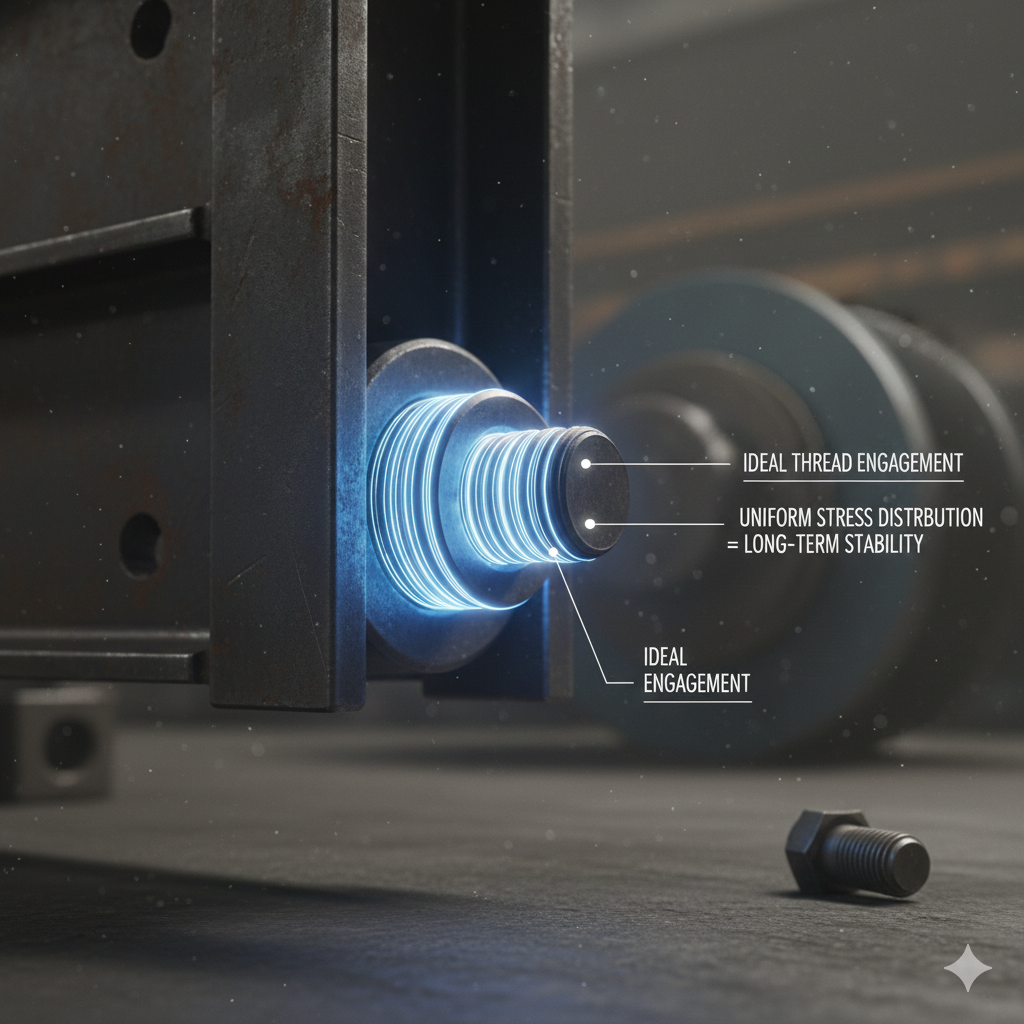
Insufficient engagement means the load is carried by fewer threads, increasing stress and the risk of stripping. Excessive torque or misaligned installation can also distort the thread profile, reducing contact and leading to fatigue failure over time.
That’s why Jingle focuses on thread accuracy and consistency from the machining stage. Every fastener is produced under controlled tolerance, ensuring that each thread flank engages perfectly with its counterpart—maximizing load distribution and joint stability.
Common Thread Engagement Mistakes Engineers Overlook
Even the best design can fail if assembly practices aren’t correct.
Here are the most frequent errors found in field installations and how to avoid them:
| Common Mistake | Impact on Performance | How to Prevent It |
|---|---|---|
| Insufficient thread depth | Causes stripping or pullout under load | Ensure engagement equals 1× bolt diameter in steel, 2× in aluminum |
| Cross-threading during installation | Misalignment reduces contact area | Start threads manually, use alignment tools before torqueing |
| Over-torqueing bolts | Crushes first few threads, leading to premature loosening | Use calibrated torque tools and follow tightening sequence |
| Mixing materials without inserts | Steel bolts in soft alloys cause thread collapse | Use thread inserts or reinforced housings |
| Lack of lubrication | High friction increases shear stress | Apply anti-seize or oil for stainless and coated fasteners |
Each of these errors can cut fastener life by more than 50%—and all can be avoided through precision machining, correct torque management, and material pairing.
How Jingle Fasteners Solve Thread Reliability Problems
1. Precision-Cut Threads for Full Engagement
Jingle uses CNC-machined threads with consistent pitch and surface finish. This ensures smooth mating and uniform load transfer, eliminating the risk of uneven stress or partial contact.
2. Material-Matched Strength
Our fasteners are designed to match the yield characteristics of the mating components. Whether used in steel, cast iron, or aluminum structures, engagement depth and thread geometry are optimized for the substrate’s hardness and ductility.
3. Anti-Wear Surface Treatments
Zinc, nickel, and phosphate coatings reduce galling and corrosion—key causes of thread damage during long-term exposure.
4. Controlled Tolerance Manufacturing
Tight thread class tolerances (6g/6H metric, 2A/2B imperial) maintain ideal fit without excessive friction, ensuring long-term retention even under vibration.
Practical Tips for Long-Term Thread Performance
-
Inspect before assembly: Debris or burrs can distort threads under pressure.
-
Use locking systems wisely: For vibration-prone equipment, combine mechanical locks with proper preload—not just adhesives.
-
Mind the environment: In coastal or chemical plants, use coated or stainless fasteners to resist corrosion-induced loosening.
-
Recheck torque after settling: Some materials relax after initial load cycles; a re-torque ensures consistent clamping force.
-
Don’t mix old and new fasteners: Reusing bolts with worn threads can cause uneven contact and unpredictable loading.
These small checks often prevent the costly downtime caused by thread failure.
Real-World Example: Preventing Thread Failure in Construction Equipment
A heavy equipment manufacturer faced frequent loosening in engine mounts. Investigation showed poor thread finish and inconsistent coating thickness reduced effective engagement.
After switching to Jingle precision fasteners with CNC-machined threads and controlled plating, loosening incidents dropped by 80%—and maintenance intervals doubled.
The difference wasn’t just the material—it was the quality of the thread geometry and coating process.
FAQs
Q1 – What’s the most common cause of thread failure?
Improper torque or insufficient engagement. Most failures occur when only partial threads carry the load.
Q2 – How do surface coatings improve engagement?
Coatings reduce friction, prevent galling, and maintain consistent preload over time—especially important in stainless or galvanized fasteners.
Q3 – Can thread inserts really extend service life?
Yes. Inserts distribute load more evenly and protect softer materials from wear, making them ideal for repeated assembly.
Q4 – How does Jingle ensure thread accuracy?
Each fastener undergoes automated optical inspection and mechanical testing to confirm pitch, tolerance, and thread depth compliance.
Precision that Holds for Decades
Thread engagement is more than geometry—it’s a promise of reliability.
Through CNC machining, advanced coatings, and strict quality control, Jingle delivers fasteners designed for consistent engagement, balanced preload, and long-term endurance under vibration, stress, and corrosion.
Explore our full range of industrial fasteners at Jingle Homepage or reach our engineering team for tailored support via Contact Us.